Global Security Operations a Chance to Learn from the Experts
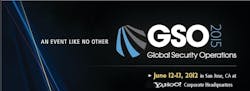
Are you building the kind of security operations that you will need in 2015? Here's your chance to find out.
Global Security Operations 2015 is an interactive workshop and hands-on technology lab designed to give security executives the chance to learn from the successful experience of leading global CSOs and security managers. Not the typical “PowerPoint session” event, the two-day workshop and technology lab is an interactive leadership workshop to address issues that are relevant — and even critical — to the success of your security program. It will be held on June 12-13 at Yahoo Corporate Headquarters in Sunnyvale, Calif. Visit www.GSOevents.com for more information and registration procedures.
Here's an exclusive Q&A with event co-hosts/co-producers Ray Bernard and James Connor. Mr. Bernard is a monthly contributor to STE Magazine and is the foremost expert on physical and IT security system convergence. Mr. Connor, also a past contributor to STE, is Principal of consulting firm N2N Secure and is the former Senior Manager of Global Security Systems for Symantec Corp.
Q: There are so many industry events already. Why another one?
Ray Bernard: Most event focus on product features or what’s being done now. This event looks ahead and asks the question, “Are you building the kind of security operations that you will need in 2015?” Changing or implementing a global or national program doesn’t happen overnight. And things don’t stand still during that time either. So we look ahead at all of the trends that impact a security program—such as management trends, risk trends, technology trends, social trends—and consider where security programs and technology deployments need to go.
James Connor: It‘s future-focused, and that’s what we need to be concentrating on now. Otherwise what we build will be outdated before we get it in place. Corporate trends and technology trends are intersecting in ways that can make security’s job easier—but it requires the right vision to make that happen.
Bernard: Practitioners thinking about this event should ask themselves, “What’s the most important thing I have to accomplish?” Then take a look at the agenda online at www.GSOEvents.com and see how that supports what they need to do.
Q: You have a Technology Lab on Day 2. How is this different from what anyone would see at trade show floors like ISC or ASIS?
Connor: At a trade show each vendor is trying to make his or her sale, mostly in isolation from other technologies. At GSO we and our event staff—not the vendors—are demonstrating how the integrated technologies work together in security response scenarios and for day-to-day security operations. Attendees also participate in the exercises. It’s a hands-on experience in an operational context, with lots of Q&A from the group. That’s very different from typical trade show floor’s one-on-one “show and tell”.
Bernard: One reality of today’s deployments is the mix of legacy technologies, which usually represents a significant investment. So we examine the ways to extend the useful life of existing technology and how to plan a migration to new technology, in a way that develops an evolvable infrastructure intended to be updated as technology advances. Today product lifecycles and the rate of innovation are very different than one or two decades ago. Yet we’re still using decades old approaches to technology deployment in many cases.
Q: The website says, “Security Leadership, Technology Command.” What exactly does that mean?
Bernard: The event is about much more than technology. The Security Leadership topics of Day 1 include effectively influencing management and other security stakeholders who are involved in the planning and decision-making that affects security. But it also goes beyond that to take a close look at what “aligning security with the business” really means, as well as how to align the business with security. It has to work in both directions. A natural topic is organizational resilience, which is something that most leading companies have been working to establish, or at least have been closely examining. Years ago resilience efforts were confined to the supply chain. Today business leaders realize that the entire organization can be strengthened in ways that are critical given the impacts of today’s economic and political environments.
Connor: We cover ROI and metrics very specifically, and show real-world examples. Most practitioners don’t get sufficient credit for all that they do. So we look at simple ways to communicate that value. The attendees are accomplished security directors and managers, so there is also a significant information sharing component.
Bernard: “Technology Command” means taking command of — really getting in the driver’s seat on — technology planning, procurement and deployment.
Connor: Many companies restrict security technology purchasing to traditional construction project practices, while IT takes an approach more suited to complex technology, and that approach is really more like what we should be using for our own networked systems. We can’t get the kind of results that we need today by using a decades-old approach to the integrator relationship. It is not only possible but necessary to define and manage security technology projects that run more smoothly and get better results with less time and effort spent in the process.
Q: Why is “Preparation” a part of the GSO 2015 event?
Connor: It is only a two-day event, and we’re covering a lot of ground. So before the event we give the attendees some new ways of looking at their security program and their relationship with the business. These are the perspectives from which we take up the subjects we address in the workshop sessions. It starts some “background thinking” going for the attendees, and gets everyone all on the same page for the start of the event. That helps us to accomplish a lot more in the short time that we have.
Bernard: We also want to hear from the attendees in advance, relating to the various subjects that we’re covering. This lets us gather benchmarking information to share with the group. It also enables us to tailor what we’re doing during the event to really align with the challenges and concerns that the attendees are bringing to the table. That’s why so many of the attendees have said, “This is an event like no other industry event.”
Connor: Many of the attendees have commented that they got a lot of very applicable ideas that they can take back with them to apply right away. That’s the whole idea—to help advance security programs without increasing the burden on the practitioner.
Bernard: This year we also have some session leaders who are past event attendees, who will be explaining their successes in applying the ideas that they got at previous GSO events. It’s a highly interactive event that’s intended to help practitioners take their security programs to a new and easily sustainable level.
About the Author
Paul Rothman
Editor-in-Chief/Security Business
Paul Rothman is Editor-in-Chief of Security Business magazine (www.securitybusinessmag.com) and has been covering the security industry for various outlets since 2001. Email him your comments and questions at [email protected].