Skip to main content
Trusted source for security news, analysis and product insights
Security Executives
Integrators
Video Surveillance
Access & Identity
Artificial Intelligence
Sections
Security Executives
Integrators
Video Surveillance
Access & Identity
Artificial Intelligence
Alarms & Monitoring
Residential Technologies
Cybersecurity
Fire Life Safety
Critical Infrastructure
Perimeter Security
Special
School Security
Healthcare
Government
SIW Buyer's Guide
Webinars
White Papers
Videos & Podcasts
Industry Event Coverage
Security Business Magazine Homepage
Security Executive Magazine Homepage
Contact
SIW Readers' Choice and Innovator Awards
Security Business Magazine Subscription
Security Executive Magazine Subscription
Newsletter Subscription
Subscription Center
About SIW and our Affiliated Brands
Advertise
Contact Us
Affiliated Brands
SECURITY EXECUTIVE MAGAZINE
SECURITY BUSINESS MAGAZINE
LOCKSMITH LEDGER INTERNATIONAL
Follow us on
http://www.facebook.com/SecInfoWatch
https://www.linkedin.com/company/securityinfowatch-com
http://www.twitter.com/SecInfoWatch
https://www.youtube.com/channel/UCa5qCB1F3aeH6Z20aBxbrlQ
Video Surveillance
Platte Canyon School District uses 3xLOGIC's VIGIL VMS to centralize video surveillance across its campus and provide authorized personnel with access to live and recorded footage.
Colorado School District Unifies Video Surveillance With 3xlogic VIGIL
Platte Canyon School District has unified more than 200 cameras on a single platform to improve campus visibility, simplify security operations and provide emergency responders...
Oct. 22, 2026
ID 473113317 © Marcus Jones | Dreamstime.com
With Z-Wave Long Range, a single gateway can connect up to 4,000 endpoints across a building like this – from rooftop sensors to underground parking access control – without the gateway hardware costs that made large-scale deployments impractical.
Wireless & Mesh Technologies
Beyond the Mesh: How ZWLR Is Expanding Z-Wave's Role in Security
Oct. 16, 2026
Timothy J. Pastore Esq., is a Partner in the New York office of Montgomery McCracken Walker & Rhoads LLP (www.mmwr.com), where he is Vice-Chair of the Litigation Department. Before entering private practice, he was an officer and Judge Advocate General (JAG) in the U.S. Air Force and Attorney with the DOJ.
[email protected]
• (212) 551-7707
License Plate Detection
Legal Brief: ALPR Legal Risks Security Pros Need to Know
Oct. 16, 2026
https://www.marchnetworks.com/?utm_source=newswire&utm_medium=external-press-release&utm_campaign=2026-event-apta-na
March Networks and VIVOTEK will present integrated video surveillance, AI analytics and evidence management technologies for mobile and fixed transit environments at APTA TRANSform 2026.
March Networks and VIVOTEK to Showcase AI-Powered Transit Security at APTA TRANSform 2026
Oct. 12, 2026
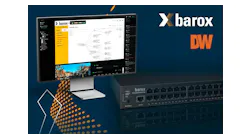
The barox integration gives DW Spectrum IPVMS users visibility into network connectivity and remote control capabilities for cameras and supporting infrastructure.
Networking Equipment and Cabling
barox Integrates Network Management Capabilities Into DW Spectrum IPVMS
Oct. 9, 2026
https://arsa.technology/
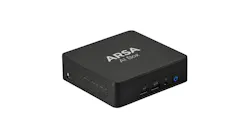
ARSA AI Box connects to existing IP CCTV cameras to deliver on-site video analytics for safety, retail, traffic monitoring and digital out-of-home advertising.
Video Analytics
ARSA Technology Introduces Edge AI Video Analytics Appliance for Existing CCTV Systems
Oct. 9, 2026
Beyond public safety, Carmel’s departments use Genetec Security Center to monitor road conditions, coordinate snow removal and track activity at parks and public gathering spaces.
Carmel (Ind.) Deploys Genetec Platform Across More Than 40 Municipal Sites
Oct. 8, 2026
Tactacam’s Defend cellular-connected camera, designed for residential and commercial property monitoring beyond the reach of traditional Wi-Fi, is part of the company’s portfolio being acquired by private equity firm GTCR.
GTCR Acquires Cellular Camera Provider Tactacam
Oct. 1, 2026
https://www.dmp.com/products/video/alarmvision/xv-plus-gateways-with-alarmvision
DMP’s expanded video platform includes VK VMS, AlarmVision Plus and Pro subscriptions and three XV Plus Gateway models.
DMP Expands Video Platform With VK VMS, AlarmVision Subscriptions and XV Plus Gateways
Oct. 1, 2026
Looking for Something?
Load More Content