Why One Credential Is Never Enough: The Case for Hybrid Access Control
Key Highlights
- Hybrid access control combines multiple credentials such as cards, mobile devices, and biometrics to improve security and convenience.
- Relying on a single credential creates vulnerabilities; hybrid systems provide redundancy and reduce failure points.
- Mobile credentials offer flexibility but depend on device battery life and software reliability, while biometrics provide strong security but can be affected by environmental factors.
- Context-aware authentication allows different security levels based on location, time, or user role, enhancing overall safety.
- Implementing hybrid solutions across industries like healthcare, education, and construction transforms access management into a seamless, resilient process.
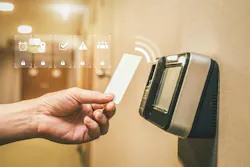
Card, Keyfob, Mobile, or Biometric? If you had the choice, which credential would you choose for access control? Depending on the end user, that answer may vary.
Whenever I am involved in the design, installation, and commissioning of a project, the keyfob is usually the default choice. Why? Portability and convenience. Just attach it to your keyring, and you are done; no app to download or open on your phone. But just like regular keys, what if you forget them at home or lose them? Do you have a backup?
This exact scenario recently happened to me on a project. Halfway to a job site, I realized I had forgotten my keyfob. There was no way I was going to turn around and go back. When I arrived, the property manager handed me his fob and said, "Go ahead, use this to get around." Then I remembered I also had a mobile credential on my phone. Yet, habit took over; I accepted his fob because it felt more immediate.
Mind you, this was a condo/mixed-use multifamily building where audits were not a major concern, and the readers were primarily for keyless entry and convenience. So, I walked around using both credentials. It wasn't an ideal situation, and in a different environment, it definitely would not have been a good choice, given that I was essentially using someone else's identity to gain access. But after using both, I was left wondering: Why settle for one? And what are the true benefits of blending these technologies into a unified ecosystem?
Why No Single Credential Wins
Given the many verticals in which access control is deployed, organizations often mandate a single preferred credential. In schools and corporate offices, the printed ID badge remains king.
With your photo, position, and company details printed on the card, it offers decades of proven utility. Many assume this is the most secure option because the credential is visually tied to an individual; an average passerby is unlikely to steal a specific badge to gain entry (unless they have ill intent, of course).
However, this assumption overlooks a critical weakness: the badge is a static token. Once it detaches from your lanyard, leaves your pocket, or is set down somewhere, it becomes vulnerable to theft or temporary misuse. Or, as in the scenario above with the keyfob, you might be tempted to lend your card to a colleague to help them unlock a door "just for a few moments."
Given the many verticals in which access control is deployed, organizations often mandate a single preferred credential. In schools and corporate offices, the printed ID badge remains king.
While it may seem harmless, you are creating risk. If that badge is lost or stolen, there is a time gap between reporting it missing and the administrator deleting it or changing its state in the system. This scenario has happened before.
Contrast this with a biometric credential, which cannot be lent to a colleague, or a mobile credential that you are less likely to share. A badge has no second layer of defense. Relying solely on this one credential creates a single point of failure that can easily be exploited.
This limitation forces us to recognize that relying on a single method is insufficient in today's security landscape. We need backup and technology that adapts to the threat level, not just user preferences. The answer lies in moving beyond "either/or" thinking and embracing a hybrid model where resilience comes from redundancy.
The Mobile Paradox: Convenience vs. Dependency
If the printed badge suffers from being a static token, the mobile credential faces a different problem: dependency on the device itself.
Mobile access has revolutionized convenience and the user experience. Tapping your phone at a reader feels like the future—no physical card to carry and no keychain jingle. It offers dynamic capabilities that a card or keyfob cannot match, such as real-time alerts when a door is accessed (especially in scenarios involving offline, battery-operated locks). A user can use an app on their phone to hold the credential via Bluetooth or store it directly in their mobile wallet using NFC technology (which is pretty cool). This offers flexibility in how the credential operates within the digital environment. For many, this is the perfect solution.
But we must consider the "dead battery" scenario. Most of us ensure our phones are charged before leaving home, but what happens if you find yourself with less than 10% battery and need to unlock a door, with your phone as your only credential? You risk getting locked out and having to contact the administrator. Not great, and potentially a major issue if you need to get in quickly. Worse, if the software malfunctions or the app glitches, it may fail altogether. Relying exclusively on mobile credentials trades the risk of theft for the risk of technical failure.
The Biometric Anchor: When "Something You Are" Isn't Enough
Then there is the biometric option: fingerprinting, facial recognition, or palm-vein scanning. For years, this was touted as the ultimate security measure because you cannot lose your fingerprint or unique facial features. This eliminates the "lost key" problem entirely.
However, biometrics do have their weaknesses. Environmental factors matter: a damaged fingerprint from injury or construction work, poor lighting on facial scanners, or a wet sensor causing false rejections. I have experienced this myself on rainy days, presenting my finger three or even four times on the fingerprint scanner before the reader would register and unlock the door (sometimes requiring re-enrollment). Furthermore, in a privacy-conscious culture, some users hesitate to share their biometric data, fearing misuse. And while it is very difficult to steal, biometric data isn't impossible to spoof; a sophisticated attacker could theoretically bypass a lone biometric scanner.
Biometrics provide an unforgeable identity, but they lack portability and adaptability to environmental conditions. They are powerful and secure, yes, but they are not solitary.
The Hybrid Advantage
This is where relying on a single credential method falls apart. By insisting on one, organizations invite the possibility of failure should a specific condition change.
A hybrid ecosystem flips this logic. Instead of asking users to choose, the system strategically accepts and uses two or more methods based on context. Consider these scenarios:
- The Fallback Logic: If a mobile credential fails due to low battery, the user quickly transitions to a physical card or fob. Taking it a step further, if the card is lost and reported, the system can prompt for a biometric scan (if the system is equipped). The door doesn't lock down; the authentication method simply shifts.
- Dynamic Security Zones: Not every door requires the same level of scrutiny. A lobby door may only need a tap (card or mobile) for speed and flow. However, a server room could demand dual authentication: Card/Fob + Biometric. This creates layers of defense that don't slow down daily operations but drastically raise the security barrier.
- Context-Aware Trust: Advanced hybrid systems can adjust requirements based on time and location. For example, accessing a facility at 2:00 AM might require a strict biometric requirement or a card + bio, whereas a standard weekday entry might only require a tap.
Employing this strategy allows the weakness of one technology to become the strength of another. The card provides the reliability of a physical credential in hand; the mobile app offers the flexibility of software; the biometric scan delivers the certainty of identity. When combined or used as a fail-safe, they form a safety net that stabilizes the entire ecosystem.
The goal of modern security isn't just to make doors harder to open; it's to ensure that legitimate access is never blocked by a single point of failure. By blending these technologies, we stop settling for the "best" option and start building the most robust one.
Hybrid in Action
When carefully planned and implemented, hybrid credentials prove their worth across diverse scenarios. Here are a few use-case examples of how they transform everyday operations:
- Hospital Shift Changes: Nurses tap their phones for quick morning entry, but when entering late at night, a badge verification step is required for enhanced security.
- Crisis Surge Response: During emergencies, admins push 72-hour mobile invites to temporary staff, bypassing hours of badge printing while legacy badge readers continue serving permanent staff.
- Elementary Schools: Teachers tap phones or badges for regular entry; substitutes receive auto-expiring mobile passes. If a lockdown is triggered, all exterior doors either block access entirely or require a biometric reader to regain entry, if needed. All interior doors require dual authentication (Card + PIN or Card + Phone).
- Construction Sites: Workers on the job site receive durable clamshell cards or fobs for use in rough environments, while managers or visitors use mobile access.
Some of these methods are already being deployed today, but there is a greater need to adopt hybrid credentials across more industries. This approach turns friction into flow.
The Future is Open
We no longer must choose between security and convenience. Hybrid credentials give us the best of both worlds: the peace of mind that comes from layered protection and the freedom of seamless access.
By embracing the full potential and ability of this technology, we build environments that are safer, smarter, and more human. The future of access isn't about picking a single key—it's about opening every door with confidence. Stop settling for one. Build an ecosystem that opens every possibility.
About the Author
 Rick Gallant
 Rick Gallant
Project Manager and Consultant with IDN-Canada
Rick Gallant brings over 15 years of physical security experience to his role as Project Manager and Consultant with IDN-Canada, supplying and coordinating door, frame, and hardware projects and providing access control solutions that complement that hardware and integrate with IP video. A certified Door + Hardware Consultant (DHC), he has worked across multiple industries