Skip to main content
Trusted source for security news, analysis and product insights
Security Executives
Integrators
Video Surveillance
Access & Identity
Artificial Intelligence
Sections
Security Executives
Integrators
Video Surveillance
Access & Identity
Artificial Intelligence
Alarms & Monitoring
Residential Technologies
Cybersecurity
Fire Life Safety
Critical Infrastructure
Perimeter Security
Special
School Security
Healthcare
Government
SIW Buyer's Guide
Webinars
White Papers
Videos & Podcasts
Industry Event Coverage
Security Business Magazine Homepage
Security Executive Magazine Homepage
Contact
SIW Readers' Choice and Innovator Awards
Security Business Magazine Subscription
Security Executive Magazine Subscription
Newsletter Subscription
Subscription Center
About SIW and our Affiliated Brands
Advertise
Contact Us
Affiliated Brands
SECURITY EXECUTIVE MAGAZINE
SECURITY BUSINESS MAGAZINE
LOCKSMITH LEDGER INTERNATIONAL
Follow us on
http://www.facebook.com/SecInfoWatch
https://www.linkedin.com/company/securityinfowatch-com
http://www.twitter.com/SecInfoWatch
https://www.youtube.com/channel/UCa5qCB1F3aeH6Z20aBxbrlQ
Critical Infrastructure
Creative #: 2227509596
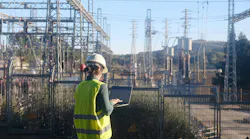
Cyber risks are equally severe and becoming more intertwined with physical ones. Data centers are vulnerable to ransomware with double-extortion tactics, advanced persistent threats (APTs) for long-term infiltration and data exfiltration, DDoS attacks, cloud misconfigurations, insecure APIs, and expanding attack surfaces from edge computing and IoT devices.
Data Centers Are Becoming the New Front Line of Converged Security
As AI workloads, cyber threats, physical attacks and OT vulnerabilities collide, protecting the digital backbone requires a security strategy that spans the entire facility.
Oct. 27, 2026
Credit: Melpomenem
It is New York City; is there much more to say? Large-scale programs for securing IoT and Smart Building Automation Systems did not exist, especially at the municipal level. The challenges were not only technological but also cultural within City agencies. The program would be new to the City.
Security Executives
The Smart City Security Imperative: Lessons from New York's IoT Cyber Defense Program
Oct. 12, 2026
Credit: TomasSereda
The trajectory is fairly clear: Smart City 1.0 was about efficiency and automation. Smart City 2.0, where most major cities sit today, focuses on integrated safety, unified platforms, and AI-assisted operations. Smart City 3.0, still emerging, points toward predictive resilience, where AI agents, digital twins and autonomous systems help cities anticipate disruption before it happens rather than simply respond to it.
Artificial Intelligence
How Technology, Collaboration and Public-Private Partnerships Are Transforming Urban Security
Sept. 4, 2026
Credit: peshkov
gettyimages2286745316
Security Executives
The Watchman's Chair Is Empty
Sept. 3, 2026
Credit: Supatman
For web apps, we do not expose services directly to the internet without a web application firewall and API protections. GenAI needs an equivalent runtime layer – an inspection and enforcement system that sits in front of models to semantically evaluate prompts and responses.
Artificial Intelligence
When AI Models Become the Supply Chain Attack
Aug. 31, 2026
Credit: DuniaDaw
Operators must now decide how to respond. Decision-making will be expedited by providing cybersecurity standards for them to adopt. Fortunately, best practice standards already exist and have long been used in the nuclear industry. A common architectural baseline, proven methodologies, and compliance accreditation and approval processes are already in place.
AI Has Changed the Critical Infrastructure Threat Equation
Aug. 26, 2026
Credit: Dragos Condrea
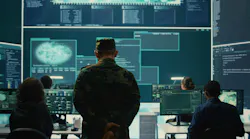
Military organizations have long prepared for contested and degraded environments where communications may fail from these efforts, or worse, infrastructure is destroyed completely. Critical infrastructure operators now face a similar reality.
Why Protecting Critical Infrastructure Security Requires a Military Mindset
Aug. 24, 2026
Credit: Fauzi Muda
The urgency behind the new Trump Executive Order reflects growing concern about frontier models with advanced cybersecurity capabilities: systems that can identify vulnerabilities at scale, prioritize exploitation pathways, and develop attacks with minimal human intervention.
Security Executives
Why Traditional Vulnerability Management Fails in an AI-Enabled Threat Environment
Aug. 19, 2026
Credit: Wengen Ling
The time for treating OT security as an IT problem is over. Water security is operational security, public safety and national resilience. The next phase of cyber warfare will test all three.
America’s Water Systems Are Still Too Exposed to Cyberattack
Aug. 18, 2026
Looking for Something?
Load More Content