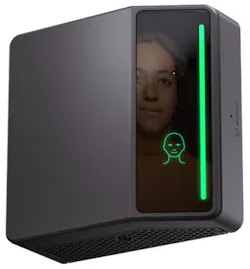
Alcatraz’s Rock access control device verifies identity at entry points using facial authentication designed to operate without storing biometric images.
Alcatraz, a provider of AI-powered physical access control systems, has raised $50 million in a Series B funding round, bringing its total capital raised to more than $100 million.
The round was led by BlackPeak Capital, Cogito Capital, and Taiwania Capital, with participation from existing investors including Almaz Capital, EBRD, and Ray Stata.
The company develops access control technology designed to authenticate employees without retaining personal biometric data. Its customer base includes AI data centers, U.S. airports, energy companies, NFL teams, universities, and Fortune 100 companies.
According to the company, adoption has accelerated in key sectors. In 2025, Alcatraz reported more than 300% year-over-year growth in data center deployments, 200% growth in new enterprise customers, and a fivefold expansion across Fortune 500 deployments.
The company’s core offering, the Rock™, is installed at building entry points and verifies identity through facial authentication as individuals move through an entrance at normal speed. The system is designed to operate without storing photographs or biometric images in the cloud, and allows users to enroll voluntarily and delete their data at any time.
Alcatraz positions its technology as an alternative to legacy access methods such as badges and PIN codes, as well as traditional biometric systems that store personal data. The platform is designed to comply with privacy regulations including GDPR, CCPA and BIPA.
The company was founded in 2016 by Vince Gaydarzhiev, a former Apple engineer who worked on hardware prototyping for iPad and iPhone during the development of Face ID.
The funding comes amid increased investment in AI infrastructure, particularly data centers, which the company identifies as a growing area of demand for physical security. Earlier this year, Safe Skies, funded by the FAA, certified the Rock™ for use in high-security airport environments.
Alcatraz said it will use the new capital to accelerate product development, expand internationally and grow its team, with expectations that 2026 will be its strongest year to date.