How AI Is Rewriting the Cybersecurity Profession
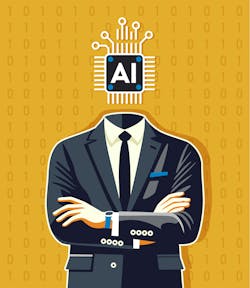
So here we are, watching AI roll into cybersecurity like the next big wave crashing on the shore. Vendors already offer tools that crawl networks, identify vulnerabilities faster than any human team, generate detailed reports, and even suggest or auto-deploy fixes. It’s the ultimate evolution of those old template-based audit reports: no more junior associates filling in blanks; just algorithms doing the heavy lifting in minutes.
I ended my last column with this question: What is the cybersecurity profession going to become, and is there a certification for that?
The question isn’t whether AI will automate many parts of our jobs; it already has—but what the profession becomes when routine scanning, compliance checks, most audits, and basic mitigation shift from human hands to machine intelligence.
So, the short answer: It won’t disappear; it will evolve and even elevate. Much like how the shift from manual vulnerability patching to automated countermeasures created demand for strategists rather than just fixers, AI is pushing cybersecurity toward higher-value, human-centric roles. Routine tasks such as log analysis, basic threat hunting, and generating compliance documentation are prime for automation. Studies from 2025, such as the ISC2 Cybersecurity Workforce Study, show that professionals are optimistic: most see AI as a career booster, not a threat, and many report significant time savings from AI tools already in use.
Remember that global shortage of skilled cybersecurity workers? You’ll see that the over-hyped topic quietly melts away. AI isn’t eliminating jobs so much as it’s changing what humans need to do.
What’s emerging is a bifurcated field. Entry-level and mid-tier monitoring roles will collapse or transform as AI handles the “grunt work” of sifting through alerts and flagging anomalies. New opportunities will emerge, however, in areas requiring judgment, creativity, and oversight that machines can’t yet replicate.
Think AI governance and ethics: Who decides when an automated response goes too far? How do we secure the AI systems themselves against prompt injection attacks, data poisoning, or adversarial inputs? Red teaming AI models, building “agentic” defenses that anticipate AI-powered threats from adversaries and integrating generative AI for incident response simulations: these are the emerging frontiers.
Professionals will need to pivot from being pure technicians to hybrid experts: part security architect, part AI strategist. Skills like software engineering for security tools, understanding machine learning biases in threat detection, and orchestrating human-AI teams will become the new table stakes. Non-technical abilities, critical thinking, communication, and ethical decision-making will matter more than ever, as teams translate AI insights into boardroom strategies or policy changes.
Certifications are adapting quickly to this reality. Traditional heavyweights like CISSP and CompTIA Security+ remain foundational, but newer certifications target the intersection of AI. ISC2’s Building an AI Strategy Certificate and its AI for Cybersecurity course can help pros grasp secure AI deployment. CompTIA is rolling out SecAI+ in early 2026, a vendor-neutral credential focused on securing AI systems and using AI safely in defense. Programs from IBM (via Coursera), Johns Hopkins, and others will emphasize hands-on generative AI for threat analysis, automated response, and ethical hacking, with tools such as ChatGPT integrations in updated CEH versions. GIAC is launching AI-focused credentials with live labs and adversary-informed testing through 2026. The message is clear: upskill in AI literacy, or risk falling behind.
The profession’s future looks less like sitting in a SOC staring at screens and more like directing an orchestra of intelligent agents. Humans will focus on the exceptions—the novel attacks, the strategic risks, the gray-area decisions, while AI handles the volume. Adversaries are already using AI to craft sophisticated phishing, generate exploits, and automate reconnaissance; defenders must stay one step ahead by mastering these same technologies.
Ultimately, cybersecurity is about adapting to the evolving threat landscape. AI isn’t the end of the profession; it’s the next chapter, demanding we evolve from compliance fillers to innovative guardians. The certifications and skills will follow, but the real certification will be the ability to think beyond the algorithm. For those willing to learn and lead in this hybrid world, the opportunities aren’t just surviving—they’re thriving.
About the Author
 John McCumber
 John McCumber
Cybersecurity Consultant
John McCumber is a cybersecurity executive providing targeted guidance for industry and government initiatives. He also develops and delivers consultative support for CIOs/CISOs in cybersecurity, data management, privacy and analytics. He is a retired US Air Force officer and former Cryptologic Fellow of the National Security Agency. During his military career, John served in the Defense Information Systems Agency and on the Joint Staff at the Pentagon as an Information Warfare Officer during the Persian Gulf War. John is a former Professorial Lecturer in Information Security at The George Washington University in Washington, DC and is currently a technical editor and columnist for Security Technology Executive magazine and the author of the textbook Assessing and Managing Security Risk in IT Systems: a Structured Methodology. He is now semi-retired and living the good life with his wife near Ocala, Florida.