Live from CES 2026: Pay Attention to Pet Tech
Key Highlights
- With single-family penetration rates leaving little room for organic growth, pet tech represents one of the most compelling adjacencies for alarm companies — and three CES 2026 startups (Rescue Retriever, Pawport, and CleverK9) each offer immediate integration paths into existing security infrastructure without requiring new back-end systems.
- The products address real pain points — thousands of pets die in residential fires annually, traditional pet doors are security vulnerabilities, and kennel monitoring is virtually nonexistent — giving alarm companies a credible "we protect your whole family" story that strengthens acquisition, deepens relationships, and reduces churn.
- The window for first-mover advantage is open but closing: pet tech companies will find distribution through retailers, veterinarians, or direct-to-consumer channels regardless — and alarm companies that don't establish partnerships early will lose both the integration opportunity and the customer relationship that comes with it.
This article originally appeared in the February 2026 issue of Security Business magazine. Don’t forget to mention Security Business magazine on LinkedIn or our other social handles if you share it.
Alarm companies serving single-family homes in the U.S. are facing the sobering reality that penetration rates in established markets leave little room for organic growth from traditional security system sales.
The path forward for alarm companies and dealers requires expanding their relevance beyond door contacts, motion sensors, and cameras – and pet tech represents one of the most promising adjacencies.
Pet owners are undoubtedly passionate customers. They often view their animals as family members and prioritize their safety and well-being as much as human family members; thus, creating demand for products and services that protect and monitor pets.
At CES 2026, I uncovered three companies (among many) that demonstrated pet tech solutions with clear integration paths for residential security providers. Rescue Retriever helps first responders locate pets during fire emergencies; Pawport uses Ultra Wideband technology to create secure, controlled pet door access; and CleverK9 offers a Z-Wave compatible smart kennel that monitors environmental conditions and pet well-being.
Each addresses a specific pain point for pet owners while fitting naturally into the product and service portfolios of companies already monitoring homes.
For alarm companies looking to expand their addressable market, pet tech offers several advantages: passionate customers willing to pay for peace of mind, recurring revenue opportunities through monitoring services, and integration with existing security infrastructure.
For alarm companies looking to expand their addressable market, pet tech offers several advantages: passionate customers willing to pay for peace of mind, recurring revenue opportunities through monitoring services, and integration with existing security infrastructure. The question is not whether pet tech belongs in the residential security provider’s toolkit, but how quickly companies can capitalize on the opportunity before competitors in the smart home and pet industries do.
Rescue Retriever: Alerting First Responders to Pets in Distress
Over 40,000 pets die in residential fires annually. When fire departments respond to home fires, they typically have no way of knowing animals are inside, and even when they do, they cannot quickly locate pets that have hidden in bathrooms, bedrooms, under beds, or other spaces.

Rescue Retriever addresses this problem with a paw-shaped smoke detector designed specifically for pet search and rescue. Unlike standard smoke detectors that alert human occupants to evacuate with sound, Rescue Retriever guides firefighters to pets once they arrive with flashing strobes.
“It solves two problems,” says Rusty Tussing, CEO and co-founder of Rescue Retriever. “How do firefighters know you have a pet? And how do they find them if a fire happens at your house?”
The system consists of two components. A reflective window sticker alerts first responders that pets are present in the home. Inside, the Rescue Retriever unit activates when smoke is detected, producing a silent strobe light visible to firefighters searching through smoke-filled rooms.Pet owners place the devices where animals spend time or retreat when scared, such as on kennels, in bedrooms, or near hiding spots.
“It is for search and rescue,” Tussing explains. “It strobes silently, because we don’t want a dog or cat to flee the area.”
Watch the live video demo from CES!
Tussing sees alarm companies as natural distribution and integration partners, and the company is pursuing connectivity with smart home systems and monitoring platforms. The device addresses a gap in alarm company service portfolios. While companies sell and monitor smoke detectors for human safety, they currently offer nothing specifically for pet protection. For alarm companies already selling monitored smoke detection, adding Rescue Retriever represents a natural extension that requires minimal additional infrastructure.
“One word: integration,” Tussing says when asked about working with alarm providers. “What Ring Doorbell has done for home safety, Rescue Retriever is going to do for pet safety,” he adds.
Future iterations of the device may include carbon monoxide detection and app integration for remote monitoring.
Pawport: Ultra Wideband Access Control for Pets
Pet doors create security vulnerabilities. Traditional pet doors remain perpetually open or use basic magnetic or RFID collars that can be easily defeated. Pawport solves this problem by applying access control technology – specifically Ultra Wideband positioning – to create what its founder calls “a security door that happens to be for your dog.”

Martin Diamond, CEO and founder of Pawport, built the product around two requirements: digital security to prevent unauthorized entry, and physical security to withstand forced entry attempts. The result is a pet door constructed from aircraft-grade aluminum and steel – that can actually stop bullets – with dual deadbolt locking.
“This is not a gadget,” Diamond says. “This is a security product. It’s built to be a door that you would put on your house, except it’s for your dog.”
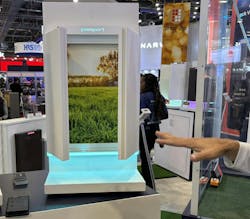
The door operates using UWB-enabled collars that provide precise positioning. When a pet approaches wearing the authorized collar, the door unlocks and opens. When the pet passes through, the door closes and locks behind them, thus preventing unauthorized animals or people from entering while giving pets freedom to move between indoors and outdoors.
The door works with retrofit installations onto existing pet doors or as part of complete systems for new installations. Options include indoor-only units or complete weatherproof tunnel systems with both interior and exterior doors.
Diamond sees multiple integration paths for alarm companies and has already built in compatibility with standard security equipment. “We could take a door sensor for windows and doors and literally attach it to the inside of the pet door, and then it’s part of their system,” Diamond explains.
This approach enables alarm companies to treat Pawport like any other door in the home – it becomes a zone in the security system that can be armed or disarmed based on the homeowner’s preferences. The door’s status (open, closed, locked) integrates into the existing monitoring infrastructure.
Diamond is also pursuing deeper integration with security platforms and smart home systems. The UWB collar could theoretically provide pet location tracking similar to Life360 for family members, creating recurring revenue opportunities through subscription services.
“People could just add it as a device into different systems,” Diamond says, mentioning potential Z-Wave integration or “partner works with” arrangements with security platforms.
For alarm companies, Pawport offers a premium upsell opportunity to security-conscious homeowners who are also pet owners. The product addresses legitimate security concerns – pet doors are entry points that must be secured – while delivering tracking capability and convenience that strengthens customer relationships.
CleverK9: Z-Wave Smart Kennel Monitoring
Dog kennels serve multiple purposes in homes: They serve as safe spaces for pets when owners are away, training tools, and nighttime sleeping areas. CleverK9 has built technology directly into the kennel structure to monitor environmental conditions, automate door operation, and provide remote visibility into pet well-being.
The smart crate, which was showcased in the Z-Wave pavilion at CES, includes integrated sensors monitoring temperature, humidity, carbon monoxide, air quality, and sound. An app enables owners to track these metrics in real-time and receive alerts when conditions fall outside safe parameters. The door can open remotely or automatically in response to detected emergencies like smoke alarms.
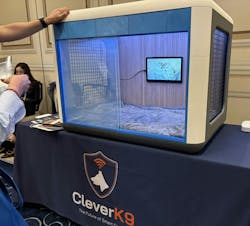

“We built a sensor cluster, and if a fire or CO2 event occurs, we have automation – if the smoke alarm goes off, the door will automatically open,” says Matthew Gilmore, founder of CleverK9. “It gives the dog a fighting chance to get out of the environment.”
The crate also includes privacy glass that transitions from transparent to opaque, creating a den-like environment when the dog is resting. The automation also enables scheduling, such as closing the crate at bedtime and opening it in the morning.
CleverK9 built the product on Z-Wave specifically to enable integration with security systems and smart home platforms. “We’re contemplating connectivity to anything Z-Wave related – be it a smoke alarm or something else,” Gilmore says.
This makes the crate learnable into any security panel that supports Z-Wave devices; thus, an alarm company installing a monitored security system can add the smart crate as a zone, receiving alerts for environmental conditions or door status changes. The crate becomes part of the home’s connected ecosystem rather than a standalone product.
Watch the live video demo from CES!
Gilmore is actively pursuing partnerships with sensor manufacturers, alarm companies, and smart home monitoring providers. “We’re talking here at CES with all sorts of companies doing smart home monitoring,” he says. “The dog crate is a part of that home, and we’re bringing a device and platform that can connect to those third-party devices.”
For alarm companies, CleverK9 provides an entry point into pet monitoring services – complete with a subscription model for app access and alerts that creates recurring monthly revenue similar to traditional alarm monitoring. The crate can be bundled with new system installations or as an add-on for existing customers.
The Business Case for Pet Tech Integration
The three companies at CES demonstrate different approaches to reach the same goal: Using technology to protect pets while creating new revenue streams for residential service providers. The residential security market may be somewhat capped, but the pet safety market is just beginning. Alarm companies with established customer bases of pet owners can expand wallet share by offering products and services these customers already want to buy, and here’s why it will work:
1. Pet owners are underserved. Despite the size of the pet care market, few security companies offer pet-specific protection beyond basic camera monitoring. This creates differentiation opportunities for early movers who can credibly position themselves as “pet safety specialists” in their markets.
2. Immediate integration paths exist. All three products work with existing security infrastructure. Rescue Retriever can integrate with monitored smoke detection; Pawport accepts standard door sensors; CleverK9 uses Z-Wave protocol. Alarm companies do not need to build new back-end systems to support these products.
3. The customer conversation changes. Leading or including pet safety – ie, “We protect your whole family, including your pets” – positions alarm companies as home protection specialists rather than just security system installers. This broader positioning helps customer acquisition and reduces churn as customers become more deeply invested in the service relationship.
4. Recurring revenue models apply. Pet tech does not require abandoning the monitoring business model that drives alarm company valuations. App-based monitoring, alert services, and integration management all support monthly recurring charges that complement traditional security monitoring fees.
The bottom line is, pet tech companies will find distribution channels. If alarm companies do not establish partnerships, pet tech will reach consumers through retailers, veterinarians, or direct-to-consumer channels. At that point, alarm companies lose the integration opportunity and the customer relationship benefits.
About the Author
 Paul Rothman
Paul Rothman
Editor-in-Chief/Security Business
Paul Rothman is Editor-in-Chief of Security Business magazine (www.securitybusinessmag.com) and has been covering the security industry for various outlets since 2001. Email him your comments and questions at [email protected].