CES Tech: Automatic Stove Shutoff Device for Fire Safety
Key Highlights
- FireAvert, developed by a Utah firefighter, is an automatic stove shutoff device that listens for smoke alarm activation and cuts power to cooking appliances — addressing a problem responsible for nearly half of all home fires in 2025.
- The system's new Z-Wave certification opens integration with major security platforms like Alarm.com, Resideo, and ADT, enabling smart home scenes such as alerting homeowners when they've left the stove on — a compelling upsell for security integrators.
- With 73% of deployments in multi-family properties, FireAvert targets a high-stakes market where a single cooking fire can displace dozens of residents — making it a natural add-on for alarm companies looking to expand their life safety offerings.
This article originally appeared in the February 2026 issue of Security Business magazine. Don’t forget to mention Security Business magazine on LinkedIn or our other social handles if you share it.
In 2025, cooking fires accounted for nearly 50% of all reported home fires, according to national insurance provider State Farm. These incidents often result from unattended cooking, grease buildup, and malfunctioning appliances, leading to significant property damage, injuries, and even fatalities.
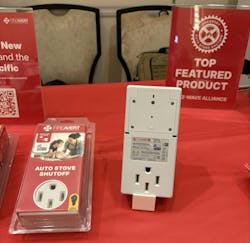
In the Z-Wave pavilion at CES, FireAvert showcased a potential mitigation solution to many of these fires – an automatic stove shutoff system that listens for smoke alarm activation and cuts power to cooking appliances before fires can fully develop.
The device, created by firefighter Peter Thorpe of Provo, Utah, operates as what the company calls a “listening device” – monitoring for the specific sound pattern of smoke alarms and triggering a relay switch to disconnect power when alarms activate while appliances are drawing current.
“It is listening for the sound of the smoke alarm,” says Nick White, VP of Sales for FireAvert. “It has a relay built in, so if the smoke alarm is sounding, and it senses draw from whatever device it’s plugged into, then it cuts power to the stove.”
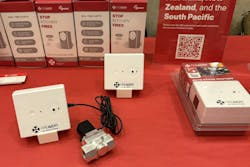
The company offers three product variants: An electric stove shutoff device that interrupts 240-volt circuits, a gas stove version that closes a solenoid valve to stop gas flow, and a general appliance shutoff for 120-volt devices like toasters or space heaters.
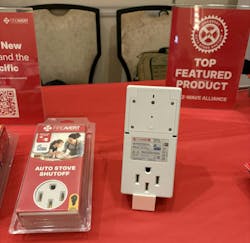
All three operate on the same listening principle, activating only when both the smoke alarm sound and electrical draw are detected simultaneously.
Installation and Reset Mechanisms
The electric stove device is installed between the wall outlet and the stove’s power cord. The unit’s size – larger than a standard plug – accommodates both the listening microphone and the relay switch required to interrupt high-amperage circuits. Most ovens include void space underneath that is sufficient to house and conceal the device. For installations where this space is unavailable, FireAvert provides an extension cord that can position the unit in the void area.
The gas version works differently due to safety requirements around fuel flow. When activated, it cuts power to a solenoid valve that stops gas supply to the stove. Because automatically restoring gas flow presents safety hazards, the gas model requires manual reset via a specific audio tone available through the company’s website, YouTube, or customer support line.
Electric models offer more flexible reset options. Z-Wave connected versions enable remote reactivation through smartphone apps once the stove has been turned off and the smoke alarm stops sounding. Non-connected electric models automatically reset when both conditions are present – the stove is off and the alarm is silent.
The device distinguishes between cooking-related smoke and actual fire scenarios. It only activates when the stove is actively drawing power. If a smoke alarm sounds when the stove is off – from burning toast in a toaster, for example – FireAvert does not interrupt the stove circuit.
Fire Department Origin and Multi-family Focus
Thorpe developed FireAvert after responding to numerous residential fires where early intervention could have prevented significant damage. In many cases, firefighters arrived to find smoke but no active flames – situations where automatic appliance shutoff would have eliminated the emergency entirely.
The company has found particular traction in multi-family properties, which represent approximately 73% of its deployments. A single cooking fire in a multi-family property can displace dozens of residents, trigger insurance claims, and create regulatory scrutiny. Proactive shutoff systems reduce these risks while demonstrating commitment to resident safety.
Z-Wave Integration and Professional Channel Opportunities
FireAvert’s recently achieved Z-Wave certification opens integration opportunities with security systems and smart home platforms. “You can set up scenes or triggers,” White says. “For example, it can detect that a resident left home but left the stove on and will ask [via notification] if the resident would like to turn it off.”
Beyond multi-family, target applications include:
Elderly care and assisted living. Caregivers can receive notifications when stoves activate or when shutoff events occur, providing oversight for residents with memory issues or cognitive decline.
Pet owner protection. Approximately 10% of cooking fires result from pets jumping onto stoves and inadvertently activating burners. Z-Wave integration allows homeowners to receive alerts when stoves turn on unexpectedly, enabling remote verification and shut-off.
Extended cooking monitoring. The system can trigger notifications after appliances have been active for predetermined periods. If an oven remains on for more than an hour, for example, the homeowner receives a reminder to verify whether this is intentional.
Smart home departure routines. Integration with security panels enables stove status checks when the security system is armed in away mode, alerting homeowners who have forgotten to turn off appliances before leaving.
Professional Installation Opportunities
White confirms the company is in discussions with major security platform providers including Alarm.com, Resideo, and ADT, with several currently testing products. Alarm.com requires dedicated certification beyond Z-Wave compliance, similar to other manufacturers seeking platform integration.
While FireAvert markets directly to consumers, White sees clear opportunities for professional security installers to carry the devices as system add-ons. The products require no specialized installation knowledge – they simply plug into existing outlets or connect to stove power circuits using standard electrical practices.
For alarm companies, FireAvert represents an upsell opportunity that addresses genuine safety concerns while differentiating their offerings. The devices provide tangible fire prevention that complements traditional smoke detection, creating a more comprehensive life safety solution.
The professional channel can also provide value through proper placement recommendations and integration configuration with broader security systems. While consumers can install FireAvert devices independently, professional installers bring expertise in optimizing Z-Wave networks, configuring notification preferences, and ensuring devices operate correctly within existing smart home ecosystems.
About the Author
 Paul Rothman
Paul Rothman
Editor-in-Chief/Security Business
Paul Rothman is Editor-in-Chief of Security Business magazine (www.securitybusinessmag.com) and has been covering the security industry for various outlets since 2001. Email him your comments and questions at [email protected].