Large North American Utility Implements Acoem Gunshot Detection
Key Highlights
-
Deployed across multiple U.S. sites to detect gunfire threats targeting utility substations and energy assets
-
Integrates on-premises acoustic detection with existing video management and PTZ camera systems
-
Provides real-time alerts and situational awareness without requiring internet connectivity
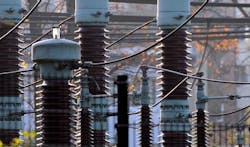
Acoem reports that a large North American electric power and natural gas utility is using its ATD Gunshot Detection system to secure critical infrastructure across multiple sites in the United States, according to an announcement.
The deployment comes as utilities face an increase in gunfire incidents targeting electrical substations and other energy assets. Such attacks have disrupted service to tens of thousands of customers and, in at least one instance cited by the utility, resulted in a prolonged outage during which a person dependent on life support equipment died.
According to the announcement, traditional security cameras were insufficient for detecting damage caused by gunfire, such as small bullet holes in transformers. The utility sought a solution capable of rapidly detecting gunshots and providing enough situational awareness to act before equipment failures cascaded.
A spokesman for Acoem told SecurityInfoWatch that the utility is unnamed at the utility’s request.
Operational and cybersecurity requirements
Gunfire incidents often originate from outside substation perimeters, sometimes hundreds of feet away. In these cases, the muzzle blast may not be audible at the site, leaving only the ballistic wave generated by the bullet. The utility required a system capable of detecting both elements to identify long-range threats.
The selected solution integrates acoustic detection with the utility’s existing video management system and pan-tilt-zoom cameras, enabling immediate visual and audio verification of events. “We needed immediate, accurate alerts to prevent catastrophic damage,” said the utility’s physical security program manager. “Whether a threat is close-range or from a high-powered rifle fired from hundreds of feet away, we needed a modern, self-contained, highly accurate system to provide a full picture.”
Cybersecurity requirements also shaped the decision. The utility operates under a strict air-gapped policy that prohibits internet connectivity within its operational network. As a result, any new technology had to function entirely on-premises and integrate with existing systems.
Deployment and integration
After testing multiple options, the utility selected Acoem’s ATD Acoustic Threat Detection system. The system processes analytics directly on the sensor rather than sending data to a remote server. When a gunshot occurs, the sensor detects both the muzzle blast and ballistic wave, confirms the event, and calculates its location.
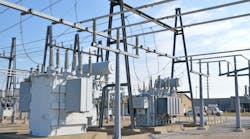
Acoem also developed an on-premises version of its Cadence software to meet the utility’s cybersecurity requirements. The platform provides live maps, sensor health monitoring, and audio clips for verification, while integrating directly with the utility’s Avigilon video management system. “Running software on-premises was non-negotiable,” the program manager said. “We needed the benefits of automation and analytics without exposing operational systems to the internet.”
Integration with on-site PTZ cameras allows the system to automatically direct cameras toward the source of detected gunfire, providing real-time visual confirmation. In some locations, the announcement notes that thermal or infrared cameras complement the acoustic sensors to detect movement outside the perimeter.
In one recent incident, the system detected gunfire near a remote substation. Operators used the linked camera feed to confirm the shots came from hunters outside the fence line and posed no threat to equipment, allowing the utility to avoid dispatching crews or contacting law enforcement.
The utility also required open standards and interoperability. According to the announcement, the ATD system integrates with existing infrastructure through APIs and supports video management systems including Avigilon, Milestone, and Genetec. The deployment began at a limited number of high-risk sites and has expanded steadily without requiring a network redesign.
While compliance with the North American Electric Reliability Corp.’s (NERC) CIP-014 standard was a consideration, the utility sought broader situational awareness and resilience. Acoustic threat detection is now part of its operational strategy for protecting substations and maintaining uptime.
“Securing the grid now demands both digital and physical vigilance,” the utility’s program manager said. “Gunshot detection has become a critical layer of defense for the infrastructure that powers our daily lives.”