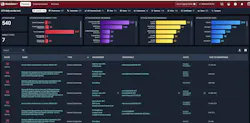
Horizon3.ai's new Rapid Response capability helps security teams identify exploitable vulnerabilities, prioritize remediation efforts and verify that critical risks have been addressed.
Horizon3.ai has introduced Rapid Response, a new capability designed to help organizations identify, prioritize and respond to emerging cyber threats as artificial intelligence accelerates vulnerability discovery and exploit development.
According to the company, security teams are increasingly challenged by a growing volume of vulnerability disclosures, threat intelligence feeds, exploit discussions and vendor advisories that demand immediate attention. While tens of thousands of vulnerabilities are disclosed annually, Horizon3.ai said only a small percentage are actively exploited, making it critical for organizations to focus on exploitability rather than the overall number of vulnerabilities.
The company said findings from more than 250,000 NodeZero security assessments have consistently shown that determining whether a vulnerability can actually be exploited is more important than simply identifying its existence. Rapid Response was developed to help security teams distinguish between theoretical risk and immediate threats that require action.
Rapid Response combines emerging threat intelligence, exploit validation and insights from the NodeZero AI-Native Proactive Security Platform to help organizations answer key questions during threat events, including whether they are exposed, which assets are affected, what remediation actions are required and whether mitigation efforts were successful.
“As a CISO, can your team handle responding to 1 CISA KEV per quarter? What about 1 per month? Per week? Per day?” said Snehal Antani, CEO and co-founder of Horizon3.ai. “With Mythos compressing the time and effort to exploit code, we should anticipate a CISA KEV tsunami in the second half of 2026, which is why we prioritized Rapid Response.”
The company said the new capability enables organizations to quickly determine whether they are vulnerable to the latest entries in the CISA Known Exploited Vulnerabilities catalog and assess the potential impact of exploitation. It also allows teams to remediate vulnerabilities, retest systems and verify that attackers can no longer exploit affected assets.
In addition, Horizon3.ai said Rapid Response can help organizations demonstrate to leadership teams, boards, regulators and insurers that critical risks were identified, addressed and validated.
“Every time a major vulnerability makes headlines, security teams are asked the same questions by executives and boards: Are we exposed? What are we doing about it? Are we safe?” said Ellen Sundra, Vice President of Customers at Horizon3.ai. “Rapid Response helps our customers answer those questions with confidence by identifying exploitable risk, prioritizing action, and verifying that remediation efforts were successful.”
Horizon3.ai said the underlying principle of Rapid Response is to focus on vulnerabilities that attackers can actively exploit. As AI-driven vulnerability discovery and exploit development continue to accelerate, the company said security teams need faster methods to validate exposure, reduce noise and verify risk reduction.
The announcement coincides with the Gartner Security & Risk Management Summit 2026, being held June 1-3 at the Gaylord National Resort & Convention Center in National Harbor, Maryland. During the event, Sundra is scheduled to discuss how organizations can operationalize AI-driven proactive security validation to reduce exploitable risk and accelerate remediation efforts.