AI-Driven Threats Push CISOs Toward Machine-Led Security, Kai Finds
Cybersecurity firm Kai has released findings from its inaugural 2026 State of Autonomous Defense Report, which found that chief information security officers increasingly view machine-led security as the future as artificial intelligence continues to accelerate cyber threats.
The report is based on a global survey of 500 CISOs and found organizations face a growing gap between machine-speed attacks and human-speed responses. According to the findings, while 89% of respondents said their organizations are prepared for AI-driven attacks, only 28% described themselves as very prepared. Additionally, 63% said attackers currently have the advantage because of AI.
Vulnerability management remains largely manual
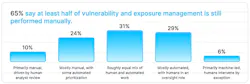
The research also found that vulnerability management remains heavily dependent on manual processes. Sixty-five percent of organizations reported their vulnerability management processes are at least half manual, while 60% said it takes more than one week to remediate critical vulnerabilities. Nearly half of respondents, 48%, said at least one-quarter of known vulnerabilities remain unremediated for more than 30 days.
According to the report, 77% of respondents said vulnerability management contributes at least moderately to burnout among security teams. More than 60% also reported that remediation validation and automated actions still require human intervention.
Automation adoption continues to grow
The survey found organizations are expanding their use of automation, although barriers remain. Fifty-two percent of respondents identified a lack of trust in automated decisions as the biggest obstacle to broader automation adoption, followed by governance and compliance concerns at 43% and skills and talent gaps at 38%.
The report found organizations are already using automation for lower-risk activities, including asset discovery and inventory, cited by 55% of respondents, and vulnerability prioritization, cited by 49%. Thirty-two percent said their organizations already permit automated remediation actions.
Looking ahead, 35% of organizations described their current vulnerability management approach as mostly or primarily machine-led. That figure is expected to increase to 45% over the next 12 to 18 months, according to the survey.
Kai said its newly released Auto Remediation capability evaluates confirmed findings to determine whether they can be remediated automatically or require human intervention. If a finding cannot be remediated automatically, the platform prepares a remediation plan and stages the change for technical teams.
Wakefield Research conducted the survey between June 15 and June 29, among 500 CISOs at private-sector companies with annual revenue of at least $500 million across four markets.