Supreme Court Strikes Down Trump Tariffs, Setting Stage for Refund Battles
The U.S. Supreme Court on Friday invalidated much of the Trump administration’s worldwide tariff regime in a 6–3 decision, finding that the president exceeded his authority under the International Emergency Economic Powers Act of 1977 (IEEPA) by unilaterally imposing sweeping, country-specific tariffs without congressional approval.
The decision has immediate implications for the security industry, which relies heavily on imported cameras, access control hardware, intrusion panels and other electronic life-safety equipment. Many of those products and components were subject to IEEPA-based tariffs affecting China, Mexico, Canada and dozens of other nations.
Security Industry Association (SIA) CEO Don Erickson told SecurityInfoWatch the court made clear that IEEPA does not authorize a president to set tariff policy independently, effectively striking down a wide swath of country-specific duties imposed under that justification.
“SIA maintains that U.S. trade policy should drive open markets, competitiveness and innovation while protecting intellectual property rights,” Erickson said. “We have advocated for relief from these tariffs for security products, so that our industry can continue to provide the most effective life safety and security equipment to consumers at affordable prices.”
SIA is urging the administration to create a streamlined reimbursement process for excess tariffs already paid. Erickson said the association views timely relief as essential and will continue pressing for trade policies that minimize disruption for manufacturers, integrators and end users.
Court: IEEPA does not authorize tariffs
Chief Justice John G. Roberts Jr., writing for the majority, concluded that IEEPA did not explicitly grant the president authority to impose tariffs and that the administration’s interpretation would amount to a sweeping delegation of Congress’s power to set tariff policy.
The ruling wipes out IEEPA-based tariffs against Canada, Mexico and China, as well as the administration’s broader “Liberation Day” duties and other country-specific measures. It affirms earlier decisions by the U.S. Court of International Trade and the U.S. Court of Appeals for the Federal Circuit, which had found that Congress did not give the president authority under IEEPA to set tariff rates.
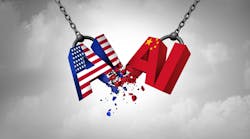
The decision sets the stage for legal battles over potential refunds of more than $130 billion in tariffs paid to the federal government.
The cases were brought by companies and states that argued the tariffs exceeded presidential authority. The cases are Learning Resources Inc. v. Trump and Trump v. V.O.S. Selections.
Within hours of the ruling, Trump said he would sign an executive order to impose a 10% global tariff on trading partners, over and above existing duties. He indicated the measure would rely on Section 122 of the Trade Act of 1974, which allows temporary trade measures to address balance-of-payments problems.
Operational challenges loom for importers
While the ruling may create opportunities for refunds, trade experts caution that the operational burden on companies could be significant.
Christopher Desmond, a partner in PwC’s Customs and International Trade practice, said the court’s decision is only the starting point. “Beyond the legal implications, the real challenge now is operational,” he said.
Companies will need to quickly determine which IEEPA-related tariffs may be refundable and quantify their potential recovery. Any refund process is likely to be congested, Desmond warned, as customs brokers face a surge of post-summary corrections and protests from thousands of importers.
Even where refunds may be available, internal capacity constraints could slow progress. Customs and trade compliance teams are already stretched managing routine filings, enforcement activity and ongoing tariff changes. Layering a large-scale refund effort on top — requiring detailed entry-level reviews and coordination with brokers under strict procedural deadlines — will strain internal resources without additional support.
“For the portion of IEEPA tariffs that may be refunded, companies should focus on three critical considerations,” Desmond said. First, robust modeling is essential to understand eligibility and financial exposure at the entry level. Second, finance leaders should account for the timing of potential refunds given procedural and capacity constraints. Third, execution risk is real, as customs brokers and in-house trade compliance teams are already operating at capacity.
Companies that move quickly with clear data and a defined strategy will be better positioned as refund mechanisms take shape, he added.
About the Author
 Rodney Bosch
Rodney Bosch
Editor-in-Chief/SecurityInfoWatch.com
Rodney Bosch is the Editor-in-Chief of SecurityInfoWatch.com. He has covered the security industry since 2006 for multiple major security publications. Reach him at [email protected].