Why Security Is Becoming a Core Civic Design Strategy
Key Highlights
- Security is earning its place at the civic design table earlier than ever – architects now recognize that thoughtfully integrated security improves circulation, operational efficiency, user experience, and public trust simultaneously, making it one of the highest-value investments in the project.
- The most effective security decisions in civic buildings often involve site planning, orientation, landscaping, and spatial organization rather than equipment – good design reduces the burden placed on technology and produces environments people experience as intuitive and welcoming rather than fortified.
- For security professionals, the shift from system designer to design collaborator requires understanding how architects balance aesthetics, accessibility, cost, and community expectations – and translating security needs into design contributions rather than arriving with a separate list of requirements.
This article originally appeared as the cover story in the August 2026 issue of Security Business magazine. Don’t forget to mention Security Business magazine on LinkedIn or our other social handles if you share it.
For decades, architects and owners have had to justify spending money on security. It was viewed as a necessary expense – important, but competing with countless other project priorities. Every camera, card reader, or protective measure had to earn its place in the budget, typically by explaining the risks it would help prevent. Today, that conversation is changing.
The shift is driven by something more fundamental than evolving threats: the expectations placed on civic buildings have changed. Today's civic buildings are expected to be welcoming, resilient, operationally efficient, and to inspire public trust – all while making responsible use of taxpayer dollars.
Across the civic sector, security is becoming one of the easiest investments to justify because thoughtfully integrated security improves so many aspects of a project at once. It enhances safety, strengthens public trust, improves the user experience, simplifies operations, and can even help build community support during the planning process.
That represents a remarkable evolution – not only in how civic buildings are being designed, but in how security professionals can deliver value.
I was reminded of this shift during this year's AIA Conference on Architecture & Design. While speaking with architects from firms around the country, I expected our conversations to center on emerging threats, artificial intelligence, or the latest security technologies. Instead, they described security as a design discipline that consistently delivered value beyond its typical purpose of protection. They spoke about security as a design tool that improves how civic buildings function, how communities experience them, and even how projects are received during public meetings.
Good security, thoughtfully executed, helps deliver one of the most valuable outcomes any civic building can achieve: public trust. Security has grown beyond protecting civic buildings. It is becoming a design strategy that helps create places people trust.
The security industry has championed this message for years. The design industry is now arriving at the same conclusion independently.
Security has grown beyond protecting civic buildings. It is becoming a design strategy that helps create places people trust.
A New Business Case for Security
Historically, the value proposition for security has been straightforward: reducing risk. The value of a camera was tied to its ability to deter, detect, or document an incident. The value of access control was tied to keeping unauthorized people out. The value of protective design was often measured against a potential threat that might never occur.
While that mission remains unchanged, the way owners evaluate security investments has evolved. Public agencies face increasing pressure to maximize every dollar they spend. Civic buildings are expected to do more than fulfill their functional purpose – they must serve diverse communities, support efficient operations, remain adaptable for decades, and reflect the values of the institutions they represent.
As a result, project teams are asking a different question: How many objectives can one investment accomplish? When security is integrated early in the design process, the answer is often "more than almost any other building system." Thoughtfully planned security can improve occupant safety while simplifying circulation, supporting accessibility, reducing operational complexity, improving staff efficiency, protecting critical functions, and reinforcing public confidence in the facility. Instead of serving a single purpose, security becomes part of the overall performance of the building. That is a far more compelling business case than simply reducing risk.
Why Civic Projects Are Different
Few building types carry greater responsibility than civic architecture. City halls, libraries, community centers, courthouses, fire departments, and public safety facilities all exist for one fundamental purpose: to serve the public. That creates a unique design challenge. These buildings must remain welcoming and accessible while protecting employees, visitors, and critical operations. They must feel open without feeling vulnerable. Secure without being intimidating. Efficient without sacrificing transparency.
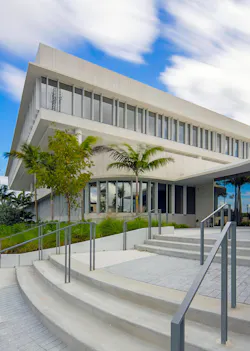
Unlike many private developments, civic buildings also become symbols of government itself. The experience people have walking through the front door often shapes how they perceive the institution inside. Every design decision communicates something to the public. An open lobby can project transparency. Clear wayfinding can communicate accessibility. Poorly integrated security creates unnecessary barriers instead – confusing routes, hostile entrances, and environments that feel more institutional than civic.
Security, therefore, becomes much more than a building system. It becomes part of the public's experience with government. More importantly, it becomes part of how communities develop trust in the institutions those buildings represent – and in one another. Good security, thoughtfully executed, helps deliver one of the most valuable outcomes any civic building can achieve: public trust.
Security Is Solving More Than Security Problems
Many of the most valuable security decisions center on site planning, building orientation, circulation, visibility, space planning, and operations – before any equipment enters the conversation.
A clearly defined arrival sequence can naturally guide visitors toward the appropriate entrance. Thoughtful landscaping can preserve visibility while still creating an inviting public realm. A well-positioned reception desk can support customer service, visitor management, and natural surveillance simultaneously. Waiting areas can be designed to reduce congestion and conflict. Service counters can support accessibility while giving staff appropriate distance and protection. Circulation paths can separate routine public activity from sensitive operations without relying on excessive doors, barriers, or signage.
When security measures are integrated within architecture, the public simply experiences a building that feels organized, intuitive, comfortable, and safe. That is the point. Good design reduces the burden placed on technology – and it requires a different approach and philosophy from the security designer helping the owner make those decisions. The result is often lower staffing demand, better operational efficiency, simpler maintenance, and a more welcoming experience for the public.
Community Meetings Are Changing the Conversation
Public meetings surrounding civic projects have traditionally focused on cost, accessibility, neighborhood impact, and whether a proposed building truly serves its community. Security entered those conversations reactively – after an incident, in response to a perceived threat, or when residents worried a proposed building would feel too fortified.
Today, project teams have an opportunity to frame that conversation differently. Thoughtfully integrated security gives them an entirely different story to tell. Rather than describing security through equipment, they can explain how the design improves the everyday experience of the building.
They can show how public spaces will remain open while sensitive functions are appropriately protected. They can demonstrate how employees will serve the public while maintaining greater awareness of their surroundings. They can describe how the design reduces hidden areas, supports visibility, manages circulation, and creates safer transitions between the site, parking areas, entrances, and interior spaces.
That is a far more compelling story than simply noting that the project includes cameras, card readers, or additional protective measures. It allows security to become part of the project's public value proposition – evidence of thoughtful planning in service of the community for decades to come. This is where security stops being a building system and starts becoming a design language shared by architects and security professionals.
What This Means for Security Professionals
This shift changes the role of security professionals. Our value now extends beyond the systems we design to the problems we help solve. That starts with asking different questions.
How should visitors experience arrival? How should staff naturally maintain awareness of public spaces? Which functions require openness, and which require privacy? How can circulation improve both security and user experience? How can technology support and reinforce architectural decisions? What operational challenges can be resolved through design or staffing, before reaching for additional equipment?
These questions require a broader skill set than traditional system design. Security professionals must understand how people move through buildings, how staff perform their work, how facilities are operated, and how architectural decisions influence behavior. We must be able to communicate risk without allowing fear to dominate the design process.
We also need to understand the architect's objectives. Architects are balancing aesthetics, function, accessibility, sustainability, code compliance, cost, schedule, community expectations, and client goals. Security professionals create greater value when they contribute to those priorities as a collaborator, rather than arriving with a separate set of requirements.
That means translating security needs into design opportunities – while still having the hard conversations. Rather than simply requesting a secure vestibule, help shape the overall arrival experience that supports access control, customer service, and public confidence. Rather than adding cameras to address poor visibility, first ask whether the layout can be improved. Rather than placing barriers wherever risk exists, explore whether distance, elevation, landscape, circulation, or spatial organization can provide protection more naturally.
This is how security professionals move from technology specialists to trusted design collaborators.
Security as a Civic Design Strategy
The conversation around civic security will continue to evolve, but its direction is clear. Security has grown well beyond protecting buildings from threats. It is increasingly a design discipline capable of improving operations, user experience, resilience, and public trust – simultaneously and measurably.
For architects, that makes security a powerful design strategy. For owners, it becomes an investment with demonstrable value across multiple objectives. For security professionals, it represents an opportunity to engage earlier, contribute more strategically, and help shape buildings that serve their communities in every sense of the word.
The most successful civic projects won't be remembered for the sophistication of their security technology. They'll be remembered for creating public buildings that people instinctively trust – buildings where security is so thoughtfully integrated that it quietly strengthens everything the facility was intended to accomplish. For security professionals willing to make that shift, from system designer to design collaborator, the opportunity has never been greater. The architects are already waiting for us at the table.
Five Questions to Ask Before Recommending Technology
1. Can this challenge be solved through design before adding technology? Good site planning, circulation, and visibility often reduce reliance on hardware.
2. Will this improve the public's experience of the building? Security should support, not complicate, the visitor journey.
3. Does this make operations easier five years from now? The best security solutions reduce staff workload rather than create new administrative burdens.
4. Will this help build public trust? Ask whether the solution makes the building feel welcoming, transparent, and thoughtfully managed.
5. Would the architect proudly explain this decision at a community meeting? If security becomes a positive talking point instead of something to defend, you're probably on the right track.
The Civic Security Checklist
Great civic security improves as many of these outcomes as possible. If a security investment addresses only one, ask whether the design can accomplish more:
✓ Improved occupant safety and emergency preparedness
✓ Greater public confidence in the facility
✓ A more intuitive and welcoming visitor experience
✓ More efficient day-to-day building operations
✓ Reduced staffing and operational burden
✓ Simplified visitor management and access control
✓ Clearer wayfinding and circulation
✓ Improved visibility and situational awareness
✓ Greater resilience to future operational and security needs
✓ Better stewardship of public investment
About the Author
 Michael Niola, PSP, CPTED
Michael Niola, PSP, CPTED
Michael Niola, PSP, CPTED, is Principal and Co-founder of The Consulting Group, where he helps owners, architects, and engineers integrate security into the planning and design of complex facilities in healthcare, civic, education, aviation, and mission-critical environments. He is a frequent industry speaker and author on security, technology, and the future of the built environment. https://theconsulting.group