EyeOTplanner design and project-planning platform
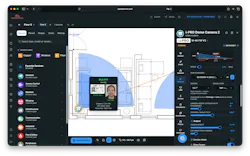
EyeOTplanner is an intelligent design and project-planning platform built specifically for the physical security industry. It gives security integrators, consultants, manufacturers, and end users one connected workspace to move a project from initial requirements through system design, documentation, pricing, and delivery.
Most security design tools help users place symbols on a floor plan. EyeOTplanner goes much further: it understands what is being designed. The platform can analyze an RFP or other project documentation, extract the system requirements, and organize them into an actionable project plan. As devices are selected and placed, EyeOTplanner compares the developing design against those requirements and the actual technical specifications of the chosen products. This helps teams identify missing coverage, incompatible equipment, overlooked requirements, and design conflicts while they can still be corrected, before they become expensive change orders, delays, or lost margin.
Users can design video surveillance, access control, networking, wireless infrastructure, intercom, and other physical security systems on uploaded floor plans or geospatial maps. They can position devices, visualize coverage, organize equipment by location, and create a coordinated system design rather than managing separate drawings and spreadsheets.
For video surveillance projects, EyeOTplanner provides data-driven coverage visualization using manufacturer and model-specific camera information. Designers can evaluate field of view, image detail, DORI and pixels-per-foot performance, mounting considerations, resolution, and other factors that determine whether a camera is appropriate for its intended purpose. Instead of simply showing that a camera exists on a plan, EyeOTplanner helps determine whether that camera can accomplish the project’s actual objective.
The platform also performs critical design calculations as the project evolves. Camera counts, recording assignments, resolution, frame rate, retention requirements, bandwidth, and storage capacity are interconnected. When one variable changes, EyeOTplanner recalculates the impact, helping teams properly size recording and network infrastructure without relying on disconnected spreadsheets after the design is complete. This reduces the risk of under-specifying a system and absorbing the cost later, or over-specifying it and losing a competitive bid.
EyeOTplanner also supports modern project inputs, including site photographs, floor plans, geospatial maps, and 3D LiDAR scans. Teams can collaborate within the same project, share information with internal and external stakeholders, and maintain a consistent record of requirements, device selections, design decisions, and supporting documentation.
What makes EyeOTplanner especially valuable is the continuity it creates across the entire project lifecycle. Physical security projects are commonly fragmented among RFP documents, drawing software, manufacturer calculators, spreadsheets, takeoff tools, pricing systems, emails, and manually assembled reports. Every handoff creates an opportunity for information to be lost or misunderstood. EyeOTplanner brings these activities together so that requirements influence the design, the design drives the equipment and calculations, and the resulting documentation reflects what was actually planned.
That intelligence is what separates EyeOTplanner from traditional design platforms. It does not merely digitize the drafting process. It actively helps users make better design and business decisions.
For integrators, that means faster and more accurate bids, fewer costly omissions, better protection of project margins, and a more professional customer presentation. For consultants and end users, it means clearer accountability and greater confidence that the proposed system meets the stated operational requirements. For the industry, it provides a practical way to replace fragmented, manual workflows with an intelligent and repeatable process.