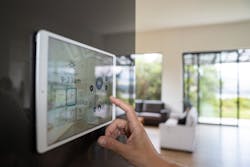
A defining feature of today’s market is consumer confidence in self-installation. In 2025, more than half of recent security system buyers (51%) self-installed their systems. DIY adoption surged during the pandemic and remains strong as users seek affordability and convenience. Meanwhile, professional installation remains relevant among homeowners seeking comprehensive coverage and service reliability.
Expanded Competition
The competitive landscape is undergoing a major realignment. Traditional leaders like ADT and Brinks maintain strong positions, but DIY brands and tech ecosystems are capturing new territory. In 2025, ADT led with 27% of all new system acquisitions, while Ring Alarm led the DIY segment, with 28% of those acquiring a self-installed security system choosing Ring, which dominates the video categories with 47% of video doorbells and 24% of smart camera purchases.
Tech giants like Amazon, Google, and Apple bring brand recognition, cross-platform reach, and subscription ecosystems that make them formidable competitors. Roku’s recent rebound in the security space, following its pivot to in-house camera development, shows how non-traditional entrants are using their strengths in adjacent connected product categories as launchpads for home security expansion.
For traditional security companies, competition is no longer limited to monitoring services; it spans digital ecosystems across the connected home environments. The future is about reliability and innovation: embedding AI-powered verification, enhancing mobile engagement, and introducing cross-category bundles. Partnerships with utilities, ISPs, and tech platforms can help traditional brands remain central in a market where convenience and integration are key loyalty drivers.
Shifting Customer Expectations
Security providers are increasingly judged not by installation quality, but by ongoing value delivery. The average monthly fee for a home security service now stands at $54, up 12% since 2017. This increase in monthly RMR is driven by expanded device integration and richer feature sets. Consumers are paying more, but expectations have risen accordingly.
Professional monitoring of security systems still commands most subscriptions (57% of paid services), yet self-monitoring of systems continues to grow, representing nearly one-fifth of the paid base. Among households without systems, 66% of video doorbell owners and 63% of smart camera owners pay for at least one service, most commonly video storage and emergency alerts to users’ phones. This trend highlights a critical dynamic: consumers equate ongoing payment with functionality, not necessarily monitoring 24/7.
Providers must clearly articulate the incremental value of professional monitoring. With 69% of self-monitoring households believing their systems are “just as safe” as pro-monitored ones, differentiation comes from verified response, reliability, and convenience. Hybrid options like on-demand monitoring or low-cost verification tiers can help providers reach both budget-minded and service-oriented consumers. These models maintain recurring revenue while giving households more flexibility in how they engage with security services
Expanding Beyond the Home
The definition of security has been beyond the front door for years. Consumers are extending their sense of protection across different aspects of life, blending home, mobility, and health into a unified “safety and security” ecosystem.
Now, more than half of security households use at least one personal or wearable safety solution, led by smartwatches and emergency-enabled bands (21%).
Vehicle monitoring and dashcams are gaining traction, with 13% of U.S. internet households owning a dashcam today, and 55% of security system owners interested in adding a dashcam service to their security package.
Fire and water monitoring services are also of interest, with 61% of security system owners interested in adding fire/gas monitoring to their security system, and another 57% interested in adding water monitoring.
For legacy providers, expanding value beyond the home is essential. Integrating fire, vehicle, and personal safety services can sustain engagement and reduce churn. Partnerships with mobile carriers, automakers, and utilities could extend brand presence into everyday protection experiences. Ultimately, traditional providers need to expand to new areas beyond just alerts and alarms.