Defining the Role of Your Campus SRO and Coordinating with Community Police Agencies
Ensuring proper emergency preparedness is a more complex task than it might first appear. Getting everyone on the same page, from students to faculty to parents, is a tall order, but a necessary one: plans and drills only work when people do.
Join moderator Steve Lasky for a discussion with Paul Timm, Director of Education Safety at Allegion; Guy Bliesner, the Idaho State Board of Education’s School Safety and Security Analyst; and Steve Somers, VP of Strategic Alliances and Initiatives/Operations at Security Service U.S., about:
- The crucial role SROs fill in a campus environment,
- The impact close collaboration with your SRO has on emergency planning and preparedness,
- And what happens when an emergency finally knocks on your door?
The SRO’s place in the school’s safety mission
School resource officers (SROs) are strong safety assets. According to Somers, the best way to support their mission is to align it with the district’s overall goal of providing safe and supportive learning environments for students.
“The SRO should become part of the school's safety and learning team, contributing to planning, prevention, and crisis management, not just law enforcement,” Somers said.
Bliesner added that this method of integration is like “community policing on steroids.” By integrating with communities, SROs can maintain control while building trust with those they serve.
While the duties of an SRO may vary between districts, Timm defined their ‘triad’ as encompassing law enforcement and teaching duties, as well as a sort of ‘pseudo-counselor’ role. They should be visible and easy to communicate with to foster open dialogue with students and encourage early reporting. Emotional intelligence, above all else, should be the defining hiring factor.
Faculty members also need to view their SROs as partners. “Include them in faculty meetings; give them opportunities to train staff on handling unknown visitors or identifying kids in crisis,” Somers said. “The longer they’re there, the better they get at it. An SRO who’s been in a building three years is just beginning to operate effectively.”
Though this combination makes strong community figures, Bliesner warned that clear agreements and defined boundaries between schools and police agencies are crucial.
“You have to have a jointly developed job description,” he said. “A good SRO is one of the best things you can have in a school. A poor one is the worst.”
Collaboration and communication
When it comes to collaboration between schools and local law enforcement, Timm said it starts at the top. “You need the superintendent and police chief aligned,” he said. “Without that, everything else falls apart.”
In effective schools, he explained, the SRO sits alongside administrators, IT, facilities, and counseling staff in behavioral threat assessment teams. “It’s about relationships and teamwork,” he said. “You can’t just relegate the SRO to discipline and expect good outcomes. You can have the best plan in the world, but if you don’t train for it, it won’t matter.”
Embedding SROs into the daily operations of faculty members also serves to unify and strengthen communications. “Cops and teachers don’t always speak the same language,” Somers said. “Embedding that police perspective makes a big difference.”
Bridging the communication gap between law enforcement and administration also leads to better training outcomes. Simulating situations like mass shootings can be critical for emergency preparedness but runs the risk of traumatizing students.
Age-appropriate planning is key. “What will work at a high school is absolutely inappropriate for a K–3 environment,” Bliesner said. Educators, not just SROs, must ensure developmental sensitivity to build trust.
Bliesner emphasized that this trust matters as much as training does. “These teams are our best tool to interdict violence from inside the school,” he said.
SROs are not a safety shortcut, however. While SROs will be on the front lines of most emergencies, Timm emphasized that educational institutions are ultimately responsible for the safety of their people.
“SROs are responsible for enhancing preparedness by leading or supporting safety training, awareness programs, and emergency drills,” said Timm. “But we have to remind our educators, we don’t offload everything to the SRO and our first responders.”
When evaluating an SRO program, Timm advised assessing it as you would assess a career: “Has that person continued professional development? Have they obtained new credentials?” Training from accredited groups like NASRO, he said, helps officers continue to grow.
When everyone shows up at the same time
All of this preparation is designed to mitigate the chaos that occurs when an incident arises and people rush to the scene.
“When that call goes out, everybody with a badge, a gun, and a radio is coming to your party,” Bliesner said. “If you don’t have a plan to use those people, you’ve got groups of police officers wandering around.”
When incident response plans break down, disaster follows. The Uvalde shooting was one example where a lapse in communication and a lack of response resulted in devastating consequences. Somers recalled the Navy Yard shooting, where multiple failures in emergency preparedness and response forced DC Police Chief Cathy Lanier to lock the facility’s gates in order to regain control of the situation.
“It takes somebody who is really going to take charge to do something like that, but they have to have a plan before it happens,” said Somers. The involved parties had undergone active shooter training but failed to account for the possibility of an incident occurring within a military installation, leaving officers confused and without access to vital security data within the building.
That “it couldn’t happen here” mentality is one thing, Bliesner said, that can’t be entertained. “Educators come from a place of empathy and welcoming but tend to come at this issue less realistically,” he explained. “Statistically, you’re about twice as likely to be struck by lightning as to be involved in a school shooting as an educator in the U.S., but lightning strikes where lightning strikes. We prepare ourselves for these events.”
The solution, he emphasized, is compassionate communication. “Educators need to understand cops, and cops need to understand educators. You can’t scare people into doing what they need to do—you have to gentle them along the process.”
Speaker
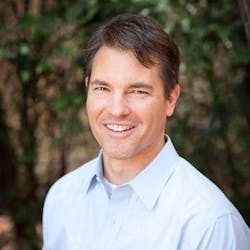
Paul Timm, Director of Education Safety at Allegion, is a board-certified Physical Security Professional (PSP). He is the author of “School Security: How to Build and Strengthen a School Safety Program” and the host of “The Changing Face of School Security” podcast. Paul was named one of the Most Influential People in Security in 2020 by Security Magazine.
In addition to having conducted more than 2,000 vulnerability assessments and his frequent keynote addresses, Paul is an experienced School Crisis Assistance Team volunteer through the National Organization for Victims Assistance (NOVA). He serves on the Campus Safety Conferences Advisory Board, the Advisory Council for the Partner Alliance for Safer Schools, the ASIS International School Safety and Security Community, and the Illinois Association of School Business Officials Risk Management Committee.
Paul is certified in Vulnerability Assessment Methodology (VAM) through Sandia National Laboratories and the ALPHA vulnerability assessment methodology. Paul holds a Master of Arts in Biblical Studies from Moody Theological Seminary.

Steve Somers, CPP. CHSV brings over 40 years of security industry leadership experience to GardaWorld as Vice President for Strategic Alliances & Initiatives. In this role, Steve is responsible for leading, managing and supporting Strategic Alliances for GardaWorld, and ensures that the Garda companies he supports, maintain a consistent high quality service delivery to their clients. Steve joined GardaWorld in 2013 and ran one of our fastest growing and most profitable regions for 10 years prior to moving into his current position.
Steve currently serves in leadership roles for the Baltimore County Police Foundation, Washington DC Police Foundation, Maryland Chiefs of Police, National Capital Chapter of ASIS as well as their Law Enforcement Steering Committee, a founder of the Global Shield Foundation supporting the Global Shield Network, and previously on the Maryland Institute for Public Safety Leadership Command College, Metro Crime Stoppers, Howard County Police Foundation, and Maryland Crime Prevention Association. Steve is also active in the International Association of Chiefs of Police (IACP), and the International Association of Emergency Managers (IAEM).
Steve is Board Certified Protection Professional in Security (CPP) by ASIS International and certified in Homeland Security (CHS-V), a recipient of the E. J. Criscuoli, Jr., CPP volunteer leadership award and the Allan J. Cross award from ASIS International, the Michael Shanahan Award for Public, Private Partnership in conjunction with Johns Hopkins University and the Baltimore City Police Department and is a graduate of the International Security Management Association’s (ISMA) Advanced Leadership Program at Georgetown University ‘s McDonough School of Business.
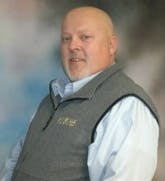
School Safety & Security Analyst, Idaho BOE. President, National Council on School Facilities. Founding Board Member: National Council of School Security Directors. Sub-committee chair for ASIS school safety standards.
With over 15 years of dedicated experience in school safety and security, Guy is currently serving as a School Safety and Security Analyst with the Idaho State Board of Education. His core competencies include comprehensive security operations, physical security, and corporate security. He is deeply committed to creating safe educational environments and his work reflects the mission and culture of my organization. A unique perspective, drawn from years of on-the-ground consulting, enables Guy to contribute meaningfully to the collective goal of protecting Idaho's students and educators.
In Guy’s most recent role, he has honed his skills in security risk management, providing vital analysis and consulting services to public K-12 and higher education schools across Idaho. He has been instrumental in addressing complex safety issues, resulting in enhanced security protocols and preparedness.
Register to view the October Campus Safety & Security Web Events here.