After the Cameras: What the Brown University Shooting Reveals About Campus Security Preparedness
Key Highlights
- Brown University has increased visible security patrols, expanded card access, and installed additional cameras to enhance physical safety across campus.
- Experts warn that simply increasing surveillance cameras is insufficient; layered, mobile, and proactive security measures are essential for effective threat prevention.
- A shift from reactive response to converged intelligence systems, including AI analytics and real-time situational awareness, is crucial for preventing campus violence.
- Strong communication, clear decision-making authority, and stakeholder engagement are vital components of a comprehensive campus safety culture.
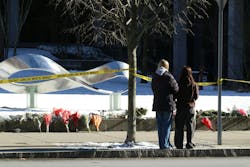
When Brown University announced on December 22 that it had placed its top public safety executive on administrative leave and commissioned multiple external reviews following the Dec. 13 campus shooting that left two students dead and nine others wounded, the move underscored a familiar institutional response to tragedy: pause, assess, and promise reform.
But among security professionals who have studied campus violence for decades, the significance of Brown’s announcement extends far beyond leadership accountability or the mechanics of an after-action review. The incident, and the University’s response, have reignited a broader and more uncomfortable question confronting higher education nationwide: whether campuses are designing security systems to respond to violence, or to anticipate and disrupt it.
In her message to the Brown community, President Christina H. Paxson outlined three immediate steps: deploying a rapid response team to ensure campus safety through winter break and into the Spring 2026 semester; commissioning an independent after-action review of the shooting and emergency response; and launching a comprehensive, external campus safety and security assessment covering policies, infrastructure, training, and technology across College Hill and the Jewelry District. Former Providence Police Chief Hugh T. Clements was named interim vice president for public safety and chief of police, reporting directly to the president.
According to Brown University administrators, many of these enhanced security measures will be in place before the University resumes full operations after winter break on January. 6, and others will be phased in before the start of the spring semester.
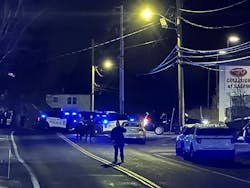
Enhancements are focused on the following areas:
- Physical Safety Staffing and Visibility. Brown University will sustain the increased presence and patrol of police, public safety officers and security guards, as well as prioritizing a visible security presence across buildings, pedestrian corridors and gathering areas.
- Card Access Expansion. The small number of buildings with key-based access will be converted to card access on an accelerated timeline, with academic and mixed-use buildings prioritized.
- Camera Coverage. Additional security cameras will be installed across campus, including at Barus & Holley, as part of an overall effort to assess and address camera coverage across building entrances, common areas, circulation spaces and surrounding environments. New blue-light phones will include integrated cameras.
- Panic Alarms and Duress Systems. With a focus on front-facing service areas and late-night operations (e.g., dining facilities), the University will expand the use of panic alarms.
- Events, Athletics and Known High-Population Activities. Events on the spring semester calendar, including athletic events and all known high-attendance activities, will continue to be assessed as part of the event security review launched earlier this fall for high-profile events.
- Operational Ramp-Up and Population Return. We are planning thoughtfully for the phased return of students, faculty and staff from winter break. This includes ensuring campus physical security and preparing for significant increases in safety and security staffing to support higher population density as we work toward resuming full academic and residential operations.
For seasoned security leaders, these steps reflect seriousness but also expose a recurring pattern across higher education: robust post-incident scrutiny paired with unresolved pre-incident blind spots.
The Illusion of Readiness
“In the wake of a campus shooting, attention often narrows to cameras, alerts, and response timelines,” said Chuck Randolph, senior vice president of strategic intelligence and security at 360 Privacy and a retired U.S. Army lieutenant colonel. “But tabletop exercises reveal something more useful—and more uncomfortable.”
According to Randolph, institutions that run realistic tabletop scenarios consistently encounter the same three failures: decision-making paralysis under uncertainty, breakdowns at operational handoffs, and technology that overwhelms rather than accelerates judgment.
“Camera counts or system size are poor measures of readiness,” Randolph said. “What matters is whether teams can rapidly identify relevant feeds, share them across operations and law enforcement, and translate visual information into action.”
This distinction is critical on large, historically complex campuses like Brown’s. Surveillance gaps are rarely the result of negligence; more often, they stem from fragmented ownership across facilities, IT, and public safety departments. When accountability is diffuse, Randolph noted, blind spots endure.
Camera counts, or system size, are poor measures of readiness. What matters is whether teams can rapidly identify relevant feeds, share them across operations and law enforcement, and translate visual information into action.
- Chuck Randolph, senior vice president of strategic intelligence and security at 360 Privacy.
“Active-shooter response is ultimately a leadership challenge under time compression,” he said. “Decisions about lockdowns, sirens, or shelter-in-place have to be made with partial information. Mature institutions rehearse those decisions long before the incident ever occurs.”
Why More Cameras Are Not the Answer
The public narrative following campus shootings often fixates on the number of cameras deployed. Brown, like many universities, reportedly operates an extensive surveillance network. But experts caution that raw numbers can be misleading.
“A campus with 1,200 cameras doesn’t guarantee 100% coverage,” said Glen Kucera, president of Enhanced Protection Services at Allied Universal. “The sheer size of most universities makes it unrealistic to expect static cameras alone to monitor an environment that stretches for miles effectively.”
Infrastructure constraints compound the challenge. Older buildings may lack sufficient wiring or power, and historic preservation regulations may restrict equipment placement. “Finding solutions for coverage gaps is far more complicated than just buying more hardware,” Kucera said.
He argues that modern campus surveillance must be layered and mobile. Drones and other deployable tools, he noted, provide rapid, on-demand visibility during large gatherings or unfolding incidents. Just as important, centralized command centers staffed around the clock ensure that video is actively monitored rather than reviewed after the fact.
“Security has to be proactive, not reactive,” Kucera said. “When planning, technology, and partnerships with local law enforcement come together, campuses are far better positioned to prevent incidents rather than simply respond to them.”
From Reaction to Converged Intelligence
Ryan Knoll, regional sales director at Motorola Solutions and a specialist in security convergence, frames the issue more bluntly.
“Reactive security is nothing more than an expensive archive of a tragedy,” Knoll said. “If we want to prevent future events, we have to bridge the gap between detection and response.”
Knoll advocates for treating campus security as a unified intelligence ecosystem rather than a collection of siloed products. In this model, AI-driven analytics create “virtual perimeters” that preserve campus openness while enabling early threat detection.
“Open cannot mean unprotected,” he said. “We can detect anomalies—visible weapons, unusual motion, acoustic gunshots—before a breach occurs, allowing intervention without turning campuses into fortresses.”
Tabletop exercises, Knoll added, repeatedly expose what he calls the “human reaction gap,” where hesitation costs lives. His recommended framework — detect, lockdown, and orchestrate critical actions — ensures alerts, access control, and communications proceed simultaneously, thereby avoiding delays.
Legacy infrastructure, he noted, does not preclude modernization. Existing cameras can often be upgraded with analytics appliances, and low-cost wireless sensors can provide real-time monitoring of doors and access points. Increasingly, camera sharing with dispatch and law enforcement shortens response times by providing first responders with real-time situational awareness.
Culture, Communication, and Shared Responsibility
Technology alone, however, cannot compensate for weak processes or disengaged stakeholders. Paul Timm, PSP, director of education safety at Allegion, emphasizes that adequate campus security begins with simple, well-communicated access control changes.
“Balancing openness with protection doesn’t require drastic moves,” Timm said. “If four doors are unlocked today, reduce to three next semester, two the next, and communicate clearly why.”
Timm also stresses the importance of positive reinforcement. Faculty and staff should be rewarded, not punished, for securing spaces and reporting suspicious behavior. Students, he argues, must be part of the solution.
“They’ve grown up with lockdown drills,” Timm said. “They understand rapid communication and can identify vulnerabilities administrators may never see.”
For campuses with aging infrastructure, Timm recommends a collaborative task force approach that prioritizes access control and communications first, then addresses surveillance incrementally. “People and process,” he said, “are just as critical as technology.”
What Brown’s Review Must Confront
Brown University’s forthcoming after-action review and campus safety assessment will examine policies, preparedness, response, and infrastructure. Security experts say the real test will be whether the findings address governance, decision authority, and integration—or merely catalog equipment and timelines.
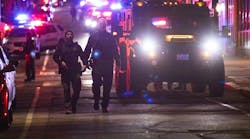
“The enduring takeaway,” Randolph said, “is that response quality is decided long before the incident begins.”
If Brown’s review leads to clearer authority, rehearsed decision-making, converged intelligence systems, and a campus-wide culture of shared responsibility, it could serve as a model for higher education at a moment when campus violence is no longer hypothetical.
If not, it risks becoming another well-intentioned document produced after certainty arrives when uncertainty, preparation, and decisive leadership mattered most.
About the Author
 Steve Lasky
Steve Lasky
Editorial Director, Editor-in-Chief/Security Technology Executive
Steve Lasky is Editorial Director of the Endeavor Business Media Security Group, which includes SecurityInfoWatch.com, as well as Security Business, Security Technology Executive, and Locksmith Ledger magazines. He is also the host of the SecurityDNA podcast series. Reach him at [email protected].