What It Takes to Secure the 2026 World Cup
Key Highlights
- The 2026 FIFA World Cup will require unprecedented coordination among federal, state and local agencies as well as private-sector partners across 16 host cities in three countries.
- Emerging technologies including AI, digital twins and advanced analytics are helping security teams improve situational awareness, test scenarios and accelerate decision-making before and during the tournament.
- Drones, cyber threats and the convergence of digital and physical security risks are forcing planners to rethink how they protect venues, transportation systems and public spaces at scale.

For the next 39 days, the world's attention will be focused on North America as the 2026 FIFA World Cup gets underway. The largest tournament in the event's history will feature 48 nations competing in 104 matches across 16 host cities in the United States, Canada and Mexico. The tournament culminates July 19 at MetLife Stadium in New Jersey.
Behind the matches, however, lies one of the most ambitious public safety and security undertakings ever attempted across the continent. Millions of visitors are expected to travel between host cities, requiring unprecedented coordination among federal, state and local agencies as well as private-sector security partners responsible for protecting venues, transportation systems and surrounding public spaces.
To gain insight into the planning behind that effort, SecurityInfoWatch turned to Carl Ghattas, a former FBI national security agent and homeland security expert with Booz Allen who has supported World Cup security planning activities.
In this executive Q&A, Ghattas discusses how security preparations for a global event of this scale have changed since the United States last hosted the World Cup in 1994, the growing role of AI and digital-twin technology, concerns surrounding drones and cyber threats, and the lessons security leaders can apply long after the tournament’s final whistle.
Threat landscape evolution
SIW: The U.S. last hosted the FIFA World Cup in 1994. From a homeland security perspective, what are the most significant ways the threat environment has evolved since then, particularly for large, multi-city sporting events?
Ghattas: In 1994, attendance at the FIFA World Cup was approximately 3.5 million people. This year, the U.S. anticipates at least 5-7 million international visitors. As the scale of the event has changed dramatically, so has the threat environment.
Over the past three decades, technology and the public’s access to it have evolved more quickly than governments have been able to respond. Now we’re facing increased complexities with the mix of physical, digital and environmental risks. Enhanced technologies from AI to biotechnology to unmanned aircraft systems (UAS) are no longer hard to get ahold of. This presents unique challenges for the bodies responsible for securing large scale events, such as the World Cup.
Complexity of multi-jurisdictional coordination
SIW: The 2026 World Cup will span multiple cities, states and agencies. What does effective multi-agency security coordination look like at this scale today, and where does it tend to break down?
Ghattas: At the scale of the 2026 World Cup, effective security coordination is less about individual agency capabilities and more about whether everyone is operating from the same real-time understanding of the environment. With matches spread across cities and states, success depends on a shared operating picture that allows federal, state and local partners to see the same information, assess risk collectively and act in sync.
Coordination most often breaks down at the seams. Siloed systems, uneven data sharing and unclear command structures can quickly undermine even well-trained teams. When situational awareness differs across jurisdictions, response slows, effort is duplicated and manageable incidents can escalate. Getting coordination right means aligning governance, technology and operational playbooks well before the first match kicks off.
Securing a global, multi-city event today requires managing converging threats at unprecedented scale.
Cyber-physical convergence risks
SIW: Major events today depend heavily on connected systems, from access control and surveillance to transportation and communications. How are cyber scenario simulations being used in World Cup planning, and what types of operational disruptions are these exercises designed to anticipate?
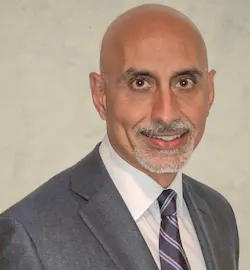
Ghattas: As major events rely more heavily on interconnected digital and physical systems, World Cup planners are likely using cyber-physical scenario simulations to understand how disruptions can cascade across operations. These exercises focus less on predicting a single failure and more on stress-testing how systems, agencies, and decision-makers respond when multiple dependencies are disrupted at the same time.
Digital twins are increasingly used across industries to run “what if” scenarios. The same should occur at all World Cup venues before the event even begins. Planners can model crowd movement after transit disruptions, rehearse responses to cyber-enabled physical attacks, and assess how outages in power, communications or surveillance could affect safety and mobility. The goal is to reduce uncertainty and shorten response times before real-world consequences are on the line. Capabilities in this regard vary from host city to host city.
Drone and airspace security concerns
SIW: The federal government has emphasized counter-UAS planning ahead of major events. What makes drones such a uniquely difficult threat to manage, and how are authorities approaching detection, identification and response without disrupting legitimate activity?
Ghattas: Drones are uniquely difficult to manage at major events because they sit at the intersection of legitimate recreational use and real security risk. They are inexpensive, widely accessible and easy to operate, yet even small systems can cause serious harm in dense environments. At the scale of the World Cup, where venues are surrounded by public spaces and complex airspace activity, distinguishing between benign and threatening behavior becomes especially challenging.
Authorities are increasingly focused on early detection, identification and context-driven response. The priority is not simply spotting a drone, but understanding what it is doing, where it is going and whether its behavior indicates risk. That requires persistent airspace awareness and the ability to share insights across agencies in real time.
Hidden Level’s technology and capabilities support an approach like this by providing continuous monitoring of low-altitude airspace, allowing officials to assess intent and respond proportionally. The goal is to intervene early when behavior becomes concerning, while minimizing disruption to lawful activity and keeping public safety at the forefront.
AI and digital twin applications
SIW: AI-driven analytics and digital twins are being discussed more frequently in public safety circles. In practical terms, how are these technologies improving situational awareness and decision-making for large-scale events?
Ghattas: At large-scale events, speed and clarity matter. AI-driven analytics and digital twins are changing how public safety teams detect, understand and respond to risk. Digital twins provide a real-time virtual view of the event environment as well as the opportunity to test for vulnerabilities and gaps before an event begins; while AI analyzes live inputs such as crowd density, video feeds and sensor data to surface patterns and flag emerging issues.
The result is faster insight. Instead of reacting to fragmented information, decision-makers gain a shared, predictive view of what is happening and what may happen next. That shift enables quicker, more confident decisions and more coordinated responses when seconds matter.
Information sharing and intelligence fusion
SIW: With so many agencies and private partners involved, how is information sharing being structured to ensure the right data reaches the right people without overwhelming operators or introducing new risks?
Ghattas: At events of this scale, the challenge is not access to information but ensuring the right information reaches the right people at the right time. With dozens of agencies and private partners involved, unstructured sharing can overwhelm operators and lead to conflicting interpretations of what is happening on the ground.
Information sharing is increasingly organized around a common operating picture that serves as a single source of truth. Additive platforms like Booz Allen’s Sit(x) ingest information from various sensors and translates data into an easy-to-understand format. This allows federal, state, local and on-scene teams to work from the same real-time view while tailoring what each role sees based on mission needs. By fusing and prioritizing data from multiple sources, analytics and automation help filter noise and surface actionable insights, enabling clearer coordination and faster, more confident decisions in rapidly evolving situations.
Lessons for everyday security operations
SIW: Beyond the World Cup, what lessons from this level of planning and coordination should resonate with security professionals responsible for transportation hubs, campuses or other high-traffic public venues year-round?
Ghattas: One of the clearest lessons from World Cup-level planning is that shared situational awareness and coordinated response should not be reserved for marquee events. Transportation hubs, campuses and other high-traffic public spaces face many of the same challenges every day, including dense crowds, overlapping jurisdictions and threats that can move quickly across physical and digital domains.
What large-scale event planning reinforces is the value of discipline and preparation. Aligning partners early, rehearsing scenarios, and operating from a common operating picture allows teams to respond with confidence instead of improvisation. The World Cup underscores that these capabilities are long-term investments in resilience, not one-time efforts, and when they are embedded into daily operations, organizations are better prepared to protect public safety every day, not just on the world stage.
About the Author
 Rodney Bosch
Rodney Bosch
Editor-in-Chief/SecurityInfoWatch.com
Rodney Bosch is the Editor-in-Chief of SecurityInfoWatch.com. He has covered the security industry since 2006 for multiple major security publications. Reach him at [email protected].