The Leadership Question That Changes Everything

Recently, my wife and I had dinner at Cantina Contramar, a relatively new restaurant inside the Fontainebleau Hotel on the Las Vegas Strip. We were dining with another couple and thoroughly enjoyed the experience. But it wasn't the food that stayed with me. It was something our server said at the end of the meal that reminded me of one of the most important lessons in leadership.
Getting Feedback
As we finished dinner, our server asked us two questions.
The first was predictable:
"What was your favorite dish?"
We gladly shared our answers. That seemed like a perfectly normal question for a restaurant server.
Then came the second question.
"What was your least favorite dish?"
That caught my attention.
Each of us shared a dish we thought could have been better and explained why. What struck me most was that the server wasn't asking to defend the menu or to explain away our opinions. Instead, he told us he was gathering feedback to share with management so they could continue improving the restaurant.
That brief exchange spoke volumes about the culture they were trying to build. Even when customers leave happy, they understand there's always room to improve. It reminded me of what may be the most powerful question any leader can ask:
"What can we do better?"
Great Leaders Seek Feedback Before They Need It
Too often, leaders wait until something goes wrong before asking for feedback. Employee engagement declines. Customers leave. Performance slips. Trust erodes.
By then, valuable opportunities have already been lost.
The strongest leaders don't wait for problems to appear. They seek feedback while things are going well because they understand that success can create its own blind spots.
I learned this lesson early in my career at Microsoft.
After assembling my leadership team, I brought in an expert in emotional intelligence (EQ) to help us become a stronger leadership group. We held several off-site sessions where we focused on communication, trust, and collaboration.
One of the most valuable parts of the process was feedback.
After completing individual assessments, the team, guided by the EQ coach, gave me candid feedback about how I could become a better leader. Then I left the room while they spent several hours giving one another honest feedback.
It wasn't always comfortable. In fact, at times I could hear raised voices from outside the meeting room.
But something remarkable happened.
Over time, those conversations strengthened our team. We learned to be honest without being destructive. We challenged one another professionally instead of making disagreements personal. We debated tough business decisions openly, trusted one another more deeply, and became far more effective as an organization.
Feedback helped us cut through assumptions, politics, and ego. It enabled us to focus on solving the right problems instead of protecting individual opinions.
When people stop asking questions, they often begin believing they already have all the answers. That's when growth begins to stall.
Nothing encourages future feedback more than seeing today's feedback lead to meaningful change.
Feedback Is a Leadership Discipline
Many leaders proudly say they have an open-door policy.
Far fewer consistently ask for honest input.
There's an important difference between being willing to receive feedback and intentionally seeking it.
The best leaders build feedback into the rhythm of their leadership.
They ask their direct reports:
- What should I continue doing?
- What should I stop doing?
- What should I start doing?
- What am I not seeing?
They ask their peers:
- How can we work together more effectively?
- Where am I unintentionally creating friction?
They ask their supervisors:
- Where can I grow as a leader?
- What skills should I be developing for the future?
And they ask customers and business partners:
- How can we serve you better?
- Where are we falling short of your expectations?
These questions create something every leader needs but can never fully achieve on their own: perspective.
Blind Spots Don't Disappear on Their Own
Every leader has blind spots.
In fact, the higher someone rises within an organization, the more likely people are to filter what they say. Employees often hesitate to deliver difficult truths. Peers avoid uncomfortable conversations. Customers may simply take their business elsewhere rather than explain why they're dissatisfied.
I wasn't immune to this.
Throughout my career, I worked hard to remind myself that I didn't have all the answers. Some of our best strategic decisions came because someone on my team challenged my thinking. They were the people closest to the work and responsible for executing the strategy. Ignoring their perspective would have been a mistake.
But feedback only works when leaders create an environment where people feel safe speaking honestly.
If employees fear criticism, retaliation, or being ignored, they'll tell leaders only what they think those leaders want to hear.
The best leaders do the opposite.
They listen without becoming defensive. They ask follow-up questions instead of offering excuses. They thank people for their honesty. Most importantly, they act on what they learn.
Nothing encourages future feedback more than seeing today's feedback lead to meaningful change.
One Simple Question
It's amazing that such a powerful leadership reminder came from a conscientious restaurant server on the Las Vegas Strip.
Imagine the impact on that restaurant if every employee approached customer conversations the same way—constantly seeking ideas for improvement rather than assuming everything was already good enough.
That's how great cultures are built.
Continuous improvement isn't driven by perfection. It's driven by curiosity, humility, and a willingness to learn from others.
The same principle applies to every organization, regardless of its size or industry.
The most effective leaders never stop asking questions because they know leadership isn't about having all the answers. It's about creating an environment where better answers can emerge.
So, here's a challenge for every leader.
The next time you finish a meeting, complete a project, or celebrate a success, don't simply ask what went well.
Ask the question that matters most:
"What can we do better?"
You may be surprised by the answers and by how much stronger your organization becomes because you were willing to ask.
About the Author
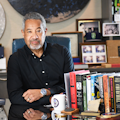 Mike Howard
Mike Howard
President of Howard Consulting Services
Mike Howard currently is President of Howard Consulting Services, LLC, a security consulting and mentoring firm based out of Las Vegas Nevada. Howard is the former Chief Security Officer (CSO) for Microsoft Corporation and held global responsibility for vital security functions including operations, investigations, risk mitigation, crisis management, executive protection, security technology, strategy, intelligence, and employee awareness. Mike was the CSO of Microsoft for 16 years. Mike speaks regularly as a subject matter expert on security and leadership while using his extensive security background to help drive industry innovation.
He spent 22 years with the Central Intelligence Agency, finishing as a Chief of Station. Mike also worked in the CIA’s Office of Security and served on the security staff of the Director of Central Intelligence. He worked in the Counterterrorism Center, ran global programs, and served in assignments around the world. Mike’s first book, “The Art or Ronin Leadership,” is available now.