Video Surveillance Industry on the Defensive
Key Highlights
- Public backlash over Flock’s ALPR cameras has put the whole video surveillance industry on the defensive and made cameras harder to sell in 2026.
- Axis research shows people accept surveillance when they know where the cameras are, why they’re there, and who has access.
- Integrators can earn trust by asking customers one simple question: “How do you deal with privacy today?”
This article originally appeared in the November 2026 issue of Security Business magazine. Don’t forget to mention Security Business magazine on LinkedIn or our other social handles if you share it.
If you talk to anyone outside the security industry and ask them what their thoughts are on security and video surveillance, odds are they are going to say something about Flock, as the news these days is flooded with stories of public outrage and protest over the misuse and abuse of automatic license plate recognition (ALPR) camera technology that for decades has been used to solve crimes, save lives and keep cities safer.
The entire video surveillance industry now finds itself on the defensive. Selling cameras is simply more difficult in 2026, whether you are a manufacturer, an integrator installing systems, or even a consultant designing and specifying them. Questions about privacy, cybersecurity, and abuse of footage must be answered definitively, even when it comes to the simplest of public-facing systems.
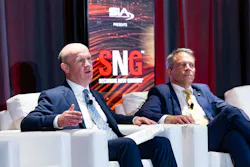
“I always say that one of my biggest fears for the industry is that someone makes a big mistake that impacts our whole industry when it comes to cybersecurity and it kind of brings down trust for the industry as well,” says Fredrik Nilsson, VP of the Americas, Axis Communications. “And I think there’s been a lot of the negatives in the press lately: who got access to the data and access to the systems as well … how you interconnect data from different systems into one system to do large-scale tracking of people's cars.”
As Nilsson points out, we have already seen some cities that have turned off their surveillance cameras because of public scrutiny over Flock. “And then they had some big crime, and then everyone said, ‘you've got to turn it all back on again,’” says Nilsson. "You need to make sure you understand who has access to the data. I had one guy who was working with this kind of technology for a police department in the office a couple of weeks ago and he said it all comes down to who has authorized access to the data and how do you make sure it's going to lock down so only the people who should be investigating could actually have access to the data.”
During the Securing New Ground conference in October, Security Industry Association (SIA) CEO Don Erickson interviewed Flock’s Senior VP of Sales Sean Kay, in an off-the-record session that emphasizes the industry’s concern over the public outcry.
“People looking at our industry are reading every day about Flock, and rightly or wrongly forming different opinions, and they think the industry is about mass surveillance, which it's not,” says Erickson. “So, we need to work together to correct the perception of the industry. What's interesting is that you have a lot of former and current law enforcement speaking out about the effective use of the technology. It is a tool, but we need guardrails. So, LPR providers need to be transparent about how technology works and who has access to the technology. You’ve got to have mechanisms in place for audits, and police departments must have policies preventing abuse and unauthorized access. I think we all agree on that.”
Currently, there are several states that have enacted legislation around the use of ALPR cameras and technology, with many other state and local guardrails put in place, while others are discontinuing the use of the cameras altogether. Meanwhile, Flock is working to win back the public trust with the addition of new safeguards the company has put in place (see sidebar).

“Public scrutiny forces us to wrestle with questions our industry needs to answer,” adds Shaun Castillo, president, Preferred Technologies, LLC. “As the capabilities of video continue to advance, it won't be enough to demonstrate that we can do something. We'll need to be able to explain why we're doing it, how we're protecting people in the process, and whether the value we're creating justifies the intrusion required to create it.”
Gauging and Changing Public Opinion
In a recent poll done by Axis Communications, while nearly 60% of U.S. respondents say they are more comfortable with video surveillance than they were five years ago, more than half of respondents expressed a greater need and demand for privacy and ethical standards, as well as transparency and stronger data privacy protections.
“We noticed that in general, people were more positive toward security surveillance compared to five years ago if they knew where it was, if they knew why it was done, and if they knew who had access to it,” says Nilsson, noting the continuing concern for privacy and transparency. “And in many locations, such as transportation and retail, 70% of people said they had an expectation of it being secured and surveilled if they knew that there was someone credible who was managing and having access to the system as well. Also, the older people were, the more in favor they were of surveillance and the younger they were, the less in favor of surveillance, which I find very interesting given the current atmosphere on campuses, for example, which we heard about here at SNG.”
Regarding the backlash against LPR cameras, Erickson says it comes down to educating the public on the effective use of the technology, as well as putting better guardrails in place to ensure the ethical use of the cameras and data.
“I think SIA needs to do more of educating policy makers about how the technology actually works – separating myth from fact, talking about the databases and not selling data and things like that,” he asserts. “The second thing I think we've got to do, and we've talked about this internally a lot, is talk about the positive aspects of technology – the use cases, both on the commercial side and the public safety side. So, for example, focusing on the public safety side right now with ALPR [and its use in] finding missing kids, sending out Amber alerts, solving murder investigations, human trafficking, basic robberies … the list goes on and on. And if you look at the principles SIA put out on the ethical use of ALPR technology, in the back of that document, there's a number of those cases cited.”
Erickson points out what is happening right now with Flock not only impacts public perception but also workforce development for the security industry.
“It's how we present the industry, and so people looking at our industry are reading every day about Flock, and rightly or wrongly forming different opinions,” he says. “And they think the industry is about mass surveillance, which it's not. And so, we need to correct the perception of the industry, and I think we can get ahead of this. We need Flock to be successful, and SIA is not going to cut and run from Flock. We're going to help them and we're going to be involved in the regulatory piece.”
Nilsson agrees, noting that while there may be an initial “backlash for a little bit,” the industry can educate the public and lobby for the proper changes that are needed.
“You need to build a relationship with the community and explain what you're doing and why you're doing it,” he explains. “The technology has been around for a long time, and LPR cameras are becoming very capable and there's a huge demand for those applications. I know some large crime centers, and they love the solutions because they can easily track things down if something happens and see where the car has come from and solve crimes a lot quicker, which saves tax money and provides for a safer environment.”
Privacy isn’t the price we pay for more intelligent security; it’s part of how we earn the trust to use more intelligent security.
Leaning into the Privacy Conversation
From the integrator’s perspective, Castillo thinks security professionals may be more intimidated by the privacy conversation than many of their enterprise customers.
“But I don't think our industry should fear the privacy conversation – we should welcome it,” he asserts. “Privacy isn't the price we pay for more intelligent security; it's part of how we earn the trust to use more intelligent security. There is so much public scrutiny around surveillance, AI, and data collection that it's easy for us to become defensive about the subject or, worse, avoid bringing it up altogether. I think that's exactly the wrong response.”
As Castillo points out, this is an opportunity for security professionals to build trust not lose it.
“The good news is that most of our enterprise customers have IT, cybersecurity, legal, and privacy professionals who have been wrestling with these issues for years,” he says. “They've already had to think through what data they collect, how they protect it, who should have access to it, how long they retain it, and what standards should govern its use. We don't need to reinvent the wheel simply because some of that data is now coming from a camera. Rather than being intimidated by the conversation, we can start with a remarkably simple question: ‘How do you deal with privacy today?’”
He continues, “Then listen. Understand the standards the customer has already established and work alongside them to apply those same principles to the security environment. We may even find opportunities in the process to help them strengthen their standards. And I think something much bigger happens when we approach privacy that way: we build trust. If people believe we're going to use increasingly powerful technology thoughtfully, transparently, and responsibly, we earn the trust necessary to take advantage of what that technology can do.”
And while there is a temptation to see privacy as something that restricts innovation, Castillo sees it differently.
“Trust creates room for innovation,” he says. “When employees, customers, stakeholders, and communities believe an organization will use powerful technology responsibly, they're more likely to have confidence in the way that technology is being deployed. And I think that creates an important responsibility for those of us in the security industry. The measure of a sophisticated security program won't simply be how much technology it can deploy or how much information it can collect: It will also be demonstrated by the restraint and judgment it exercises.
“The future of surveillance isn't seeing more. It's knowing what deserves our attention, understanding what we should do with that information, and having the discipline to leave the rest alone.”
Flock Introduces New Safeguards Amid Growing Public Concern
Flock CEO Garrett Langley recently announced some additional safeguards the company has introduced in their effort to strengthen privacy, accountability, and security around the use of the company’s ALPR cameras.
The biggest changes come to how the company is dealing with accountability, including stronger auditing measures and requirements for law enforcement agencies.
“Abuse of Flock technology, at any level, is unacceptable,” said Langley. “We have strengthened safeguards over the past nine years, from basic audit logs to proactive monitoring. 16 weeks ago, we introduced Audit Assistance, which detects abnormal activity and flags it for Administrator review. In recent weeks, those reviews have been associated with arrests of several law enforcement officers who allegedly abused the system.”
While more than one-third of Flock customers have voluntarily adopted Audit Assistance, the company will now require all law enforcement customers to adopt this feature by the end of this year. “In addition, we will institute proactive lockout,” he explains. “When a user’s activity meets defined criteria for abnormal behavior, Flock will automatically suspend access pending administrator review. The goal is to intervene before misuse becomes recurring or widespread.”
A Review of the Key Flock Safety Changes
Privacy and Data Retention
- Flock's recommended default ALPR data retention period will be reduced from 30 days to seven days.
- A new feature called Evidence Mode will allow investigators to preserve specific ALPR data tied to active cases while keeping it in cold storage.
- Existing customers will retain their current retention policies unless they choose to adopt the new seven-day recommendation.
- Agencies will be able to apply offense-based sharing restrictions that determine what types of investigations outside agencies can use to search their camera network. For example, departments could permit searches related to violent crime, stolen vehicles or missing persons while restricting access for other purposes.
Accountability Measures
- Flock will require all law enforcement customers to use its Audit Assistance program by the end of the year.
- The system monitors user activity and flags potentially abnormal behavior for agency review.
- Langley said recent reviews generated through the program were associated with arrests of several law enforcement officers accused of misusing the system.
- Flock also plans to implement automatic lockouts when user activity meets predefined criteria for suspicious behavior, suspending access until administrators complete a review.
Mandatory Case Numbers
- By the end of the year, all law enforcement searches will require a case number.
- Emergency searches will remain permissible without a case number, but those searches will automatically be flagged for administrative review.
About the Author
 Paul Ragusa
Paul Ragusa is the Editor-in-Chief for Security Business magazine, an Endeavor Business Media Security publication. He has more than 10 years experience covering the security industry, as editor of Security Systems News for 6 years and 4 years at Locksmith Ledger.