Dallas Embraces AI-Powered License Plate Cameras Amid Rising Scrutiny
Key Highlights
- Dallas police utilize over 600 license plate-reading cameras, significantly aiding in crime investigations and arrests.
- Flock Safety's technology analyzes vehicle features beyond license plates, enabling more comprehensive surveillance and investigative leads.
- While courts have upheld the use of license plate readers, concerns persist about warrantless tracking and long-term data storage.
- Some local governments have chosen to end or not renew contracts with Flock Safety due to privacy and civil liberties worries.
Hours before the sun rose on Dallas police Chief Daniel Comeaux’s first day on the job, an elderly man in a wheelchair was shot dead near Fair Park.
Two days later, the new chief stood among a cluster of officers outside the suspected gunman’s home in west Oak Cliff. He was impressed by one tool the investigators had used to arrive there: the network of license plate-reading cameras scattered across the city.
“I was like, ‘Alright,’” Comeaux recalled saying, referencing the April case months later in an episode of Bridging the Divide, the Assist the Officer Foundation’s podcast, “‘explain this whole Flock camera.’”
Investigators tied the suspect to a second fatal shooting earlier the same month. The story, Comeaux said, was one of his favorites to tell. The chief described how the clarity of the vehicle images surprised him and how officers, with those photos in hand, were able to build a case for the arrest.
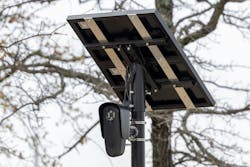
The license plate-reading cameras, usually mounted on 12-foot poles, have quickly become standard in police departments across the country, including the Dallas Police Department. Documents recently obtained by The Dallas Morning News through open-record requests indicate Dallas police utilize hundreds of the cameras across the city.
The fast-spreading surveillance network is often lauded by investigators, with many crediting the tool as one of their most effective in identifying suspects, making swift arrests and solving crimes.
Civil-liberties advocates are uneasy about the technology’s rise. Those concerns have sometimes turned to action: In Texas, a handful of city and county governments have turned away from Flock Safety, one of the dominant private vendors providing the technology.
In those instances, their elected bodies debated the technology’s usages and moved to end or not renew their contracts with Flock Safety.
What is Flock Safety?
Founded in 2017, the Atlanta-based company markets its technology to law enforcement agencies, as well as homeowners associations and private businesses — many of which share their video access with law enforcement.
One of the company’s cofounders, Garrett Langley, told Forbes in an article published in September that they had more than 80,000 AI-powered license-plate cameras across the United States.
About 5,000 police agencies use the company’s tools, he told the magazine.
The company markets what it calls its “vehicle fingerprint technology,” a system that doesn’t just read license plates but analyzes a vehicle’s make, model, color and other cosmetics — like bumper stickers or decals — to flag it across a network of cameras.
The technology, according to company documents, can identify vehicles with paper tags or no tags at all, search for them without a plate number and match images with scanned vehicles to generate investigative leads.
Langley said in the Forbes interview that Flock’s systems help solve an estimated million crimes a year and predicted that, within a decade, its nationwide network of cameras and drones could nearly eliminate crime.
In Dallas, police have access to more than 600 license-plate reading cameras throughout the city, according to documents recently provided to The News through open records requests.
The City Council approved a three-year, $5.7 million contract with Flock Safety in May. More than $3.9 million will be paid out from the city’s general fund, with the remainder coming from a nearly $1.7 million grant from the Texas Department of Motor Vehicles and a $125,000 grant from the U.S. Department of Homeland Security.
Flock is not alone in selling the technology. Its competitors include Axon Enterprise, the Scottsdale, Ariz., company behind the Taser and an early adopter of police body-worn cameras; and Motorola Solutions, the Chicago-based company whose products are embedded in departments across the country.
Worries about privacy, possible uses
Critics of Flock and other companies’ license plate-reading technology fear the products are being used as part of the Trump Administration’s heightened immigration enforcement efforts.
In a June response posted to its website, Flock said local agencies retain discretion over whether or not to share their camera data with federal agencies.
Others, including the American Civil Liberties Union, contend the tool lacks governing rules and have pointed out specific use cases they see as problematic.
One such example earlier this year came from Johnson County, southwest of Dallas, where a sheriff’s sergeant used the tool while trying to locate a woman authorities had been told might have had an abortion.
In an interview with The News, Johnson County Sheriff Adam King described the search as a welfare check for a woman believed to be harmed or in danger. The woman, he added, was not under investigation at any point and was not facing any charges.
In the company’s statement responding to concerns about federal access, Flock echoed King’s description of the Johnson County search as a welfare check.
So far, courts that have considered license-plate readers have upheld their use, finding that drivers have little expectation of privacy when it comes to plate numbers visible on public roads. One recent lawsuit in Virginia argues the long-term databases of vehicle movements cross a constitutional line by enabling continuous tracking without a warrant.
In that case, two Hampton Roads residents are suing the city of Norfolk, Va. They contend the city’s use of a network of Flock license-plate readers amounts to unconstitutional, warrantless surveillance in violation of the Fourth Amendment, according to The Virginian-Pilot.
Another question is where the cameras are placed. The exact locations are often withheld by police departments, including by Dallas police, in response to inquiries or open records requests.
A crowd-sourced website created by privacy advocates, deflock.me, aims to map Flock cameras around the world and says it has identified more than 58,000 of them.
The presiding judge in the Virginia case ruled earlier this month to unseal a list showing the locations of more than 600 Flock cameras across the Hampton Roads region.
©2025 The Dallas Morning News.
Visit dallasnews.com.
Distributed by Tribune Content Agency, LLC.