emotivae video analysis
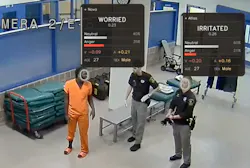
emotivae is a deep-tech behavioral prediction platform that reads multimodal human signals in real time to identify pre-action patterns before critical events occur.
It combines affective neuroscience with multimodal AI to move beyond traditional emotion detection: rather than classifying faces into static emotion labels, the system models how emotional states evolve, escalate, and converge over time — recognizing the structured behavioral trajectories that precede aggression, theft, self-harm, and other at-risk behaviors.
The platform simultaneously analyzes micro-expressions mapped through Facial Action Units, macro-expressions and their deliberate suppression, blink rate, pupil dilation, body posture, gesture, and environmental context — from both live video streams and recorded footage.
This multimodal fusion is key: a single signal in isolation is noise, but a convergent pattern across multiple channels over time becomes a prediction. Uniquely, emotivae detects the mismatch between what a face tries to project and the underlying emotional activation that surfaces anyway — the point where intent becomes visible. The system achieves over 90% accuracy, validated across the world's leading public facial expression, emotion, and action datasets. emotivae serves security operators, healthcare professionals, and consumer experience teams.
In security and public safety, it delivers structured, probabilistic alerts to operators before an event occurs — pre-aggression, stress escalation, and at-risk pattern identification for public spaces, campuses, large venues, and critical infrastructure. In healthcare and consumer experience, it powers adaptive environments and actionable insights grounded in genuine emotional understanding.
Built for real-world conditions, emotivae operates reliably across varying lighting, camera angles, motion, and partial occlusions. Flexible deployment options include edge processing for ultra-low latency, on-premises installation for strict compliance and data residency requirements, secure cloud for distributed scenarios such as drones and body cameras, and hybrid architectures.
Privacy is foundational: emotion analysis runs without personal identification by default, with facial recognition available only in regulated security contexts where legally permitted and explicitly configured. Configurable sensitivity thresholds give organizations full control over false-positive rates for their specific use case.