TrustAI Access Control Software from TrustLogix
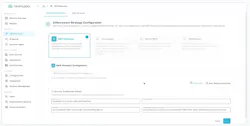
TrustLogix today launched TrustAI, the policy control plane that unifies governance across data platforms, AI pipelines, models, and autonomous agents. Built on the proven TrustAccess and TrustDSPM foundation, TrustAI establishes a unified policy fabric that operates at machine speed, ensuring consistent access decisions across the entire AI and data ecosystem—eliminating the dangerous gap between AI autonomy and traditional access controls.
"Healthcare AI without governance is a non-starter and Trustlogix lets us innovate with AI while staying compliant. They have been true partners in helping us move fast without breaking trust,” VP, IT, Healthcare and Biotech, Gartner Peer Insights review.
The AI Data Security Velocity Gap Organizations now face what analysts call a "velocity gap": humans govern at human speed while AI agents operate autonomously with broad, persistent access to sensitive data, often using standing credentials that never expire. Without adaptive controls, AI agents effectively become "super users," capable of accessing, modifying, or exposing data far beyond what any individual user should be capable of.
“In our focus on regulated industries like financial services and healthcare, it’s clear that privacy and compliance for AI are a major problem. Enterprises can't deploy AI agents at scale without an architecture that enforces access compliance automatically,” said Scott Raynovich, Founder and Chief Analyst at Futuriom.
"TrustAI provides the policy control plane these industries need: governance that operates at machine speed while maintaining the audit trails and data controls regulators demand." Beyond the Security-Innovation Tradeoff Security teams lack visibility into which agents access what data, on whose behalf, and for what purpose. Meanwhile, sensitive PII and PHI flow unchecked into AI prompts and models, creating regulatory exposure under frameworks like GDPR, HIPAA, and SOX. Without automated governance, security teams can become bottlenecks—forced to choose between blocking AI innovation or exposing the enterprise to unnecessary risk.
“The AI era demands a new trust architecture, and TrustAI delivers it,” said Ron Longo, CEO, TrustLogix. “We provide the policy fabric that embeds trust into every agent interaction, removing the false tradeoff between driving AI innovation and operating without control. Enterprises can move at machine speed because governance is built into the foundation.”
How TrustAI Works
A critical part of the TrustLogix Data Security Platform, TrustAI creates a unified policy fabric that governs every AI access decision—from data queries to AI pipeline operations to agent actions—ensuring consistent enforcement across platforms, models, and frameworks. It continuously evaluates every data request, from any agent, human or non-human, before data is returned, enforcing least-privilege access based on real-time context. TrustAI ensures that a single governance framework applies consistently whether data is accessed by a human analyst in Snowflake, an AI training pipeline in Databricks, or an autonomous agent making real-time decisions.
“With TrustAI, we’re delivering an architecture built for this AI-native world, where data, identity, and AI policy operate as one, enabling enterprises to deploy AI at scale with trust that’s designed, not assumed,” explained Ganesh Kirti, Founder, Board Chairman, and CTO, TrustLogix
Key capabilities:
Real-time authorization: Evaluates each request based on user identity, data sensitivity classification, and query intent—adapting policies dynamically rather than relying on static permissions
Just-in-time access: Replaces standing privileges with temporary entitlements granted only for specific tasks, automatically revoking access after use
Identity-aware enforcement: Bridges the gap between non-human agent identities and human user entitlements, ensuring agents can only access data the requesting human is authorized to see
Automated data masking: Leverages integrated DSPM capabilities to detect and mask sensitive fields like SSNs and health records before they enter AI context windows
Immutable audit trails: Logs every AI-data interaction with full traceability (who accessed what data, when, why, and under which policy) meeting emerging AI governance requirements.