EasyAssist Low Energy Swing Door Operator from dormakaba
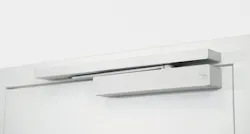
dormakaba has launched the EasyAssist smart access system, a new solution designed to simplify door operation for older adults, children and people with limited mobility. The company said the system is intended to improve comfort and safety while setting a new standard for barrier-free access to buildings and rooms.
The EasyAssist system can be retrofitted into existing facilities, including senior living communities, hospitals, nursing homes, hotels and administrative buildings. It also features low power consumption to support energy-efficient operation.
"Barrier-free access without unnecessary physical effort is becoming a key requirement for modern buildings," said Till Reuter, CEO of dormakaba. "With the EasyAssist system, we support people in their daily lives and provide an innovative solution that can be easily integrated into existing buildings."
The compact system combines four functions into a single solution. It provides electronic assistance to reduce the effort required for manual door opening, supports automatic opening with a light touch, enables touchless access in fully automatic mode and delivers controlled, quiet door closing.
According to dormakaba, the system is designed for straightforward installation because it uses the existing mounting points of conventional door closers. This approach allows the technology to be added to existing doors without extensive modifications.
The company first launched EasyAssist in the United States in April 2026. Germany and several Asian countries are scheduled to receive the system in July 2026, followed by Switzerland in spring 2027. Additional markets are expected to follow.
dormakaba said the system's development was informed by multiple research collaborations. The company partnered with universities in Germany to study ways to reduce the force required to open doors throughout their range of motion. It also worked with the Singapore Institute of Technology to examine the challenges older adults encounter when using doors in daily life.
The company said the product addresses growing accessibility needs driven by demographic changes. Citing the World Health Organization, dormakaba noted that the global population over age 60 is expected to reach about 2.1 billion by 2050, increasing demand for accessible environments that support health, safety and social participation.