Paxton Solo Replaces Legacy Access Control at Student Housing Site
Paxton’s new phone-based, cloud-hosted Solo access control system has been deployed at a student housing property in Staffordshire, U.K., replacing a standalone system used to manage access for approximately 500 residents.
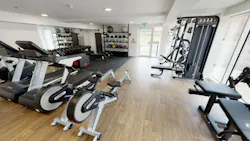
Homes for Students operates 235 student housing properties across the U.K. and Ireland. JPR Fire, Security and Data provides the security system for the One London Road property in Newcastle-under-Lyme, which includes five residential blocks and an onsite gym.
The property had been using a standalone access control system that did not require network infrastructure. Students gained access by entering an access code or presenting a fob.
Managing the system had become increasingly difficult, according to the companies, with site managers regularly replacing lost fobs and incurring additional operating costs.
Mike Gater, department manager at JPR Fire, Security and Data, approached the property about upgrading its access control after attending Paxton’s launch event for Solo.
Solo is a phone-based, cloud-hosted access control system that uses smartphones for system administration and door access. The system does not require network infrastructure at the property.
Using the Paxton Solo app, the site management team can administer access remotely from a smartphone. Students use their phones instead of access codes or physical fobs to enter their buildings.
When a smartphone with appropriate access permission is presented at a Solo-controlled door, the phone communicates with the Solo controller using Bluetooth Low Energy to instruct the door to open. Because the property has minimal Wi-Fi, the phone uses mobile data to confirm access permissions for the door.
If network connectivity is unavailable, credentials can be stored on the phone for three to four hours, allowing access while the phone is offline.
“As soon as we saw the Solo introduction, we knew it would be a great fit for our clients at One London Road,” Gater said. “The premises have no network infrastructure, so a standalone system was always going to be a requirement. But with approximately 500 students on site, our clients would really benefit from more features of a centralized system.”
JPR Fire, Security and Data ran Solo alongside the existing standalone system while students were migrated to the new platform in phases. Once residents were using the Solo app, the access code for the legacy system was changed to prevent students from continuing to use that method.
Gater said the system's cost was another factor in the decision.
“Aside from the benefit of Solo being cloud-based, with no network infrastructure requirements, the other real selling point for our customers was the price,” he said. “The upfront cost of the Solo kit is very accessible. Even with the ongoing cost of the door subscription, our clients would see a cost saving compared to extending their previous standalone system, as they were constantly replacing lost fobs in significant numbers.”

Expanding access beyond building entrances
The deployment also expanded access control to student common rooms. Previously, anyone who had gained access to the building could enter those areas. With Solo, residents must have appropriate access permissions and present their phones to a Solo DoorTag.
Tallulah-Mae Moran, general manager at Homes for Students, said the system has reduced the time and cost associated with physical fobs while providing additional information for managing the property.
“Paxton’s Solo system has reduced the ongoing costs of replacing fobs and time spent doing this,” Moran said. “The ability to see the date and time of who accessed which door is extremely useful for us and allows us to manage the site to a better standard and provides accurate information when investigating issues on site.”
Moran said the system also allows staff to set up and manage users remotely rather than distributing and collecting physical credentials.
Paxton, with U.S. headquarters in Greenville, South Carolina, is offering security installers a free two-hour online training session on Solo. Participating companies will receive a complimentary one-door Solo kit that can be used to evaluate the system and demonstrate it to customers.