Layered Security Strategies for Protecting Critical Infrastructure
Key Highlights
- Layered security models start from perimeter deterrence to high-security internal areas, ensuring comprehensive protection.
- Security entrances like full-height turnstiles, optical turnstiles, and mantrap portals are tailored to different security levels and facility needs.
- Regulatory compliance mandates strict access control, supervision, and record-keeping to prevent breaches and ensure accountability.
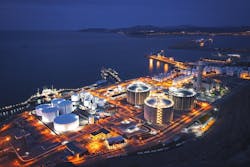
Critical infrastructure lies at the very foundation of modern civilization, providing power, water, fuel, connectivity and other vital resources to support every aspect of daily life. Even the slightest disruptions to these services can have far-reaching consequences for families, businesses, schools, the government and all other aspects of society.
As critical infrastructure facilities serve essential functions, they are governed by a host of regulatory compliance laws. These include the requirement to have a “defensible” physical security strategy in place, with only authorized individuals permitted on-site. Regulated sites must implement access control, have supervision to ensure access is controlled and maintain access records to verify compliance.
A defensible strategy is not only about perimeter access control. The best approach to protecting a facility is through a layered security model. This model starts at the outermost perimeter and becomes increasingly secure as one moves towards the most sensitive areas. The concept is to implement security measures of escalating strength, culminating in the most robust security at the facility’s core.
Importance of regulatory compliance
Security entrances play a vital role in this layered approach. These solutions can be categorized into three levels of security based on their ability to mitigate tailgating: deterrence, detection and prevention. Selecting the right security entrance for each area of the facility is critical.
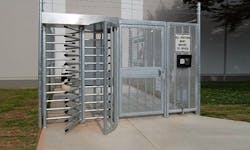
Deterrence — The first layer of security is deterrence. This is typically applied to the outermost perimeter of the facility, such as a fence line or parking area. Full-height turnstiles are a common choice here. These robust barriers physically prevent unauthorized individuals from entering while allowing access to those with valid credentials. While they are highly effective, it is essential to note that two individuals may attempt to pass through the same turnstile compartment, making this a deterrent rather than a complete solution.
Full-height turnstiles not only secure the perimeter but also provide a discreet pedestrian entry option, reducing the risk of unauthorized vehicles entering. Their durable construction ensures they can withstand harsh outdoor conditions, making them ideal for critical infrastructure facilities such as power plants, ports, or chemical facilities.
Detection — The second layer of security is detection, typically positioned in facility lobbies or reception areas. At this level, the goal is to detect unauthorized access attempts and respond accordingly. Optical turnstiles are a common security measure, combining sleek design with advanced sensor technology. They not only provide a visual barrier but also detect and alert security personnel to tailgating attempts.
Reception or guard staff can monitor these entrances, verifying visitor credentials and ensuring compliance. This setup provides an additional layer of accountability, as all entries and exits are monitored and logged. This level of security is crucial for large critical infrastructure facilities where visitor management is necessary.
Prevention — The final and most secure layer is prevention, suitable for the most sensitive areas of a facility. Security mantrap portals or high-security revolving doors are ideal for this level. These systems ensure that only one person can enter at a time, and they often require dual authentication methods, such as a biometric scan (fingerprint, iris, or facial recognition) and a security credential.
Mantrap portals are highly effective because they are self-contained. Users must pass through two interlocking doors, with the second door only unlocking once the first is securely closed. These portals can be configured to require additional identity verification, providing the highest level of access control. Security revolving doors offer a similar high-security solution, particularly for employee-only areas, where they can operate without continuous supervision.
Layered security in large, open facilities
Critical infrastructure facilities like power plants, refineries, ports and railways are often expansive, with open layouts and multiple access points. Implementing a layered security strategy in such environments is essential to ensure complete coverage. For instance, full-height turnstiles may secure the perimeter, while optical turnstiles can be deployed at lobbies for visitor management and mantrap portals are used for high-security internal areas.
Such a layered approach not only enhances security but also supports regulatory compliance. Regulations governing critical infrastructure frequently mandate secure access control, supervision of access and the maintenance of access records. By utilizing a variety of security entrances, facilities can demonstrate compliance and reduce the risk of penalties for non-compliance.
Ensuring accountability
One of the key advantages of security entrances in critical infrastructure is the level of accountability they enable. With modern access control systems, each entry and exit can be tracked, ensuring a verifiable record of who was present at any given time. Biometric integration further enhances this accountability by verifying that the person presenting the credential is the rightful owner.
Moreover, high-security portals and revolving doors can prevent common security breaches such as passback (one person handing their credentials to another) and tailgating (multiple individuals entering with a single credential). These advanced entrances ensure that each individual is correctly authenticated before gaining access.
While security is paramount, it is also essential that security entrances do not create significant delays for employees or visitors. Critical infrastructure facilities can be busy environments, with high volumes of foot traffic at peak times. The right combination of security entrances can ensure secure access without causing bottlenecks.
For example, high-security revolving doors can accommodate a steady flow of authorized employees without requiring supervision, while mantrap portals can be reserved for high-security areas where a slower, more controlled entry process is acceptable.
Protecting critical infrastructure with secured entrances
Ultimately, the protection of critical infrastructure is one of the highest priorities for any organization operating in this sector. Using the right mix of security entrances, a layered security strategy can ensure that only authorized individuals gain access, maintaining both regulatory compliance and operational safety.
A wide range of security products can enhance the protection of critical infrastructure. These include full-height turnstiles for perimeter security, optical turnstiles for monitoring visitor access in lobbies, and high-security portals for sensitive areas requiring strict access control. Additionally, biometric authentication devices like fingerprint or facial recognition scanners can be integrated for identity verification. Surveillance cameras, alarms and intrusion detection systems can further enhance site security, providing a multi-layered approach to access control.
Security entrances provide a scalable, efficient and reliable solution for safeguarding critical assets. Whether it is a power plant, a port, a water treatment facility, or any other essential service, a well-planned access control strategy can ensure that these vital resources remain secure and operational.
About the Author
 Brian Beideman
Brian Beideman
Regional Manager—Mid-Atlantic (DC, MD, VA, WV) & Public Sector, Boon Edam
Brian Beideman is a seasoned security industry professional with 30 years of experience in strategic business development and government-focused sales. His career spans work with the U.S. Intelligence Community, the Department of Defense, federal civilian agencies, and SLED markets. Beideman has sold enterprise-level software, hardware, and integrated solutions across a range of public sector applications, with expertise in FICAM, PACS/LACS convergence, HSPD-12 credentialing, and federal procurement. He has worked closely with system integrators, channel partners and prime contractors to support mission-critical security programs.