Genetec Report Charts the Industry’s Shift Toward Strategic Operations
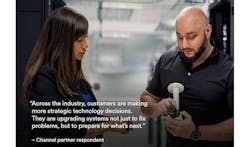
A new industry report by Genetec finds that physical security is increasingly being viewed as a strategic enterprise function rather than a standalone protective measure, as organizations modernize systems and align more closely with IT to improve resilience and long-term business value.
The "State of Physical Security 2026" report draws on survey responses from more than 7,300 physical security professionals worldwide and examines how evolving technology priorities, organizational collaboration and workforce pressures are reshaping the sector. According to the findings, organizations are moving beyond siloed systems and point solutions toward unified and integrated platforms that support more holistic security management and better decision-making.
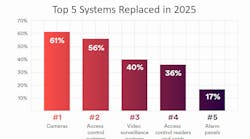
The findings suggest that physical security is no longer viewed solely as a protective function, but as a contributor to broader organizational objectives.
“Security is becoming a strategic function. When systems deliver intelligence alongside protection, they empower enterprises to innovate, adapt and lead in an era of constant change,” states Christian Morin, vice president of product engineering at Genetec, in the report.
Among other top takeaways:
- The report highlights growing interest in advanced technologies, particularly artificial intelligence (AI) and analytics. Among end users, interest in AI adoption has doubled, reflecting demand for tools that can automate tasks, reduce operational noise and improve efficiency. At the same time, cloud adoption continues to expand, with hybrid cloud models gaining momentum as organizations seek scalable solutions without sacrificing control or resilience.
- Collaboration emerges as a central theme throughout the report. Physical security teams are increasingly working alongside IT departments, as well as channel partners and manufacturers, to address cyber risk, manage data responsibly and deploy new technologies with clear operational objectives. The report notes that technology delivers value only when it is implemented intentionally and aligned with defined outcomes, rather than adopted for its own sake.
- Workforce challenges remain a persistent concern heading into 2026, with skills shortages and staffing constraints influencing deployment timelines and project priorities. In response, organizations are investing in training, automation and process improvements to bridge capability gaps while maintaining operational continuity.
- Overall, the report suggests that physical security is entering a new phase of maturity, driven by modernization efforts, deeper IT integration and a growing emphasis on collaboration. End users are increasingly seeking long-term partners that can provide not only technology, but also expertise, stability and guidance in a rapidly evolving security landscape.
Readers can download the full "State of Physical Security 2026" report for detailed findings and analysis here.
About the Author
 Rodney Bosch
Rodney Bosch
Editor-in-Chief/SecurityInfoWatch.com
Rodney Bosch is the Editor-in-Chief of SecurityInfoWatch.com. He has covered the security industry since 2006 for multiple major security publications. Reach him at [email protected].