Why Orchestration Is the Next Step Beyond Integration
Key Highlights
- Orchestration goes beyond integration by coordinating technologies, information, people and workflows around operational objectives.
- AI and intelligent automation are expanding the ability to coordinate security operations and support human decision-making.
- Effective orchestration begins with defining the desired operational capability rather than simply selecting technologies.
(Editor’s note: This is an installment of “Real Words or Buzzwords?” series about how real words become empty words and stifle technology progress.)
For decades, the electronic physical security industry has made tremendous progress in connecting and integrating technologies. Open standards, APIs, unified platforms, AI and intelligent automation now make possible levels of coordinated functionality that would have been difficult to imagine not long ago.
Getting the full value from those technologies requires thinking beyond integration to how technologies, information, people and workflows function together to achieve operational objectives. That is where orchestration comes in.
Recently, I’ve heard orchestration used interchangeably with integration. It isn’t. Interface, integration and orchestration describe progressively higher levels of functional capability. Understanding their differences helps explain how AI, intelligent automation and converged security operations are changing both the technologies we deploy and the organizational capabilities they establish.
The evolution of capability
Interfaces enable systems and devices to exchange information with, or invoke functions in, one another.
Integration combines two or more systems and devices so they operate together to provide functionality beyond what each provides independently.
Orchestration coordinates technologies, information, people, processes and governance to achieve a common operational objective.
These are not competing concepts. They are successive layers of capability. An interface makes integration possible. Integration makes orchestration possible.
From connected systems to coordinated operations
The physical security industry has spent decades improving interfaces and integration.
Open standards, increasingly capable APIs and unified security platforms have made it possible for video management, access control, intrusion detection, intercoms, visitor management and numerous other technologies to exchange information and function together.
Those advances remain essential. But the industry’s focus is beginning to shift. The question is no longer simply, “Can these systems communicate?” Increasingly, organizations are asking, “What operational capability should these systems establish?”
That distinction reflects the industry’s evolving focus from connected technologies to coordinated operations.
 Integrated and orchestrated security technologies can create layers of protection that adapt to changing conditions while supporting broader organizational security objectives.
Technology in service of operations
The shift is evident throughout Genetec’s 2026 State of Physical Security Report, which emphasizes that technology should serve organizational objectives rather than become an objective in itself.
As the report states: “Technology must be managed and deployed with intention, not for its own sake.” It continues, “The real impact of these technologies, however, will depend on how they are applied.”
Those observations describe something broader than system integration. They point toward orchestration. Orchestration is intentionally coordinating technologies, information, people, processes and governance so they work together toward common operational objectives. In that sense, interfaces and integration become enabling technologies that help establish organizational capabilities.
AI is accelerating the evolution
Artificial intelligence is helping move the industry beyond event-driven automation toward coordinated operational workflows.
Historically, many integrations followed predictable patterns:
- A forced door displayed nearby cameras.
- A panic alarm generated notifications.
- A video analytic triggered recording.
AI enables something considerably richer.
Information from multiple systems can now be correlated, summarized, prioritized and presented in ways that improve human decision-making while reducing nuisance alarms and operator workload. Intelligent automation can recommend actions, initiate workflows and adapt responses according to operational context.
Yet AI, by itself, is not orchestration.
An AI model may classify an event. An analytics engine may identify suspicious activity. Neither determines organizational policy, response authority, escalation procedures, documentation requirements, or management accountability.
Those are orchestration decisions. Technology performs some of the work. People perform some of the work. Orchestration establishes how technologies, information, people and workflows function together to achieve operational objectives.
Four-dimensional security surveillance as orchestration
This evolution is already becoming visible within modern security operations.
In my recent Security Executive article, Four-Dimensional Security Surveillance Equals 3-D Plus Time, I described how AI is moving surveillance beyond passive observation toward a more active, coordinated operational capability. Rather than focusing solely on cameras, the discussion examined how AI-enabled sensing, analysis, automated technical actions, human decision support, prevention, intervention and response can work together as a unified capability.
As that article observed, “... it integrates the human-in-the-loop role with AI-enabled sensing, analysis, automated technical actions and human decision support. It represents a proactive, responsive form of security surveillance ... that fuses prevention, intervention and response into a unified operational capability.”
That description closely reflects what orchestration means in today’s physical security environment. It also described the objective as, “...coordinating across systems so digital processes and physical actions happen in sync, at the speed of the incident.”
That sentence captures the essence of orchestration. Integration enables systems to exchange information. Orchestration enables coordinated operational action.
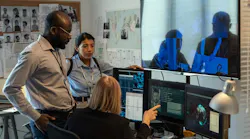 AI delivers the greatest value when it helps security teams make sense of information, communicate shared understanding and translate decisions into consistent action.
Designing for orchestration
Designing for orchestration begins by defining the desired operational capability rather than selecting technologies. A useful approach is the development of a Concept of Operations (ConOps) document, which describes how technologies, information, people, workflows and governance (roles, responsibilities, decision-making and performance measures) will function together to achieve operational objectives.
The progression toward orchestration
The industry’s future will continue to require robust interfaces and effective integration. Neither becomes less important. In fact, they become more valuable because they provide the foundation upon which orchestration is built.
As AI, intelligent automation, hybrid cloud architectures and enterprise-wide operational collaboration continue to mature, success will depend less on whether technologies can exchange information and more on whether organizations have established effective operational capabilities.
Perhaps that suggests a new way of thinking about these three terms:
- Interfaces connect systems.
- Integration enables systems to work together.
- Orchestration enables organizations to work together through technology.
That is more than a change in terminology. It represents the continuing evolution of electronic physical security from simply connecting technologies to coordinating organizational capabilities.
About the Author
 Ray Bernard, PSP, CHS-III
Ray Bernard, PSP, CHS-III
Ray Bernard, PSP, CHS-III, is the principal consultant for Ray Bernard Consulting Services (RBCS), a firm that provides security consulting services for public and private facilities (www.go-rbcs.com). In 2018 IFSEC Global listed Ray as #12 in the world’s top 30 Security Thought Leaders. He is the author of the Elsevier book Security Technology Convergence Insights available on Amazon. Ray has recently released an insightful downloadable eBook titled, Future-Ready Network Design for Physical Security Systems, available in English and Spanish.
Follow him on LinkedIn: www.linkedin.com/in/raybernard.
Follow him on Twitter: @RayBernardRBCS.