30 Years Later, the Connected Home Industry Is Still Chasing Simplicity
Key Highlights
- Panelists said the connected home industry still faces many of the same challenges it did decades ago, particularly around interoperability, simplicity and customer experience.
- Executives from eero, Ubiety Technologies, WorldVue and cyberManor discussed how AI is beginning to reshape security, personalization and technical support.
- Speakers argued that long-term success in the connected home market will depend less on flashy technology and more on creating reliable, seamless experiences consumers are willing to trust and pay

Thirty years after the connected home industry first began taking shape, panelists at Parks Associate’s recent CONNECTIONS conference argued that many of the industry’s biggest challenges remain surprisingly familiar: interoperability, customer experience, recurring revenue and reliability.
During a panel session titled “Looking Back and Looking Forward 30 Years: 1996-2056,” executives from across the smart home, networking, hospitality and residential integration markets discussed how the connected home has matured — and where artificial intelligence (AI) could fundamentally reshape the user experience in the decades ahead.
Moderated by Elizabeth Parks, president and CMO of Parks Associates, the panel featured executives from Ubiety Technologies, WorldVue, eero and cyberManor discussing how the industry has evolved from fragmented, proprietary systems into increasingly interconnected ecosystems.
Interoperability remains a core industry challenge
For Matt Davidson, principal product manager for connected experiences at eero, one of the industry’s biggest transitions has been the move away from isolated smart home products toward infrastructure designed to support broader interoperability.
Davidson said consumers have little interest in understanding the technical underpinnings of connected devices. Instead, they expect systems to work seamlessly regardless of protocols, hubs or platforms.
“What they want to know is they want to have the infrastructure in their home,” Davidson said. “They don’t want to have to go buy a hub. They want something that’s going to provide connectivity.”
He pointed to emerging standards such as Matter and Thread as important steps toward giving consumers more flexibility while reducing dependence on closed ecosystems tied to specific voice assistants or proprietary platforms.
That broader push toward interoperability was echoed by Gordon van Zuiden, founder of cyberManor and a branch partner with Daisy Co. Van Zuiden reflected on the residential technology market of the late 1990s, when many home automation systems relied heavily on proprietary architectures that required significant programming and integration work.
According to van Zuiden, the rise of IP-based platforms and more open APIs helped accelerate innovation and allowed integrators to create richer connected experiences that could evolve through software updates instead of hardware replacement cycles.
At the same time, he argued the industry still has not solved one of its longest-running issues: simplifying the ownership and maintenance experience for consumers.
“Nobody really owns the home,” van Zuiden said. “Probably nobody will be the single OS of the home.”
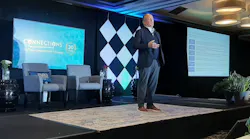
AI is shifting security toward context and automation
Much of the discussion centered on how AI could help bridge that gap between technical complexity and consumer expectations.
Keith Puckett, co-founder and CEO of Ubiety Technologies, argued that traditional residential security systems often fail because they still rely on outdated user behaviors, such as requiring homeowners to manually arm alarm systems.
Instead, Puckett said the future lies in what he described as “presence intelligence” — systems capable of understanding who is in the home, recognizing behavioral patterns and reducing nuisance alerts through contextual awareness.
“We always say our system’s always on,” Puckett said. “You don’t need to arm it. It just knows that you’re home. It knows that you’re not.”
Puckett argued that consumers are increasingly frustrated with excessive notifications, complicated installations and systems that fail to provide meaningful intelligence. AI, he said, should not simply add new features but instead reduce friction and make systems feel more intuitive and less intrusive.
The hospitality market is facing many of the same pressures, according to Robert Grosz, president and COO of WorldVue.
Grosz said hotel operators increasingly recognize that technology quality directly affects guest satisfaction, even as many property owners remain hesitant to invest aggressively in infrastructure upgrades.
He described a future where hotel rooms automatically personalize entertainment, streaming preferences and in-room experiences based on guest profiles and loyalty accounts.
“All that stuff we’re doing in the lab,” Grosz said, “is just trying to commercialize it.”
RMR, ongoing service still drive the business model
Recurring revenue models also emerged as a major theme throughout the session.
Davidson noted that outside of security-related services, the connected home industry has struggled to convince consumers to pay ongoing subscription fees because many smart home experiences still fail to demonstrate consistent value.
Van Zuiden said that challenge has created new opportunities for service providers capable of maintaining increasingly complex home technology environments. He pointed to growing demand for trusted advisors who can troubleshoot systems, manage software updates and guide consumers through new product integrations.
According to van Zuiden, one of the industry’s biggest lessons over the past two decades is that connected homes require ongoing support long after installation is complete.
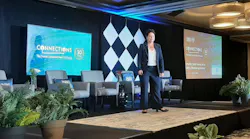
Toward the end of the discussion, panelists shifted from consumer-facing AI applications to the operational impact AI is already having behind the scenes.
Van Zuiden said AI-powered troubleshooting tools are beginning to reduce the expertise required to diagnose networking and device failures in the field by giving less experienced technicians access to large knowledge bases built from accumulated service data.
Grosz said similar investments are occurring in hospitality support environments, where AI-assisted troubleshooting is helping customer support teams resolve issues faster while reducing operational friction for hotel staff.
While the panel frequently looked ahead to what connected living could become by 2056, many of the session’s strongest takeaways focused on challenges the industry is still trying to solve today: making connected technology simpler, more reliable and more valuable to everyday users. Panelists repeatedly returned to the idea that interoperability — and the ability to seamlessly connect devices, platforms and services — will ultimately determine how widely connected home technologies are adopted in the decades ahead.
“At the end of the day, nobody really owns the home,” van Zuiden said. “Probably nobody will be the single OS of the home. So who owns the OS? It’s probably going to be the person who's going to be inside the home that makes sure when product A doesn't work with product B, that it will work. But the more of these standards and simplicity and interconnectivity come about, the greater the acceptance.”
About the Author
 Rodney Bosch
Rodney Bosch
Editor-in-Chief/SecurityInfoWatch.com
Rodney Bosch is the Editor-in-Chief of SecurityInfoWatch.com. He has covered the security industry since 2006 for multiple major security publications. Reach him at [email protected].