Dave & Buster’s Turns Security Data Into a Tool for Vendor Accountability
Key Highlights
- Dave & Buster’s centralized oversight of contract guard services across more than 200 locations.
- Security performance data helped the company consolidate its vendor network from 18 providers to 13.
- Vendor consolidation and negotiated bill rates are projected to generate more than $400,000 in annual savings.

Managing contract security across a handful of locations can make it difficult enough to maintain consistent standards. Spread that responsibility across more than 200 venues, multiple markets and 18 security providers, and the challenge becomes considerably larger.
That was the situation facing Dave & Buster’s as its security program expanded along with the company’s footprint.
The entertainment and dining company operates more than 200 Dave & Buster’s and Main Event venues across the United States, Canada and Puerto Rico. Its locations combine restaurants, sports bars and arcade entertainment, with extended operating hours and significant guest traffic.
Security coverage was largely managed at the individual location level. Stores and their security providers handled much of the daily activity, giving locations flexibility to respond to their immediate needs. Corporate security, however, was responsible for coordinating the larger program.
As the company expanded, corporate security lacked a centralized view of vendor performance, coverage and compliance across the enterprise. Dave & Buster’s sought to address that in 2025 by implementing Securitime, a centralized security workforce management platform providing visibility into scheduling, attendance, vendor compliance and operational reporting.
“Prior to Securitime at a corporate level, we didn't have direct visibility into what was being worked compared to what was scheduled,” says Enid Rohena, security support specialist for Dave & Buster’s.
The limits of decentralized oversight
The issue went beyond knowing whether a security officer reported for a scheduled shift.
Information about coverage was distributed among individual stores and vendors. Attendance might be documented through paper logs, verbal confirmation or a security provider’s own processes. A location could generally determine whether an officer had been present, but there was no enterprise-wide method for determining exact arrival times, shift completion or whether hours worked matched what had been scheduled.
That fragmentation also complicated vendor management.
Performance information was dispersed across locations, leaving corporate security without a standardized method for comparing providers. Store experience and anecdotal feedback consequently played a role in assessing performance.
Additional security coverage presented another challenge. Locations sometimes needed extra personnel for major events, periods of high customer volume or emerging security concerns. Without a centralized approval process, corporate security had limited visibility into when those hours were being added, the reason for the additional coverage and the resulting effect on spending.
Incident reporting was similarly decentralized. Reports involving security personnel frequently moved among stores, vendors and corporate security by email, sometimes requiring additional follow-up to obtain a security provider’s report.
For a relatively small corporate security team, manually tracking those activities across hundreds of venues was not practical.
The broader objective became establishing accountability among all of the participants in the program rather than simply imposing additional controls on contract officers.
“The goal was to create accountability across all stakeholders so we could work together more effectively and improve the overall performance of the security program,” Rohena says.
Building a centralized view
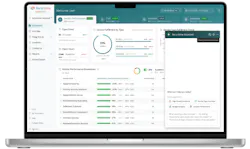
More than 218 locations now use Securitime for scheduling, attendance, vendor compliance and operational reporting. Corporate security can compare scheduled coverage against hours actually worked, identify compliance exceptions and examine vendor performance from a central dashboard.
Instead of manually monitoring activity at every venue, the security team can concentrate on exceptions and performance trends that warrant attention.
Rohena says the system has become part of her daily routine.
“I log into the platform every day. Mondays, I spend the most time looking at any problem locations, our vendors and what happened over the weekend.”
The company also established a standardized process for approving incremental security coverage. Requests for additional officers — whether prompted by a large sporting event, busy weekend or security concern — move through corporate security and operations.
That gives the company a record of why additional security was requested and allows it to distinguish approved operational requirements from unplanned additions.
The platform also allows security officers to submit incident reports electronically, reducing the email exchanges and follow-up previously required among stores, vendors and corporate security.
From attendance tracking to vendor management
For security leaders overseeing contracted personnel, centralized scheduling data can provide something more valuable than confirmation that an officer arrived for work: a consistent basis for measuring provider performance.
“The goal of Securitime has never been to simply verify whether a guard showed up for work,” says Lee Basey, vice president and general manager of Securitime. “The real value comes from giving security leaders the operational intelligence they need to make smarter decisions about vendors, staffing and overall program performance. When organizations have objective data, they can move from reacting to issues to proactively managing their entire security program.”
Dave & Buster’s began incorporating that information into its vendor-management process.
Rather than waiting for a location to raise a concern, corporate security can review compliance data and identify recurring problems. Scheduling and attendance requirements are also being incorporated into third-party vendor contracts as they are renewed, establishing participation in the centralized process as an expectation for security providers.
The resulting data has given the company a common measurement framework across vendors and locations.
That proved particularly consequential when Dave & Buster’s began evaluating its network of security providers.
Using performance data to reshape the vendor network
Dave & Buster’s reduced its security vendor network from 18 providers to 13, shifting business toward providers demonstrating stronger performance while moving away from those that consistently fell short of expectations.
The consolidation also allowed the company to expand relationships with higher-performing vendors into additional markets.
That, in turn, affected procurement.
Larger relationships with selected providers created opportunities to negotiate more favorable bill rates. Dave & Buster’s projects that the resulting vendor changes will generate more than $400,000 in annual savings.
The distinction behind that figure is important: According to the case study, the projected savings did not primarily result from uncovering billing discrepancies or catching officers who failed to work scheduled shifts.
Instead, the savings resulted from using operational security data to decide which providers should receive the company’s business, where they should operate and how those vendor relationships should be structured.
In other words, information originally associated with security operations became part of the company’s vendor and procurement decision-making.
Accountability as a management tool
The experience illustrates a broader management issue for enterprises that depend on multiple contract security providers: collecting data and using it to manage performance are different things.
A scheduling or attendance record can document an individual shift. Aggregated across locations and providers, however, the same information can reveal compliance patterns, identify recurring exceptions and provide a factual basis for conversations with vendors.
For Dave & Buster’s, centralized data also established common expectations among store management, corporate security and contract providers.
“The biggest value Securitime has brought to Dave & Buster’s has been accountability,” Rohena says. “The platform has created a more efficient process for everyone involved.”
The approach is also becoming part of the company’s longer-term contract security strategy. Scheduling and attendance requirements are being incorporated into vendor agreements as contracts are renewed, establishing measurable performance expectations for security providers.
For security professionals managing distributed contract guard programs, Rohena’s experience shows how workforce data can serve purposes well beyond attendance verification. At Dave & Buster’s, that information is being used to identify compliance trends, evaluate vendors and inform procurement decisions.
“Having instant access to this type of security program information has made it better for everyone,” Rohena says.
About the Author
 Rodney Bosch
Rodney Bosch
Editor-in-Chief/SecurityInfoWatch.com
Rodney Bosch is the Editor-in-Chief of SecurityInfoWatch.com. He has covered the security industry since 2006 for multiple major security publications. Reach him at [email protected].