Open vs. Closed Video Surveillance: Which Is Best for Your Business?
Key Highlights
- Explore the differences between open platforms and closed systems.
- Learn how businesses can integrate advanced innovations in an open platform.
- See how open architecture provides a greater return on the initial security investment.
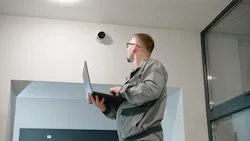

Today's video surveillance systems are capable of generating business intelligence, powering AI-driven decisions, and connecting multiple locations. However, unlocking that potential is contingent on a foundational choice: system architecture.
Open platforms integrate with third-party hardware and software, while closed systems restrict businesses to a single vendor's ecosystem. Understanding the difference will help you build a solution that works for your business today and scales with it tomorrow.
How Video Surveillance Architecture Impacts Future Business Operations
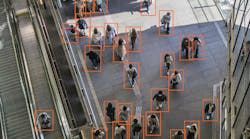
Video surveillance solutions are now being used beyond their initial security capabilities. This is due to the introduction of cloud and AI capabilities which transform security cameras into sources of business intelligence. Because of this, departments outside of physical security are looking at how video data can be used to improve operations.
Architecture impacts how possible it is for businesses to use surveillance system data to benefit the operations of the company, as it can either enable or constrain future technology adoption. If a business is using a legacy system that doesn’t integrate, it can make it all the more difficult to uncover the insights present within that video footage and scale it across the organization.
What Is an Open Video Surveillance Platform?
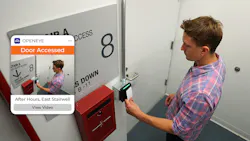
An open video surveillance platform is a device-agnostic solution that allows for third-party integrations. These solutions adhere to ONVIF standards for greater interoperability between security cameras regardless of brand. Open platforms enable other types of integrations with traditional security systems such as access control and intrusion alarm panels as well as other business technology such as environmental sensors, IoT devices, identity management, and additional business intelligence systems. Such integrations add to the effectiveness of video surveillance and enable organizations to increase efficiency and make data-driven decisions for the business.
With greater vendor choice, businesses can select the systems that work best for their unique needs today and tomorrow. There’s less need to rip and replace the existing hardware. Instead, upgrades can be introduced in more streamlined phases. This optimizes use of the existing infrastructure to achieve a better return on investment while paving the way forward for adding advanced innovations, creating stronger long-term adaptability.
What Is a Closed Video Surveillance Platform?
A closed video surveillance platform operates by using one vendor’s hardware, software, services, and support and restricting integration with third-party systems. For customers who want a single pane of glass, a closed solution can seem to be the best fit as it’s seemingly easier to manage.
However, while this may seem simpler on the surface, a closed architecture can quickly become limiting. If the company wants to add cameras with analytics capabilities that its initial provider doesn’t offer, it's either required to operate two separate platforms or forgo the analytics deployment altogether. This creates greater dependence on the vendor and limits the amount of choice a business has in building and adapting the solution over time.
Separately, a closed platform creates future challenges. As technology advances and business needs change, there will be new opportunities to connect video data to operations. In a closed system, businesses may be waiting for the closed system provider to develop their own solution, and, if or when this is available, it will likely be limited in offering compared to the best-of-breed solutions available on the market.
Open vs. Closed Video Surveillance: Key Differences
|
Consideration |
Open Platform |
Closed Platform |
|
Camera Compatibility |
Compatible with third-party cameras |
Compatible only with closed platform provider’s cameras |
|
Third-Party Integrations |
Works with third-party systems |
Does not work with third-party systems |
|
Hardware Choice |
Freedom to choose whichever hardware, regardless of manufacturer |
Only works with closed platform provider’s hardware |
|
Existing Infrastructure |
Able to integrate into existing infrastructure |
Requires a rip-and-replace approach |
|
Upgrades |
Able to be upgraded over time, regardless of manufacturer |
Able to be upgraded over time with provider’s hardware line only |
|
AI Video Analytics |
Can use third-party, edge, and server-side AI video analytics |
Limited to closed provider’s analytics offering |
|
Vendor Dependency |
Not dependent on a single vendor |
Dependent on the closed platform vendor |
Which Video Surveillance Architecture Is Optimal for Your Business?
The architecture you choose today can directly inform current total spend and system capability in the future. Open platforms are more cost-effective upfront, allowing you to use existing investments in security and adjacent systems, but also provide options long term. With the inability to integrate third-party tools, closed systems often lead to multiple redundant platforms, missed capabilities, and expensive overhauls down the line. This creates vendor dependency and limits how quickly your business can innovate.
Open architecture removes that dependency. It works with the hardware you already have to protect the existing investment while offering the freedom to layer in advanced solutions on your own timeline and budget. This enables faster, more cost-effective scaling without the operational burden of managing disconnected systems.
Integrate Your Systems in an Open Cloud Video Platform
The future of security involves gathering more data points from more sources for a complete picture of the business. Through an open cloud-managed video surveillance platform, businesses can flexibly scale the system across locations by working with a wide range of devices and systems, including AI video analytics, access control, intrusion, identity management, and business intelligence. By using an open architecture, organizations can turn that data into actionable intelligence to make more informed decisions.
Interested in learning more about how open, intelligent, and trusted cloud video solutions work with the technology you have today and the technology you adopt tomorrow? Book a demo with OpenEye today.