Data Centers Are Becoming the New Front Line of Converged Security
Key Highlights
- AI both strengthens attackers and creates new targets, including model gateways, training data, and firmware.
- IT-OT convergence can turn a cyber intrusion into disruption of power, cooling, and other facility operations.
- Physical risks include unauthorized access, insider threats, sabotage, extreme weather, and utility failures.
- Resilience depends on layered physical and cyber controls, zero trust, supply-chain oversight, and tested response plans.
- Governments and industry must collaborate to strengthen critical infrastructure, power resilience, and security standards.
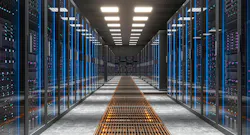
Data centers have moved from behind-the-scenes infrastructure to the center of the modern economy. They support everything from cloud services and financial transactions to healthcare systems, connected devices and the enormous computing requirements driving the artificial intelligence boom. As more critical business and government functions depend on these facilities, the consequences of a security failure extend well beyond the walls of a single building.
That dependence is also making data centers more attractive targets. Physical intrusion, cyberattacks, vulnerabilities created by IT/OT convergence, supply-chain risks, and the increasingly complex role of AI are creating a security environment that no single layer of protection can address. For data center operators, security has become an operational requirement, one that must account for the facility, the technology inside it and the systems connecting it to the outside world.
AI Convergence Impacts Data Center Threat Ecosystem
AI endangers data center security in two significant, converging ways: by empowering attackers and creating new, highly privileged AI-specific attack surfaces within the data center itself.
AI accelerates traditional cyberattacks with machine-speed reconnaissance, automated vulnerability discovery, and polymorphic malware, reducing the time between intrusion and breakout. Deepfakes and hyper-personalized phishing make social engineering more effective. AI systems in data centers, including model gateways, orchestration layers, RAG pipelines, and workflow engines, introduce new high-value targets. When compromised, these AI components act as control planes, enabling credential theft, lateral movement, and compute hijacking. Attackers exploit AI-specific vulnerabilities, including prompt injection, model poisoning, and inference attacks. As AI hardware scales, firmware-level threats become more severe.
AI accelerates traditional cyberattacks with machine-speed reconnaissance, automated vulnerability discovery, and polymorphic malware, reducing the time between intrusion and breakout.
The result is a dual-risk environment in which AI enhances attackers' capabilities while expanding defenders' attack surface. Data centers must now protect not only networks, workloads, and identities, but also AI pipelines, model access, training data integrity, and firmware trust anchors. Without adaptive identity controls, continuous attestation, and AI-aware security architectures, data centers become more vulnerable to both automated attacks and AI infrastructure compromises.
Cyber Threats and OT-IT Convergence
Cyber risks are equally severe and becoming more intertwined with physical ones. Data centers are vulnerable to ransomware with double-extortion tactics, advanced persistent threats (APTs) for long-term infiltration and data exfiltration, DDoS attacks, cloud misconfigurations, insecure APIs, and expanding attack surfaces from edge computing and IoT devices. The SolarWinds incident remains a stark example of a supply-chain compromise that enabled widespread access.
A critical emerging dimension of OT-IT cybersecurity is the convergence of information technology (IT—data and corporate systems) and operational technology (OT—systems that control physical processes such as power, cooling, and industrial controls).
OT environments, once air-gapped and obscure, are now networked for efficiency and remote management. Many OT devices are decades old and lack native security capabilities. This eliminates traditional perimeters and enables lateral movement: a cyber intrusion into IT can reach OT systems that manage the facility's physical resilience, turning digital breaches into real-world operational disruptions.
Adversaries are using AI to automate attacks, create deepfake phishing, create self-evolving malware, and coordinate large-scale campaigns. Looking ahead, quantum computing threatens existing encryption, necessitating quantum-resistant algorithms. Power and security are interdependent.
Global data-center electricity consumption increased to approximately 788 terawatt-hours in 2025, up nearly 20% year on year, with the United States accounting for nearly 40% of that total (about 312.6 TWh). Projections suggest demand could roughly double by 2030, driven primarily by AI workloads. A cyberattack on the energy grid or physical sabotage of substations can bring down data centers, while the massive power consumption of AI facilities strains aging grids, creating mutual vulnerabilities.
Physical Threats: From Perimeter to Rack
Physical security remains essential. Unauthorized access through break-ins, tailgating, vehicle ramming, or social engineering can lead to hardware theft, sabotage of power or cooling systems, or the installation of malicious devices. Insider threats, whether from malicious employees, contractors, or those with lingering privileges, are especially prevalent in multi-tenant colocation environments.
Environmental hazards (fires, floods, extreme weather) and utility failures (grid outages or cooling breakdowns) can halt operations in minutes. According to industry research, physical security flaws account for approximately 10% of data breaches, demonstrating how a single physical gap can undermine even the most robust cyber defenses.
Physical security remains essential. Unauthorized access through break-ins, tailgating, vehicle ramming, or social engineering can lead to hardware theft, sabotage of power or cooling systems, or the installation of malicious devices.
In my recent SecurityInfoWatch article on data center challenges, I emphasized a multi-layered physical approach, including high-security fencing and vehicle barriers at the perimeter, biometric access controls (facial recognition, fingerprints, iris or vein scanning), AI-enhanced video analytics and drones for real-time anomaly detection, zoned internal access with mantraps, and continuous monitoring of environmental systems. Traditional methods alone are insufficient; AI-powered surveillance and automated responses are required to detect and respond in real time.
Major Threat Actors
Nation-state actors, particularly those linked to China, Russia, Iran, and North Korea, see data centers as strategic targets for espionage, conflict preparation, and disruption. This approach is exemplified by groups that have long-term persistence in critical infrastructure. Transnational ransomware syndicates seek maximum leverage by targeting shared or hyperscale facilities that serve many downstream clients.
Insiders and ideologically motivated actors add to the complexity. Hybrid attacks that combine physical access and cyber exploitation are becoming more feasible. According to reports, insider-related factors (malicious, negligent, or compromised credentials) account for a significant share of breaches, with estimates ranging from 30-45% across various studies.
Building Resilience: Procedures, Technologies, and Strategies
Effective defense requires a unified, defense-in-depth strategy that incorporates both physical and cyber controls. In my writings, I have consistently advocated for these pillars:
• Zero-trust architectures and "security by design," which assume no inherent trust and verify each access request.
• Multi-factor authentication, network micro-segmentation, encryption (at rest and in transit), and strict identity and access control.
• AI-powered tools for real-time threat detection, anomaly identification, and automated response—transforming AI from a threat multiplier to a defensive asset. Organizations that use AI and automation in their security operations have saved nearly $2 million on average in breach costs.
• Strict supply-chain risk management, ongoing vulnerability assessments, penetration testing, and insider-threat programs with monitoring and training.
• Strong incident response, geographically diverse backups, and business continuity plans that comply with frameworks such as NIST, ISO 27001, and SOC 2.
• Public-private partnerships, intelligence sharing, and scheduled tabletop exercises.
In the AI era, power resilience and cybersecurity must be treated as two sides of the same coin, with OT/IoT defenses and electromagnetic pulse (EMP) hardening considered as needed.
 dreamstime_xxl_19785822
The Path Forward
Data centers are located at the intersection of technological progress and systemic risk. A reactive approach is a losing strategy. Organizations must prioritize proactive risk management, human-AI collaboration in security operations, ongoing employee awareness, and cross-industry collaboration. Governments and industry are both responsible for modernizing grids, enforcing standards, and treating these facilities as critical infrastructure.
The stakes are high: maintaining the security of these digital fortresses is critical for economic stability, public safety, and national competitiveness. By embracing layered defenses, zero-trust principles, and resilience by design, we can ensure that data centers remain strongholds rather than vulnerabilities in an increasingly complex threat landscape.
About the Author
 Chuck Brooks
President of Brooks Consulting International
Chuck Brooks is a recognized global thought leader in cybersecurity, AI, quantum computing, and risk management. He is President of Brooks Consulting International and adjunct faculty in Georgetown University’s Graduate Program in Cybersecurity Risk Management, where he was named Faculty of the Year for 2026.
Chuck was among the first employees at the Department of Homeland Security at its inception, where he served in the newly created Science & Technology Directorate. He has also served in executive roles in industry, including at General Dynamics Mission Systems, Xerox, and Rapiscan. LinkedIn has recognized Chuck as one of the Top 5 Executives to Follow in Technology, and various media sites have awarded him the title of Top Cybersecurity Expert.
He is a prominent figure in global media, has served as a keynote speaker at many events & conferences, and has written more than 450 articles on topics related to artificial intelligence, quantum tech, cybersecurity, and homeland security. He is also the author of the widely acclaimed book, “Inside Cybersecurity”.
Chuck is a graduate of the University of Chicago with a Master of Arts degree, DePauw University with a Bachelor of Arts degree, and The Hague Academy of International Law with a certificate in International Law.