Announcing the 2026 Security Innovator Award Honorees
This article originally appeared in the July 2026 issue of Security Business magazine. Don’t forget to mention Security Business magazine on LinkedIn or our other social handles if you share it.
The Security Innovator Awards are the industry’s only 100% peer-nominated program to recognize the innovative contributions made by individuals in the security industry, from integrators to consultants, to practitioners, to manufacturers and service providers.
This year’s group of Security Innovators is as diverse as it is experienced. We received peer nominations from all walks of the security industry, from CEOs and founders all the way to data scientists, field technicians, and consultants working on the front lines every day.
The following profiles of these security industry luminaries were all written by the person who actually nominated them, or, in the case of someone nominated by multiple people, a conglomeration of the nomination summaries.
How The Submission and Selection Process Worked
This award is open to anyone in the security industry to recognize a fellow employee or a partner with whom they work closely for being innovative. We think it fills a unique void in this industry for peer-nominated recognition.
Through email outreach and social media, we asked everyone in the industry to nominate a deserving colleague for consideration. We asked them to focus on a key aspect of the nominee’s innovation – someone who, for example:
- Devised a new or innovative way to deploy a technology solution;
- Stepped up during a crisis or other emergency;
- Went above and beyond to have a positive impact in the community or for our industry;
- Developed a new, game-changing technology, feature, or standard;
- Demonstrated a long career of innovation;
- and more – anything industry-related and innovative was considered.
As long as both the nominee and nominator actively work in the security industry, the nomination was accepted.
Read on to learn more about this year’s Security Innovators, and keep in mind the innovative people both within your organization and those you work with outside of it to be honored with this award for 2027!
Editor’s Note: Nearly all of the following Security Innovator profiles have been shortened and summarized from the original nomination; however, they are all based on the words of the nominator(s).

Miller Anyogu, Co-Founder, Reconview
Nominated by: Bob Gerardi
Miller Anyogu has the mind of a high-level architect and the hands of a builder, which is an unusually rare combination. When a customer’s hydraulic system was failing in a brutal, high-dust environment, he traveled to the site himself to diagnose the physical toll the conditions were taking on the unit, then redesigned the seal and filtration approach so it would never fail under those conditions again. He holds multiple security-related patents, including the most recent for MobileTalk, a next-generation mobile emergency call box that connects users directly to security personnel. He is currently leading development of an advanced video management system and a drone detection integration project for government agencies. Watching him walk a manufacturing floor to shave time off a design process while simultaneously architecting a complex system is, as his nominator puts it, rare.
Marco Baldocchi, Founder, CEO & Scientific Chief Officer, Emotivae
Nominated by: Fabiana Rosamilia
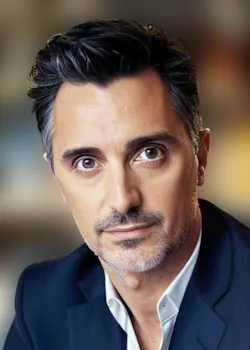
Marco Baldocchi said something that stuck: “Security cameras see everything, but they understand nothing. They see someone raising their voice, but they don’t see the anger building up 20 seconds earlier.” Emotivae is his answer to that gap. It is an Emotion AI platform combining neuroscience and computer vision to read micro-expressions, cognitive stress levels, and up to 98 emotional states in real time, without identifying the individuals. In live demos on crowd footage, the system flags rising aggression and cognitive stress before any visible incident has occurred. In real-world testing, it has anticipated violent incidents by 10 to 30 seconds, enough time for security to intervene before a situation escalates. The shift Marco is driving is fundamental: from reacting to violence to reading it before it becomes behavior.
Lon Bazelais, Founder, Grid Squared Systems
Nominated by: Steven McCory
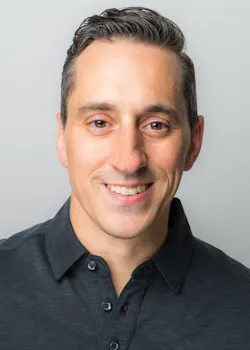
Lon Bazelais builds teams the way most leaders talk about building teams. When Steven McCory joined Grid Squared as Director of Operations in 2022, he watched Lon extend genuine trust and ownership to everyone: technicians, coordinators, admins, project managers. When a project ran behind, Lon was in it. When a client had concerns, he treated it as everyone’s responsibility, including his own. That mindset spread. The results showed up in the culture first, then in the recognition: Brivo’s Excellence in Installation Award, multiple SIA “25 on the Rise” honorees, consecutive FAST Technician of the Year winners, and a 2025 SAMMY Awards finalist nod. Those awards are a byproduct of the environment he created, one where quality mattered, people mattered, and everyone felt responsible for the company’s reputation.

Chris Boak, Service Manager, Preferred Technologies
Nominated by: Delilah Palacios
Chris Boak taught himself to build apps and then used that skill to solve his team’s real problems. He created an industry-specific app that lets service techs reverse-search hardware images, ask configuration questions, and surface potential issues, with results filtered specifically to video management, cameras, access control, and intrusion detection. He also taught himself PowerBI and built a service dashboard that tracks overdue tickets, flags items with no updates in 48 hours, highlights return visits, and surfaces customer follow-ups in real time. That dashboard reduced task completion time by 45 percent, eliminating the need for an additional service coordinator and freeing the existing one to focus on customer engagement rather than running manual reports. Chris and his nominator maintain a running “We oughtta” list. The list keeps getting shorter.

Brent Boekestein, Vice President of Enterprise Accounts, OpenEye
Nominated by: Chris Musk
Before joining OpenEye, Brent Boekestein co-founded Vintra, an AI-powered video analytics company deployed by Fortune 100 companies and the U.S. Government before its acquisition by OpenEye and Alarm.com in 2023. He holds an MSc from the University of Manchester and co-authored two patents in computer vision, and has delivered more than two dozen talks globally on AI and the Internet of Things. At OpenEye, he has been a tireless advocate for treating video security as an active operational platform rather than a reactive cost center, educating customers, partners, and colleagues on what AI tools actually enable, particularly around agentic capabilities and cross-departmental collaboration. His track record of accurately forecasting which AI advances will matter most in the field has made him a trusted guide at a moment when the industry is sorting signal from noise.

Victoria Brenneman, VP of Product Management, SimpliSafe
Nominated by: Bella Brenner
Victoria Brenneman helped develop and bring to market two industry-first professional monitoring services at SimpliSafe: Intruder Intervention and Active Guard Outdoor Protection. Both shifted the home security model from reactive to proactive, combining AI and live monitoring agents to detect and deter threats before they escalate. When Active Guard launched, SimpliSafe became the first home security company to offer that type of indoor and outdoor monitoring staffed by its own in-house team of security experts. The work addresses a real customer need: people want to feel protected before an emergency, not simply alerted after the fact. Victoria leads five product development teams and balances aggressive growth with a commitment to operational excellence. She was named the Boston Business Journal’s 2026 LGBT Trailblazer Award recipient for her impact as both an innovator and a mentor.

Scott Brothers, COO, Oncam
Nominated by: Justin Duyao
Scott Brothers has guided Oncam through a strategic evolution that repositions the company’s panoramic imaging expertise for a cloud-connected, AI-driven era. Under his leadership, Oncam introduced Oncam Core, a cloud and mobile-first video management platform, combining AI-enabled analytics, edge processing, and open-platform integration to help organizations scale surveillance without the complexity traditionally associated with enterprise video systems. He has championed a partner-first, open-architecture approach at a moment when many manufacturers are moving toward closed ecosystems, building strategic collaborations with Qualcomm, AWS, and SanDisk to accelerate edge AI and cloud scalability while maintaining ONVIF compliance. His focus throughout has been on making cloud, AI, and analytics operationally usable for integrators and end users, not just technically impressive.

Guerry Bruner, Program Manager, ITS/Unmanned and Critical Infrastructure Solutions, ASSA ABLOY
Nominated by: Savannah Ragali
A couple of years ago, most critical infrastructure conversations were still rooted in traditional approaches: perimeter fencing, mechanical locks, perhaps cameras. The reality of unmanned sites was being overlooked. Guerry Bruner didn’t wait for the market to catch up. In his role at ASSA ABLOY, he educates the marketplace and builds awareness around what actually happens at unmanned sites: no staff, limited visibility, delayed response times, and a real gap between risk and protection. He kept showing up to industry meetings, trade committees, and board discussions, pushing the same message and backing it up with real examples until the conversations started to shift. He didn’t invent a single tool or technology. He changed how people think about the problem, and in security, that’s what drives real innovation.

Steve Carlevato, Director of Product Management – Security, Resideo
Nominated by: Sarah Reckard
Steve Carlevato led the overhaul of Resideo’s BRK and First Alert smoke and carbon monoxide alarms to meet the 8th edition standard, assembling an 80-person engineering team and working directly with homeowners and professionals to ensure the new products matched what users actually needed. The updated software distinguishes between nuisance smoke from cooking and genuine danger from burning synthetic materials, a meaningful improvement in how quickly people can recognize a real threat. He also shaped upgrades to the First Alert VISTA H Panel, designed to help security professionals modernize the millions of legacy VISTA systems in the field without complete replacement. Most recently, he helped unveil a first-of-its-kind cloud-based access control partnership between ProdataKey and First Alert, allowing the same badge used for access control to also disarm intrusion systems, solving a persistent integration challenge for small and mid-sized businesses.

Maureen Carlson, President, System Surveyor
Nominated by: Mindy Klement
Since becoming President of System Surveyor in March 2025, Maureen Carlson has driven a transformation in how the platform serves integrators and end users. In just over a year, she has overseen the launch of Camera Advisor, Customized Reports, System Surveyor for Phone, an Integration Marketplace, System Surveyor Connectors, and a Certification Program, moving the platform from a site survey tool into a collaborative, intelligent system design environment that connects to the broader software ecosystem integrators already use. Individually each feature represents a meaningful improvement; collectively they represent a fundamental shift in how security systems are designed, managed, and communicated to stakeholders. Carlson’s combination of practical vision, ecosystem thinking, and measurable adoption is what sets her apart.
Eric Clay, Vice President & Chief Security Officer, FMOL Health
Nominated by: John Krivulka
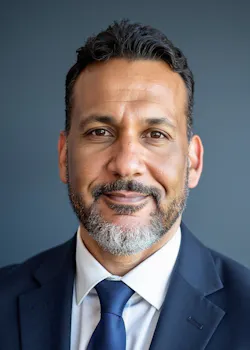
Eric Clay may be the most recognizable figure in healthcare security today, and that recognition is earned. As CSO at FMOL Health, he has been a consistent advocate for moving beyond passive monitoring toward proactive, AI-enabled threat detection and incident prevention, and for ensuring that new technologies serve the actual mission of healthcare security rather than just what developers think would work. He serves as a bridge between technical developers and end users, a role the industry needs more of. He speaks at conferences around the world, authors articles regularly, and appears frequently in print, video, and podcast formats. He champions data-driven strategies that identify vulnerabilities before incidents occur, and his work has helped set benchmarks for the healthcare security industry as a whole. Beyond his own organization, his willingness to share knowledge freely with peers across the field is what sets him apart.
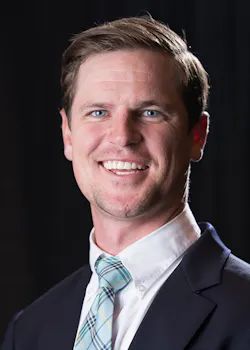
Kevin Collins, Enterprise Account Executive, Allied Universal Technology Services
Nominated by: Bobbie Ferraro
Kevin Collins understood the real vulnerability in Zero Trust before most of the industry had moved past the buzzword: the edge. Sensors, door hardware, the devices collecting data at the starting point. In nuclear and critical infrastructure environments, he recognized that if the data coming from those devices can’t be trusted, nothing built on top of it can be trusted either. He pushed for practical adoption of complete, edge-to-cloud secure technology stacks inside some of the most demanding and highly regulated environments in the country, at a time when others were still focused on traditional approaches. His willingness to challenge the “this is how we’ve always done it” mindset in environments where that mindset is most deeply entrenched is what makes him worth recognizing.

Andrew Corsaro, CPP, Vice President of Consulting Services, ZBeta
Nominated by: Zack Brunette
Andrew Corsaro came into the security industry the hard way, as a Major Crimes and Counterterrorism Detective with the Baltimore City Police Department, before carrying that operational foundation into corporate leadership roles at Cox Enterprises, Equifax, and Capital One. At ZBeta, he has become one of the industry’s most credible voices on drone security and unmanned systems, helping build the firm’s drone consulting program and advancing conversations on aerial threat mitigation, airspace policy, and the responsible integration of UAS into enterprise security environments. He speaks regularly at GSX and ISC West, contributes to publications including Data Center Dynamics and CSO Magazine, and co-authored a widely circulated piece on drone threats to data centers. His value is the rarity of someone who can translate hard-won operational experience directly into the emerging threat conversations the industry still needs to catch up on.

Jean-Florent Cros, CTO, Acoustic Threat Detection Systems (ATD), Acoem
Nominated by: Frédéric Droin, Jérémie Boisset, Julien Preuilh, François Magand, SiewSun Chan, Géraldine Daumas, John Walden, Timothy English
Jean-Florent Cros came to gunshot detection as an acoustic and vibration engineer, not a software developer, and that background turned out to be exactly what the problem needed. He adapted acoustic sensing for civilian safety applications, building the algorithm architecture that separates sounds, syncs them with camera feeds, and pinpoints a gunshot’s location in three dimensions. When his team needed better tools to manage AI model performance across projects, he taught himself the missing skills and built a cross-functional framework from scratch, bringing structure without bureaucracy and giving engineers, data scientists, and project teams a shared foundation. Colleagues describe him as the glue between the commercial team, hardware designers, and AI data science team. He can predict how sound will behave in an environment from photographs and descriptions alone. The ATD platform is deployed worldwide. He is the reason it works.
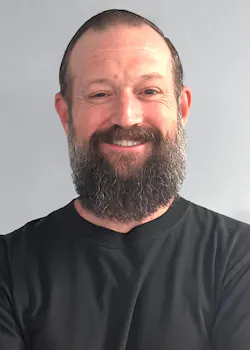
Evan Davis, Senior Manager of Solutions Engineering, TRENDnet
Nominated by: Emily Chae
Evan Davis’s value is hard to describe in a single moment because it shows up across dozens of them. His job is helping partners design the right solutions for complex projects, and where others reach a dead end, Evan keeps thinking. He doesn’t stop at what one product can do; he considers how components work together, how the full design will function under real-world conditions, and how it will continue to perform over time. For TRENDnet’s partners and potential partners, that depth of thinking, applied specifically to networking and network devices, means they walk away with solutions that are both practical and durable.
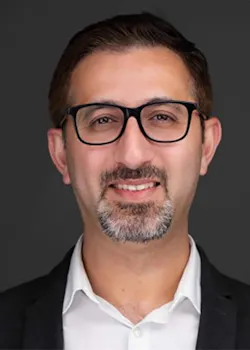
Apurva Dhanwantri, SVP & Chief Information Security Officer, Cornerstone OnDemand
Nominated by: Hardik Mehta
After working closely with Apurva for more than seven years, I’ve watched our cybersecurity team grow from just over ten people into a 55-plus-person organization. What defines Apurva is his ability to see potential in people before they see it themselves: a Database Architect growing into a Cloud Security Architect, an Auditor stepping into Security Intelligence Operations leadership. His technical initiatives have matched that investment in people, including Cloud Security Fusion, AI-powered threat modeling, agent red-teaming frameworks, and gamification-based security awareness that turns compliance training into something people actually engage with. That combination of vision, execution, and genuine investment in people is why Apurva stands out.
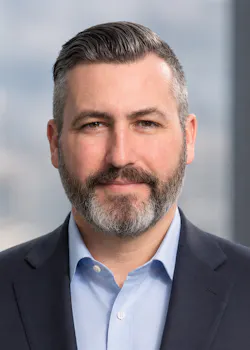
Sean Dyon, Vice President, Authentication Business Unit, HID
Nominated by: Martin Ladstaetter
For decades, physical access control and identity access management lived in separate worlds. Sean Dyon closed that gap. As VP of HID’s Authentication Business Unit, he has been the driving force behind Converged Credentials, enabling a single credential to open physical doors and authenticate users into workstations, applications, and cloud environments simultaneously, replacing fragmented access models with a unified, phishing-resistant identity experience. Under his leadership, HID helped Fortune 50 enterprises unify physical and logical access for more than 50,000 users. He was also instrumental in HID’s acquisition of IDMelon, recognizing early the market shift toward passkeys and passwordless authentication and how it aligned with physical access convergence, enabling existing employee badges to function as FIDO credentials. He accelerated the customer journey toward zero trust years ahead of where the rest of the industry was looking.

Janet Fenner, President, Defined Marketing
Nominated by: Matt Gyulay, Tristin Vaccaro, JoAnn Petrone, JoAnne Murphy, Mike Dunn, Averie Oetjen, Eric Joseph
Janet Fenner has a way of looking at something everyone accepts as “the way it’s done” and just not buying it. She organized a full scavenger hunt through New York City the night before ISC East 2025, with company-sponsored limos and more than 125 clients and partners traversing the city before anyone had set foot on the show floor. Six months later, people were still talking about it. At ISC West, she turned a client appreciation event into a poker tournament that brought customers, partners, and team members together in a way the show floor never does. For Mission 500, she has generated fundraising ideas that range from a PLINKO game at GSX, to a cash-cab golf outing, to a man in a giant inflatable dinosaur costume at the annual 5K. She doesn’t just market what you already are; she pushes you to be better.

Chad Ferguson, Director, K-12 Vertical Market, Convergint
Nominated by: Lorna Kiewert
Chad Ferguson leads Convergint’s STEP Up for Schools program, which donates security system upgrades, including equipment and installation, to schools that couldn’t otherwise afford them. Over the past year, he reshaped the program from a collection of individual efforts into a structured grants model. In its first year under that framework, the program received 64 applications and expanded to 20 grants across the U.S., with international expansion underway. By the end of 2026, Convergint will have supported 175-plus schools globally. When a Colorado superintendent told Ferguson his teachers couldn’t lock their classroom doors from the inside, Ferguson worked directly with manufacturer partners to secure donated hardware until every door locked properly. The superintendent cried on the phone. Another superintendent asked him, “What’s the catch?” She couldn’t believe a company would donate that level of time, labor, and equipment without expecting business in return. Ferguson’s answer: there isn’t one.

Juan Pablo Forno, Security Specialist, Wesco Corporation
Nominated by: Mark Edwards
Juan Pablo Forno recognized an opportunity that most people in distribution were missing. By analyzing Inner Range’s native integrations with leading security brands, he developed a Converged Technology strategy for the Americas that positions Inner Range at the core of a full turnkey solution, with brands including Axis, Milestone, ASSA ABLOY, HID, and Allegion connecting as edge devices. The strategy doesn’t just define a go-to-market approach; it directly shapes Inner Range’s R&D roadmap and engineering investments. His vision created a path to significant revenue growth across the entire Wesco product portfolio, from core to edge, by building a framework that turns individual product relationships into a coherent, enterprise-grade security outcome. That kind of systems-level thinking across a distribution channel is rare.

Israel Fried, CEO, The Syndicate & Fox2Sierra
Nominated by: Kim Marsh
Israel “Izzy” Fried spent his career in the military, law enforcement, litigation, and private security before turning those experiences into a mission: building safety and security solutions he would have wanted when he was in the field. What sets him apart is that he deliberately built those solutions to be accessible and affordable for smaller venues, houses of worship, and schools, not just organizations with large budgets. He has personally driven product hundreds of miles across state lines so potential clients can understand the benefits firsthand, and he offers no-charge field testing with drone and surveillance products to organizations exploring the technology. Three years in, the people who know him say the same thing: he never stops, and he only wants to make the world safer.

Kim Garcia, Director of Marketing, Inovonics
Nominated by: Brett Kelly
Kim Garcia didn’t just adopt AI tools at Inovonics; she built the foundation that made them work at scale. Her deliberate, intentional approach to implementing AI across the marketing function has exponentially expanded the team’s capacity, and the impact extends well beyond the marketing department. She brings genuine ownership to the work: thoughtful about which tools to use, careful about how they’re integrated, and consistent about making the results visible to the broader organization. In a moment when many marketing teams are experimenting with AI superficially, Kim is doing the harder work of making it structural, and her colleagues see the difference every day.
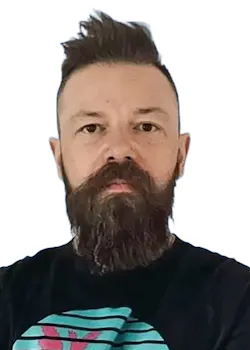
Jeff Groom, Director of Engineering, AI, Acre Security
Nominated by: Beth Hancock
For the past decade, the SOC operator’s job has looked roughly the same: four monitors, three interfaces, disconnected logs, a ringing radio. What the industry has shipped in that time is mostly smarter object detection and incrementally better alarm filtering. Jeff Groom is one of a small handful of engineers bringing genuinely modern AI to physical security at production scale. He and his brother Adam founded REKS, a generative AI startup built for physical security data, which Acre acquired in 2024. The result is Acre Via, launched in March 2026 and described as the first AI assistant for physical access control: a single operating layer where an operator can ask, understand, decide, and act across systems in one place. The operational difference is the gap between an alert taking 90 seconds to triage and 90 seconds to resolve. Jeff started from how an operator actually thinks under pressure and built the architecture to match.
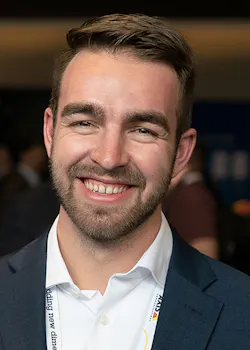
Josh Hartmann, Vice President, Hartmann Controls
Nominated by: Robyn Handy
At 27, Josh Hartmann is already VP of Hartmann Controls, recognized by SP&T’s Top 30 Under 30, and speaking at ACS25 alongside Lee Odess. What makes him stand out has less to do with those credentials and more to do with how he operates day to day. He combines an electrical engineering background from the University of Toronto with real business experience, which gives him the ability to walk into a room with people twice his age and push confidently for smarter solutions because he genuinely believes the security industry can do better than it currently does. He has been the primary driver behind his company’s early-adoption mindset on new technologies, and more than that, he actively builds a culture around it. People who work with him don’t just hear about innovation; they see it modeled in how Josh approaches every problem.
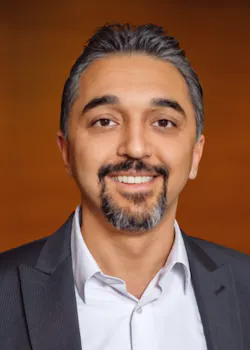
Serdar Ince, Global SVP of Innovation and AI, Securitas Technology
Nominated by: Tony Byerly
Dr. Serdar Ince brings a rare combination to his role: deep technical expertise, strategic vision, and a clear-eyed understanding of what end users actually need. As Global SVP of Innovation and AI at Securitas Technology, he led development of SecureStat Cumulus, a cloud-based, AI-powered camera-to-cloud video solution designed to simplify operations and support faster, more informed decisions across environments. Beyond product work, he leads the company’s Global Technology Outlook Report, helping clients and the broader industry understand how AI, cloud, and data are transforming security into a proactive, intelligence-driven capability. What consistently sets Serdar apart is his ability to translate complex technology into practical outcomes, reducing risk, increasing efficiency, and improving the end-user experience regardless of industry or business type.
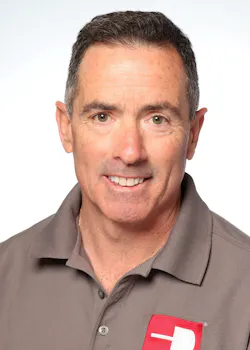
Michael Keegan, Vice President of Security Products, Magnasphere
Nominated by: Joseph Hedeen
For 16 years, Mike Keegan has crisscrossed the United States with a small wooden door and a 15-minute presentation, talking to alarm companies, engineers, specifiers, and architectural firms about door contacts. No ad agency, no back-office support. He made demo videos at his kitchen table, used LinkedIn to get appointments, and got on planes without hesitation. He made the case, contact by contact, for a more secure switch technology, until a distributor who once told him “Keegan, I’ve got enough door contacts” called back within a year to set up Magnasphere as a vendor because customers were asking for it. In 2010 nobody had heard of Magnasphere. In 2026 it is a global brand. Mike Keegan is why.

Kevin Kiley, CEO, Airia
Nominated by: Claire Kahn
When AI adoption began sweeping through enterprise organizations, most business leaders were asking one question: How fast can we deploy this? Kevin Kiley was asking a different one entirely: What happens when no one is watching?
That instinct – to look past the excitement and into the risk – is what defines Kevin Kiley as a security business innovator. As Chief Executive Officer of Airia, the leading Enterprise AI Management platform, Kevin has built a company around a truth the industry was slow to confront: organizations were racing to adopt
AI agents across their operations without putting in place the governance and security infrastructure to manage them responsibly.
Kevin’s path to this moment is grounded in a rare pattern of category-defining success. As part of the early executive leadership team at AirWatch, he helped scale the company from 350 million in revenue, a trajectory that culminated in a landmark $1.54 billion acquisition by VMware.
He then joined OneTrust as Chief Revenue Officer, where he was instrumental in driving the company from zero to more than $400 million in ARR and 14,000 global customers in just five years – a hypergrowth story that established OneTrust as the defining platform in data privacy and trust. Most recently, as CRO of Lacework, Kevin led a successful strategic turnaround that resulted in the company’s acquisition by Fortinet. Each chapter reflects the same core skill: identifying where enterprise risk is headed before the market catches up.
At Airia, Kevin applied that same foresight to the AI era. Airia originally set out to build an AI agent orchestration platform. But through thousands of conversations with customers and industry leaders, Kevin recognized a critical and largely unaddressed gap: the ability to see, secure, and govern AI agents once they were operational inside the enterprise. He made the strategic call to expand Airia’s platform to include enterprise-grade security and governance capabilities – not as an add-on, but as a foundational pillar.
That reframe changed the trajectory of the company. Rather than building another tool for creating AI agents, Kevin pushed Airia to become the platform that could detect threats and enforce policy at runtime across every AI agent in an organization, regardless of where or how it was built.
His framing of the problem is both precise and urgent. “Security asks if someone can break in,” Kevin has noted. “Governance asks if we can stand behind what AI agents do – both today and six months from now.” As AI agents proliferate across departments, each making autonomous decisions that affect customers, finances, and regulatory standing, the inability to audit or explain those decisions is no longer a theoretical risk. It is a present one.
Kevin built Airia around that reality, helping hundreds of enterprises deploy AI with the visibility and control their boards, regulators, and customers demand.
In an industry prone to chasing the next innovation, Kevin Kiley’s defining contribution is the discipline to ask what comes after – and the conviction to build for it.

Helen Kimber, Senior Data Scientist, Genetec
Nominated by: Beth Burnsed
Over seven years at Genetec, Helen Kimber has led machine learning research and development projects that have materially improved the capabilities of Genetec solutions. She led a patent-protected machine learning research project that became a core component of the new intelligent search capabilities in Genetec Security Center SaaS, launched at ISC West 2026. She co-founded DART, Genetec’s cross-departmental Data, Analytics and Research Team, which shares internal research and AI use cases to expand understanding across the organization. She was named Genetec Inventor of the Year in 2024 and was nominated for a Novi Award in 2026. Beyond her own output, she is known for taking complex topics and making them accessible, providing guidance on machine learning projects and analytics tooling across teams that lack in-house expertise. She advocates for comprehensive datasets to accelerate research, and she consistently invests in the growth of the people around her.
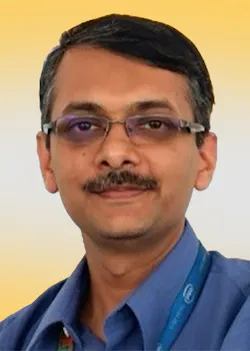
Amol Kulkarni, Co-Founder, Dragonfruit AI
Nominated by: Natasha Mathur
With 15 years at Intel across hardware security and cryptography, Amol Kulkarni understands what fails once you move beyond controlled environments. When AI entered the security industry, most conversations drifted toward GPU upgrades and infrastructure investments that enterprise security teams could never realistically scale across thousands of locations. Amol pushed in a different direction, asking a harder question: what actually survives at the 5,000th site? Back in 2019, he was already running production AI workloads on Mac Minis at enterprise retail locations, years before the rest of the industry caught up. The platform he built delivers video intelligence across distributed locations on existing cameras, across fragmented networks, without on-site support or hardware refresh cycles. He consistently optimized for real-world survivability over technical sophistication, and that discipline is what makes his work genuine innovation.

Steve Lindsey, Co-Founder & Chief Strategist, LVT
Nominated by: Mary Rose McCaffrey
Steve Lindsey co-invented the mobile security unit market nearly 15 years ago and has kept building since, accumulating 11 patented inventions that have redefined how organizations deliver security protection in areas traditionally too large, costly, remote, or complex to cover. His solutions prioritize minimal environmental impact with optimal uptime. Most recently, he launched the industry’s first agentic AI-powered talk-down feature, delivering customized audio trained on human behavioral data without leveraging facial recognition. Many in the industry said it wasn’t yet possible. LVT’s products demonstrate its capability daily. Steve’s technical range spans electronic and network engineering, cloud computing, and wireless communications, and his commitment to ethical development runs through all of it. His nominator, drawing on decades in government and private industry security, places him among a select few whose vision genuinely reflects the challenges of modern security, matched with the technical skill to solve them.

Brian Lohse, General Manager, Alarm.com for Business
Nominated by: Chelsie Woods
Brian Lohse recognized early that the security industry’s reliance on on-premise systems was creating poor end-user experiences and limiting long-term growth for service providers. As co-founder of Secure-i, he helped build one of the industry’s earliest commercially viable cloud-based video platforms, proving that cloud delivery could simplify deployment, improve reliability, and unlock new services for integrators. Following that acquisition, he carried the vision to Alarm.com, where he created one of the first truly unified commercial platforms integrating intrusion, access control, video, fire, fleet, analytics, and automation through a single cloud interface. As General Manager of Alarm.com for Business, a division he has led for more than 11 years, Lohse has scaled that platform to over one million unique business properties. He effectively wrote the go-to-market playbook for cloud-based recurring revenue security, and the industry has been running his plays ever since.
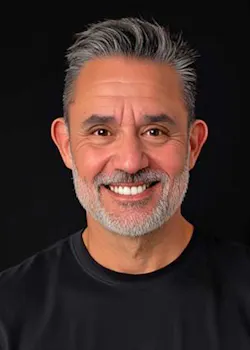
Robert Mancuso, Chief Business Officer, North America, iLOQ
Nominated by: Sadie Stiles
Robert Mancuso didn’t invent iLOQ’s technology, and he’ll tell you that directly. What he has done is become the person in North America who makes the market understand why it matters. The pitch is genuinely different: traditional access control puts power and intelligence at the door and asks the user to bring a credential to that powered point. With iLOQ, the lock requires no batteries or wiring; power and credential arrive together through the user’s phone or key fob. That flips the conventional model entirely. Robert is the educator driving that mental shift, taking a concept that is technically distinct from everything the market knows and making it understandable, usable, and relevant to customers, partners, and integrators. Developing a new category is hard. He believes in this one, and it shows.
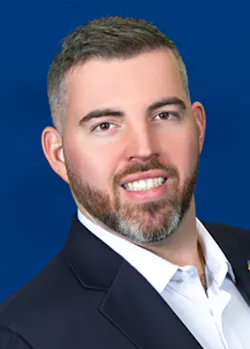
Steven McCory, President, General Integrated Project Management & Services (GIPM)
Nominated by: Lon Bazelais
Following his service in Afghanistan with the 82nd Airborne Division, Steven V. McCory built a career spanning project management, operations, business development, and executive leadership. His progression from frontline operations to strategic advisory roles provides a unique perspective on organizational growth, operational excellence, and business execution.As President of GIPM, a Service-Disabled Veteran-Owned Small Business (SDVOSB), McCory advises organizations and system integrators on strategic growth, operational improvement, project management, GSA schedule readiness, government contracting, CMMC compliance, and security system design and specification. Committed to service beyond business, McCory serves on the SIA Veterans in Security Advisory Board and as Membership Chair and Military Liaison for the Long Island chapter of ASIS Intl., supporting veteran workforce development and the next generation of industry leaders.
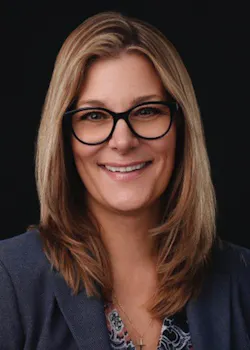
Stacy Molenda, Integrated Solutions Specialist, ASSA ABLOY
Nominated by: Ward Figge
Stacy Molenda wins on tenacity and relationships, often in that order. On a large project she was pursuing, the prospect decided to stay with the incumbent competitor. Most salespeople walk away at that point. Stacy stayed connected, offered support where she could, and maintained a positive relationship without pressure or agenda. She was eventually invited back into the process and awarded the opportunity. It sounds simple, and that is precisely the point: her approach is grounded in genuine service rather than transaction, and it produces outcomes that purely transactional approaches don’t. In an industry where relationships are everything, Stacy has built her reputation on being the person who shows up, stays present, and delivers.
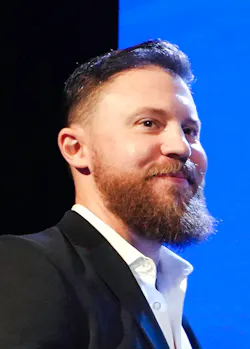
Don Morrow, CEO & Founder, HighlandTech
Nominated by: Melissa Morrow
Don Morrow doesn’t talk about AI the way most people in tech do. He talks about the real operational problems security businesses deal with every day: missed calls, delayed responses, overwhelmed teams, information lost between systems and people. At ISC West, demoing Electra to security integrators, he skipped the buzzwords and focused on practical scenarios, what happens when a customer calls after hours, how service requests get buried, why technicians lose time chasing incomplete information. People connected with it immediately because it reflected how their businesses actually run. Don spent years around physical security operations before building HighlandTech, and that grounding shows. He focuses on keeping humans in control while using AI to strip out repetitive work and improve communication, building solutions that change how people work day to day rather than making the loudest claim.

Matthew Narowski, Chief Operations Officer, Security Central
Nominated by: Tyler Buchanan
Over the past 24 months, Matt Narowski has moved ideas from concept to production faster than most people in this industry manage in five years. At Security Central, he has led development of multiple intelligent voice agent solutions, brought a new technician app to market, and driven a wide range of operational improvements that have changed how dealers, technicians, operators, and customers experience monitoring every day. The recognition Security Central has earned for its innovative technology during this period has Matt’s fingerprints on it. What makes him stand out is that he has kept the same pace. He was recognized as a Security Innovator before, and rather than coast on that, he kept building, kept pushing, and kept raising the standard for his team and for the industry.
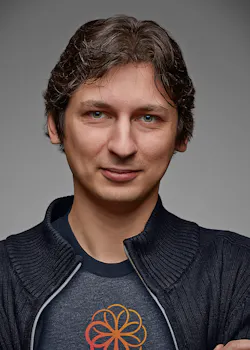
Alex Pachikov, CEO & Founder, Sunflower Labs
Nominated by: George De Marco
I’ve seen a lot of “game changers” that weren’t. Alex Pachikov and Sunflower Labs are the real thing. What Alex built is a fully autonomous drone-in-a-box solution, designed from the ground up to operate without a human in the loop. The Beehive System extends security infrastructure in ways most of us considered commercially unviable just a few years ago, and it’s actively deployed with recognizable names worldwide. What sets real innovators apart is straightforward: did you build something that works, that customers use, and that changes how we think about delivering security intelligently? Alex did all three.

Darron Parker, EVP Sales, IDIS Americas
Nominated by: Kristen Plitt
I was in the middle of a media interview recently, talking about AI and analytics and where surveillance is headed, and I found myself pausing. Because what I was actually thinking about was something Darron had said. We were positioning some newer AI-driven capabilities for an upcoming exhibition, and the conversation was going exactly where you’d expect: features, differentiation, the usual. Darron cut through it and said, “If this doesn’t actually make it easier for our customers to get value from it, we’re just adding complexity.” That shifted everything. In an industry that tends to equate innovation with adding more, he consistently pushes toward what can be simplified or removed so the technology actually works in the real world. That mindset has rippled into how we approach customers, partners, and internal decisions. Real innovation, in a world where everyone makes the same things, is about making what matters actually usable. That’s what Darron drives.
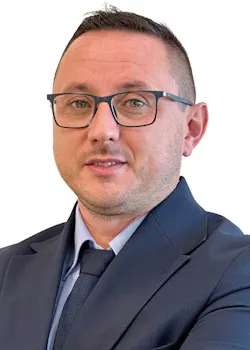
Fabio Perri, Business Development & Technical Sales Engineer, CIAS Security
Nominated by: Cathy McHugh
For the past two and a half years, Fabio Perri has been helping open the North American market for CIAS Security Systems, and he has done it the hard way: traveling throughout the continent, sitting with integrators, consultants, and end users, and offering no-obligation proof-of-concept installations so organizations can experience the technology before committing. He develops creative solutions for complex perimeter security challenges at critical infrastructure sites, and he is available at a moment’s notice regardless of time zone. What makes Fabio stand out is equal parts technical and human: he talks to people rather than hiding behind email, he invests in customers before they are customers, and he brings genuine care to every engagement. His colleagues call him a Rock Star. His customers call him back.

Kristen Plitt, VP of Marketing & Sales Development, IDIS Americas
Nominated by: Darron Parker
Marketing and sales development are rarely combined into a single role because the skillsets pull in different directions. Kristen Plitt took both on and made them reinforce each other. She treats brand-building, awareness, lead generation, sales training, and customer experience as one connected story rather than separate silos, which means security technology lands with customers as something accessible and usable rather than intimidating and abstract. The moment that captured it for her nominator was a project with Garage Monkey, one of IDIS Americas’ most distinctive customers. Kristen simplified a complex feature set into plain language the sales team could actually use, then turned around and built what her nominator calls the best case study he’s ever seen: bold, informative, and genuinely fun to watch. The customer told them directly that their value to Garage Monkey traces back to Kristen’s work.
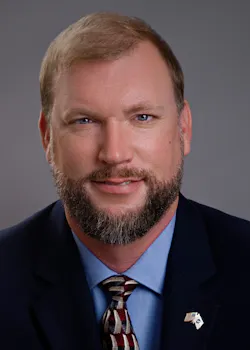
Jon Polly, Chief Solutions Officer, ProTecht Solutions Partners
Nominated by: Brett Zelnio
It’s rare to find someone who understands not just where a technology is today but where its trajectory is pointing. Jon Polly is that person. He turns up consistently on panels and in closed-door think-tank sessions mapping the future of security technology, and his genuine curiosity is what sets him apart from most consultants, who tend to stay cautious about speculation. Jon dives in headfirst. He recently provided a grounded, current-state assessment of drone detection, mitigation, and the regulatory landscape when most people in the room were still getting oriented. In a more recent conversation, he was already working through the implications of a Wells Fargo patent on nano-tech biometric dust. That combination of technical rigor and forward-looking thinking is what makes him one of the most valuable minds in security consulting.

Sylvain Prevost, Senior Fellow, HID
Nominated by: Steve Belt
Sylvain Prevost holds the title of Senior Fellow at HID, one of very few in the entire ASSA ABLOY organization, and the distinction is well-earned. His realization rate for turning research into products is 60 to 70 percent; the industry average is 10 to 20. He holds more than 40 patents. He led development of the iCLASS SE readers, the first HID readers with a secure element, which remain among the most impactful products the company has ever shipped and are still deployed globally. In 2013, Google invited him to contribute code and help shape NFC and Host Card Emulation standards for mobile devices; that code became the foundation for HID’s mobile access division, which launched Mobile Access in 2014 with the Seos mobile app. He also created the proof of concept for what became Mercury’s M1 controller platform. Beyond his own output, he mentors the next generation of technical leaders at HID with the same care he brings to his own work.
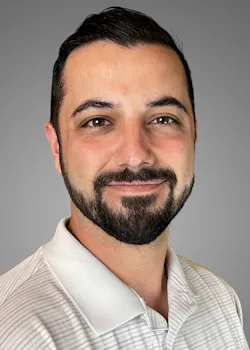
Corey Russell, Technical Solutions Specialist, Gallagher Security
Nominated by: Jeff Ogborn
Corey Russell is a self-taught programmer who started with basic Python scripting and turned that skill into something the industry didn’t know it needed. When Gallagher built QuickSwitch to enable cost-effective migrations from legacy access control platforms, Corey asked the question nobody else had: what happens to the data? He wrote scripts to extract data from ODBC-style databases and map it directly into the Gallagher system, then built a window viewer that lets users clean legacy data, correct misspellings, and add required I/O before import, ensuring the new system starts error-free. The result is a migration tool that has become genuinely popular with customers, drawing consistent feedback about significant time savings and the elimination of tedious manual data entry. Corey kept the user experience front and center throughout, and it shows.
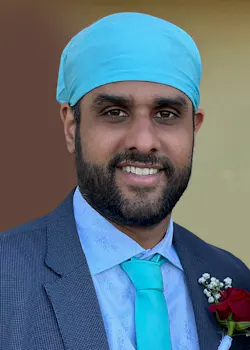
Sunpreet Sandhu, Lead Technician, Supertech Systems
Nominated by: Balvinder Sandhu
Sunpreet Sandhu has been a driving force behind Supertech Systems’ growth, bringing a rare combination of deep technical knowledge and customer-focused leadership to everything he does. His expertise spans video surveillance, access control, Control4, and Crestron systems, giving him genuine end-to-end capability across the residential and commercial security stack. He operates as both a hands-on technician and a sales resource, with a strong instinct for what works in the field and what doesn’t. His commitment to customer service and his willingness to go beyond what’s expected has helped Supertech build a reputation strong enough to earn recognition as one of the top alarm companies in Vancouver. He works six days a week because security is his passion, and the results reflect it.

Alex Sappok, CEO, RaySecur
Nominated by: Peter Basile
Powder-based mail threats are increasing fast, with fentanyl now classified as a weapon of mass destruction and incidents turning up everywhere from correctional facilities to corporate headquarters to government offices. Most people in the industry kept refining the same approach used for decades. Alex Sappok asked a harder question: what if that approach was wrong for the threat in the first place? Rather than improving on X-ray, he pushed toward terahertz imaging, which detects fine powders and subtle anomalies traditional systems routinely miss. He also thought about the operators running these systems every day. Traditional X-ray machines are massive, radiation-emitting units requiring shielding and ongoing safety management. The result of Alex’s work is a system that is more effective against modern mail threats, safer for the people using it, and more sustainable, with no radiation, no lead shielding, and no hazardous operating environment.
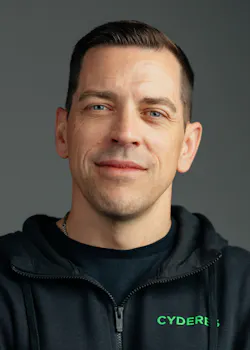
Chris Schueler, Chief Executive Officer, Cyderes
Nominated by: Natalie Hog
What makes Chris Schueler different from most executives in this space is that his instinct to protect people runs through everything he does, not just professionally. Army veteran, father of three daughters, cybersecurity CEO, avid biker. It’s the same instinct showing up in different places. I watched him walk into a meeting that was going sideways and turn the whole room around without minimizing what was happening or letting anyone spiral. Everyone at the table ended up feeling like they were solving the problem together. He also goes into high schools to talk to kids about cybersecurity careers, not as a PR play but because he genuinely cares about growing this industry beyond his own company. Most executives are good at running a business. Chris does that, and you walk away from a conversation with him thinking: that person makes me want to do better work.

Serhiy Serdyuk, VP of Product Management, NAKIVO
Nominated by: Mariia Lvovych
Serhiy Serdyuk has done something the data backup industry quietly assumed wasn’t possible: built a genuinely enterprise-grade data protection platform and kept it affordable enough for the organizations that need it most. Under his direction, NAKIVO built out capabilities that belong at the enterprise level, including immutable backups, air-gapped storage, automated backup verification, site recovery orchestration, and multi-factor authentication, and made them available at a price point most competitors reserve for their entry-level tier. Customers switching from Veeam or Commvault consistently report significant cost reductions without losing the capabilities they need. NAKIVO has earned recognition from G2, Gartner Peer Insights, Capterra, the 2025 Global Recognition Award, and Globee Awards in 2026, with a 98% customer satisfaction rate. In an industry where complexity is often equated with progress, Serhiy’s legacy is making serious data resilience accessible to organizations of every size.
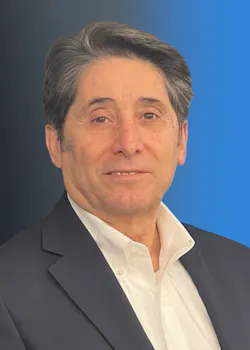
Sam Shalaby, CEO, Wavestore
Nominated by: Kevin Baldwin
“Unified security” became the buzzword of 2026. Sam Shalaby has been saying it for three years. When he acquired Wavestore, he came in with a clear and specific vision: unify access control, video management, and event intelligence into a single platform, built cloud-native, always up to date, with modern UI/UX that matches the interface quality people expect in every other part of their lives. He has been building toward that through WaveFusion, Wavestore’s unified security platform. What distinguishes him is that he listens as deliberately as he leads: to his gut, to his partners, and to his customers, iterating based on what he hears. He sold Feenics and said he still had unfinished business. Wavestore is where he is finishing it.

Kumar Sokka, CEO, Acre Security
Nominated by: Beth Hancock
The orthodoxy in physical access control for the past five years has been rip and replace. Kumar Sokka became CEO of Acre Security in June 2025 and refused it. He inherited a portfolio of long-serving on-premises platforms alongside an unformed cloud-native vision, and rather than deprecate the legacy stack and treat migration friction as someone else’s problem, he built One Acre: a strategy centered on a single insight, that customers want a path forward that respects what they’ve already built. The technical centerpiece is Acre Bridge, a hardware device that lets a legacy on-premises system communicate directly with Acre’s cloud-native platform in parallel, letting customers adopt cloud management, mobile credentials, and a unified operator experience without touching the stack they installed years ago. The rest of the category spent five years politely pretending that problem didn’t exist. Kumar solved it.

Debra Spitler, VP, Business Development, HID
Nominated by: Brent Vernon
With 46 years in the security industry, Debra Spitler has fingerprints across more of the modern access control landscape than most people realize. In 2007, she led development of Crescendo, an enterprise smart card that served as a stronger alternative to password-based authentication at a time when no comparable converged credential solution existed. In 2011, she piloted mobile access credentials at Arizona State University, one of the earliest real-world deployments of mobile access, an approach still in use today. More recently, she drove HID’s ability to bring mobile access into Apple Wallet and Google Wallet, moving the entire industry forward. She works across HID and ASSA ABLOY to align product development with Apple, Google, and Samsung, keeping HID in step with the pace of consumer technology. She is, as her nominator puts it, an unsung hero of the industry.

Chaz Stennett, Vice President of Sales, Select One Security
Nominated by: Todd Lemoine, Krissy Budish
Chaz Stennett has built a reputation across the Midwest as someone who genuinely moves the needle for the dealers and integrators he works with. He spent years as a Speco camera representative, educating dealers on camera deployment, recurring monthly revenue strategies, remote management, and the technology behind the systems, going well beyond the typical manufacturer rep role. Since joining Select One Security, he has continued that mission at a broader scale, helping businesses across the region better understand surveillance solutions and shift from reactive to proactive security postures. His passion for the industry, his commitment to education over transaction, and his track record of bringing real-world camera deterrence and large-scale video surveillance deployment knowledge to his customers make him a consistent force for raising the bar in his market.
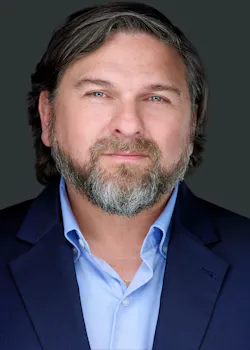
Cameron Tabor, Senior Vice President of Software Engineering, Protos Security
Nominated by: Ava Noonan
Cameron Tabor identified a problem most security companies live with every day: massive amounts of operational data inside the business, but getting useful answers from it was still painfully manual. Clients had dashboards, but answering questions about incident trends, vendor performance, or recurring issues still required people pulling spreadsheets. Cameron led Protos Labs to build an AI-powered assistant directly inside the Protos Client Portal, letting users ask questions conversationally and receive real-time operational insights instantly. What took hours of manual back-and-forth can now be done in minutes. What sets his work apart is that he approached AI as a solution to a practical business problem, building a foundation for broader operational intelligence across the platform, and positioning Protos for the next generation of AI-enabled security operations.

Kurt Takahashi, Industry Consultant and Board Member, Paravision and Constellis
Nominated by: Nicola Oakie
Kurt Takahashi has led organizations including Pelco, AMAG, and Netwatch. He offers a broader perspective than many C-suite leaders by combining deep industry knowledge with a clear sense of how technology, business, and people work together. By linking business strategy, technology, customer engagement, and global operations, he has helped those organizations grow and transform. Kurt encourages everyone in an organization to look beyond their own departments or projects and focus on solving bigger business challenges. He understands hardware, software, services, and the people who make them work, and he knows how to bring them together. The cultures he has built show up in business results and in the collaboration, innovation, and long-term success of his teams.

Mats Thulin, Director of AI & Analytics Solutions, Axis Communications
Nominated by: Erin Hall
Since joining Axis in 2010, Mats Thulin has shaped the company’s AI-driven video analytics strategy with a consistent through-line: AI should augment human decision-making, not replace it. He spearheaded Axis’s approach of running AI and deep learning analytics directly on network devices at the edge, improving privacy, cybersecurity, and system efficiency simultaneously. Beyond the technical work, he has been a central figure in the broader industry conversation about how AI should be developed and governed, translating complex technology into operational terms that customers and partners can actually act on. His influence runs from R&D through partner education, policy engagement, and thought leadership. In a moment when the security industry is sorting through an enormous amount of AI noise, Mats is one of the people helping the field land on what responsible, practical deployment actually looks like.
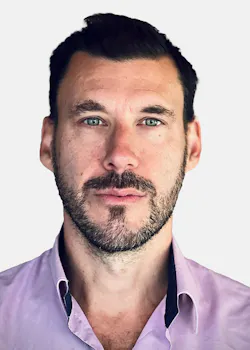
Marcus Tonndorf, CEO & Founder, Hexlox
Nominated by: Ingo Blaettermann
Marcus Tonndorf started Hexlox in 2016 after identifying something most people in security had overlooked entirely: critical infrastructure, data centers, and telecom equipment are routinely held together by standard bolts anyone can open in seconds. His solution secures existing bolts without requiring system redesign. The company became a market leader in the bicycle segment, but Marcus’s vision was always broader. When the time came to expand into infrastructure and security markets, he made the difficult call to restructure, accepted the conflict and risk that came with it, and started building toward the larger opportunity. His nominator watched him hear about ISC West on a Monday, book a flight that evening, fly 23 hours with three stopovers, and return with 48 leads. That relentless, vision-driven drive is what defines him.
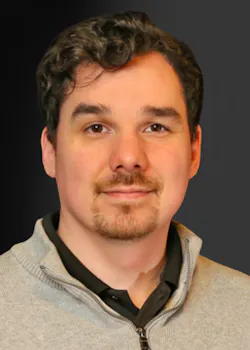
Jon Uren, President & CEO, Cypress Integration Solutions
Nominated by: Tristin Vaccaro
Jon Uren is one of the few CEOs in this industry in his thirties, and he has earned the seat. At Cypress Integration Solutions, whose tagline is “Problem. Solved.”, he leads with that same literal commitment: when a shipping problem needed fixing, he vibe-coded a custom packing calculator and implemented a 3D printer to fabricate containers that better protected products in transit. That combination of engineering instinct and business pragmatism runs through everything he does. Beyond Cypress, Jon serves as vice-chair of the SIA OSDP working group, where he coordinates standard releases, drives marketing initiatives to accelerate OSDP adoption, and creates real-world interoperability testing opportunities across the industry. He is equally comfortable solving a customer’s connectivity problem on the floor and shaping the standards that the whole industry will follow.

Wes Usie, Founder & President, CHeKT
Nominated by: Mark Donahue
Wes Usie spent more than 35 years in the security industry before identifying a gap that had been accepted as an inherent limitation: traditional alarm systems are reactive, slow to verify threats, and overwhelmed by false alarms. His response was to help establish an entirely new category, Proactive Visual Security, and to build CHeKT around it. The platform is cloud-native, unifying cameras, AI analytics, alarm systems, and monitoring centers into a single ecosystem that enables real-time threat verification and intervention before crimes escalate. Built, as Wes puts it, “for dealers, by a dealer,” CHeKT reflects his deep understanding of what integrators and monitoring centers actually need to deploy scalable solutions. The model attracted Alarm.com, which made a majority acquisition of CHeKT. The industry Wes entered more than three decades ago now has a category he helped create.
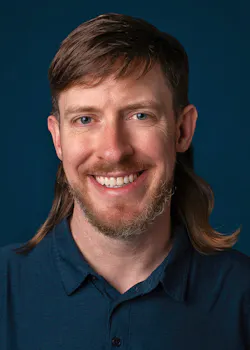
Aaron Volkmann, VP, Engineering, HiveWatch
Nominated by: Jenna Hardie
Aaron Volkmann came up through dial-up BBS, legacy satellite systems for the U.S. Air Force and Space Force, and a career spent modernizing infrastructure where failure carries real consequences. That background is exactly why he fits at HiveWatch. As VP of Engineering, Aaron sits at the intersection of engineering, sales, and operations, meaning when a customer surfaces a challenging integration question, he leads the charge alongside his team to solve it. What sets him apart is his disciplined restraint: he describes himself as a “fast follower,” which sounds humble until you realize that in security, chasing unproven technology can expose your customers. That combination of technical depth and hard-won pragmatism is what makes Aaron a genuine asset to this industry.
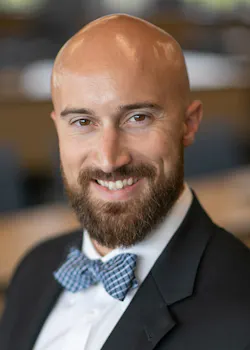
Tyler Webb, Mobile Ambassador, Allegion
Nominated by: Carissa Buckley
Tyler Webb saw something most of the industry was still debating and decided to prove it. He helped build the nation’s first mobile wallet access experience at an off-campus student housing community, a project that required aligning four organizations, The Preiss Company, IRIS Technologies, Quext, and Allegion, on a first-of-its-kind deployment. When technical roadblocks came up, Tyler translated complexity into next steps and kept the project moving. What the project proved matters as much as the project itself: he reframed how integrators think about their role in a mobile-first world, not as people being displaced by technology but as essential partners in deploying it. By advocating for open architecture and smarter credential management, he gave the trade a roadmap for offering higher-value services. The result is already influencing how multifamily and student housing operators approach access control.

Jeremy White, Founder & CEO, Pro-Vigil
Nominated by: Satish Raj
Jeremy White founded Pro-Vigil 20 years ago on the belief that remote video monitoring could be smarter, faster, and more useful than the industry had bothered to make it. His commitment to reinvesting in the company rather than outsourcing has shaped everything: Pro-Vigil built its own Surveillance Operations Center, which has since earned UL certification and The Monitoring Association’s Five Diamond Designation. He has continuously pushed the AI models, the role of trained human intervention, and the technology that enables prevention rather than response. Last year, Pro-Vigil helped prevent nearly 28,000 crimes across customer sites. Two decades in, Jeremy’s fingerprints are on every one of them.
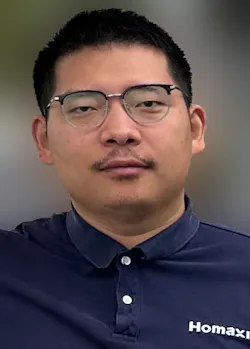
Yong Yang, Regional Manager, Homaxi
Nominated by: Raul Baltodano
Yong Yang focused on one of the security industry’s most persistent deployment challenges: locations that need surveillance coverage but lack nearby power or network infrastructure. Traditional solutions, trenching or trailer-based systems, are expensive, disruptive, and often visually incompatible with the environment. His approach, which he describes internally as “Architectural Security,” introduced solar-powered surveillance systems using 5G connectivity that can be rapidly deployed and integrated more naturally into modern environments. The shift in philosophy is meaningful: rather than forcing environments to adapt to security infrastructure, his work makes security deployment flexible, practical, and visually compatible with its surroundings. For locations where conventional approaches simply don’t work, Yang’s framework opens coverage that wasn’t previously viable.

Eric Yunag, EVP, Product & Services, Convergint
Nominated by: Shannon Symalla
Eric Yunag’s instinct when he sees an unmet need is to run toward it, not around it. When AI flooded the security industry with questions and uncertainty over the past year, customers were trying to navigate a major shift with no clear framework. Eric went directly to customers, global partners, and operational teams across industries to understand the challenges firsthand. He listened, tested, and refined through 47 iterations before launching “The Path to Intelligent Security” this spring: a framework that takes a genuinely complex topic and makes it practical and actionable, giving organizations a way to assess where they are, where AI creates value, and how to build a roadmap forward. Since launch, he has stayed deeply involved, leading tabletop sessions with hundreds of customers and working with manufacturers to align technology roadmaps to real outcomes. The market is still debating the questions. Eric built the answer.

Brett Zelnio, Principal Consultant, Stratified Logic Group
Nominated by: Brent Lawson, Jon Polly
Consigliere. That’s the word that comes to mind. Brett Zelnio is the person serious security practitioners call when the challenge is real and the answer matters. He built out ZBeta LabZ, a testing environment unlike anything else in the industry: a camera wall with adjustable height and angle, controllable lighting, swappable systems, and XR integration that lets you stress-test cutting-edge and future technologies in a single space. The ability to compare combinations and generate real data that simply wasn’t available before sets this apart. Jon Polly watched Brett walk into an HID event and boldly tell them to discontinue prox as a technology. When they said it couldn’t be done, Brett painted a picture clear enough that they understood it could. Thorough, technically credible, and an excellent orator, he recently launched Stratified Logic Group, and the industry is better for it.
About the Author
 Paul Rothman
Paul Rothman
Editor-in-Chief/Security Business
Paul Rothman is Editor-in-Chief of Security Business magazine (www.securitybusinessmag.com) and has been covering the security industry for various outlets since 2001. Email him your comments and questions at [email protected].