Top 10 Most-Read Security News Stories of 2025
Key Highlights
-
Policy and regulatory decisions played an outsized role in shaping security conversations in 2025
-
Technology disruption — from AI to consumer tech — continued to challenge established security business models
-
Leadership changes and legal rulings underscored growing risk, accountability and scrutiny across the industry

Throughout 2025, SecurityInfoWatch readers closely followed breaking news that signaled where the security industry is headed and where pressure points are emerging. From government actions and regulatory shifts to market disruption, legal battles and leadership changes, these stories captured moments that carried immediate operational and strategic implications for security professionals. The following list highlights the most-clicked news articles published on SecurityInfoWatch in 2025, with each headline linking to the full report.
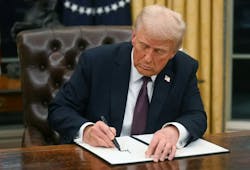
Trump Administration Disbands Cyber Safety Review Board
In one of its earliest cybersecurity actions, the Trump administration disbanded the Cyber Safety Review Board, a public‑private body created to analyze major cyber incidents and recommend systemic improvements. The move halted ongoing investigations, including reviews tied to telecom infrastructure attacks, prompting concern from security and technology leaders who warned the decision could weaken cross‑sector collaboration and national cyber resilience.

Canada Orders Hikvision to Cease Operations, Cites National Security Concerns
The Canadian government ordered Hikvision to cease operations in the country following a national security review, citing risks associated with the Chinese‑owned video surveillance manufacturer. The decision intensified global scrutiny of foreign surveillance technology and raised questions for integrators and end users about supply chains, compliance obligations, and the long‑term viability of certain video security vendors.

Apple’s Reported Camera Plans Could Disrupt Home Security Market
Reports that Apple is exploring camera‑based smart home and security products sparked debate about potential disruption in the residential security market. Analysts noted Apple’s ecosystem, brand trust, and integration capabilities could challenge established alarm and smart home providers, while raising broader questions about data privacy, platform control, and how traditional security companies compete with consumer tech giants.

Vivint Loses Appeal in $189M CPI Dispute
A federal appeals court upheld a $189 million judgment against Vivint in a long‑running legal battle with CPI Security Systems over deceptive sales practices. The ruling reinforced legal and reputational risks tied to aggressive door‑to‑door sales tactics and served as a cautionary signal for residential security providers navigating compliance, ethics, and competitive pressure in customer acquisition strategies.

Trump Executive Orders Poised to Impact Security Industry
A series of executive orders issued by President Trump signaled potential shifts in federal policy affecting the security industry, including changes to regulation, trade, and government oversight. Industry stakeholders monitored the directives closely, assessing how new priorities around national security, technology, and procurement could influence manufacturers, integrators, and service providers operating in regulated markets.

Simplisafe Puts On the White Gloves
SimpliSafe introduced a premium ‘white‑glove’ service option aimed at elevating customer experience through professional installation and personalized support. The move reflected growing competition in the residential security market, where providers are seeking differentiation through service quality, customer retention, and higher‑value offerings rather than competing solely on price or DIY convenience.

‘It Could Be a Disaster for Us’
Security industry leaders warned that proposed regulatory and spectrum changes could significantly disrupt alarm monitoring and critical communications services. Stakeholders expressed concern that shifts in federal policy could undermine reliability, increase costs, or limit operational capabilities, highlighting the industry’s dependence on stable regulatory frameworks to support life‑safety and emergency response systems.

Eagle Eye Networks Unveils AI‑Powered Gun Detection Solution
Eagle Eye Networks announced the launch of an AI‑powered gun detection solution designed to identify visible firearms in video feeds and alert security teams in real time. The announcement underscored growing interest in AI analytics for violence prevention, while also raising questions about accuracy, response protocols, and the role of automated detection tools in broader security strategies.

Johnson Controls Taps Danaher Executive Joakim Weidemanis as Next CEO
Johnson Controls named Joakim Weidemanis, a longtime Danaher executive, as its next chief executive officer. The leadership transition signaled a continued focus on operational discipline, portfolio optimization, and growth in building technologies, with security and fire systems remaining central to the company’s long‑term strategy amid evolving market demands.

Trump Budget Proposal Slashes Key Security Preparedness Funds
The Trump administration’s proposed federal budget included deep cuts to security preparedness and emergency management programs, prompting concern from public safety and security professionals. Critics warned the reductions could weaken infrastructure protection, disaster readiness, and grant‑funded initiatives relied upon by state and local agencies to address evolving threat environments.
About the Author
 Rodney Bosch
Rodney Bosch
Editor-in-Chief/SecurityInfoWatch.com
Rodney Bosch is the Editor-in-Chief of SecurityInfoWatch.com. He has covered the security industry since 2006 for multiple major security publications. Reach him at [email protected].