The Smart Money: Apple Makes New Smart Home Push
Key Highlights
- Apple’s Home Collection, built with LG and Schneider Electric, is entering a market where four in five smart home owners would consider switching platforms.
- Security providers now hold 16% of primary smart home control. Their monitoring relationships and recurring revenue give them an edge.
- ADT will install Apple’s lineup, and professional monitoring is the next area to watch.
This article originally appeared in the November 2026 issue of Security Business magazine. Don’t forget to mention Security Business magazine on LinkedIn or our other social handles if you share it.
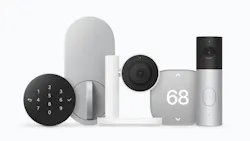
In October, Apple announced its new Apple Home Collection, a lineup of smart home accessories – including indoor and outdoor cameras, thermostats, temperature sensors, and a video doorbell and door lock – designed in collaboration with LG Electronics and Schneider Electric.
While Apple has been a relatively small player in smart home control compared with Amazon and Google, this marks a major expansion, bringing entertainment, communications, security, and home automation together through a more integrated platform. Parks Associates research consistently finds that one-quarter of U.S. households are Apple loyalists, owning three or more Apple devices – all other brands rank far behind.
The question is: Can Apple make up ground in a market where Amazon, Google, and Samsung have spent years building their positions? Its extensive consumer electronics ecosystem, loyal customer base, and established reputation for privacy give it a good chance.
Consumers Are Open to Change
The partnership between Apple and LG is interesting, particularly because Parks Associates research shows that consumers are not firmly committed to their existing smart home platforms.
Security companies also have something that many device manufacturers want: recurring service revenue and an ongoing relationship with customers.
Smart home device owners use many platforms for control, and four in five say they would consider switching their primary platform – with 46% citing the ability to control all their devices in one place. Consumers also point to better security and privacy, broader compatibility, and easier setup.
That is a significant finding for Apple, given its broad user base. Parks Associates research finds that 48% of smart home device owners now use a single platform to manage their devices, up from 36% in 2024. Consumers are moving toward fewer platforms, even as the number of companies competing for that position continues to grow. Amazon remains the leader in primary smart home platform usage at 34%, followed by Google at 13% and Apple at 10%. Those positions are well established, but consumers are clearly willing to reconsider their choices.
Security Providers Gain Ground
Competition is growing beyond the major consumer technology companies. Security providers have been gaining ground, as their share of primary smart home control increased to 16% in Q2 2026. These companies have an established relationship with the household, often through a paid monitoring service, and they are extending that relationship into cameras, automation, energy management, and new forms of home monitoring.
ADT’s acquisition of Origin AI is a good example of how the security industry is investing in technologies that go beyond traditional alarm systems. Wi-Fi sensing could support additional services related to safety, awareness, and monitoring in the home.
Security companies also have something that many device manufacturers want: recurring service revenue and an ongoing relationship with customers. That gives them an advantage as connected home products become more closely tied to services.
The Apple-ADT Partnership
Apple’s partnership with ADT for professional installation is an important part of its expansion into home security. ADT will provide installation services for HomeView and select connected home products, including LG cameras, video doorbells, and smart locks.
The relationship gives Apple access to ADT’s installation network and experience working with security products in the home. For ADT, it creates an opportunity to reach Apple’s large customer base, including households that may not have previously considered professional installation.
There has been no mention of professional monitoring as part of the agreement, but this will be an important area to watch, particularly for cameras and video doorbells. ADT already has the monitoring infrastructure, experience, and customer relationships to support these services, potentially giving Apple a way to introduce professional video monitoring without building its own monitoring operations.
Whether ADT will have a role beyond installation remains to be seen, but the relationship could create opportunities for recurring security services as Apple’s portfolio expands. It also raises an interesting question about whether ADT could ultimately provide monitoring for devices sold through a platform that competes with its own smart home offerings.
LG’s Television Advantage
LG’s television business adds another dimension. Smart TV ownership has increased from 60% of U.S. internet households in 2022 to 71% in 2026, according to Parks Associates research. The television is already an important interface for entertainment, and there are opportunities to extend its role into home control.
Roku is an early example, with approximately 10% of smart home device owners reporting using Roku as a smart home control platform. LG has the ability to connect its televisions, appliances, and smart home technologies, potentially making the TV another point of access for managing the home.
This also brings streaming, advertising, and direct-to-consumer services into the discussion – more evidence of the convergence among home controls, safety and security, and the video entertainment and consumer electronics ecosystems.
AI and What Comes Next
AI will also influence how this market develops. Amazon and Google have moved more aggressively in bringing AI capabilities to their platforms, and security providers are investing in AI-enabled monitoring and automation.
Apple will need to show how its approach improves the smart home experience rather than simply adding another assistant.
Apple and LG have the assets to become stronger smart home competitors. Apple’s loyal customers and LG’s investments in appliances, television, and Homey could be a useful combination.
The opportunity for Apple and LG is to solve problems that have limited the market for years: getting devices to work together, making automation useful, and giving consumers a reason to invest in connected services.
With 80% of smart home device owners willing to consider another platform, the market is still open to change. Apple and LG may have an opportunity, but they will have to earn that position.
About the Author
 Elizabeth Parks
Elizabeth Parks is the President of market research firm Parks Associates. For more information, visit www.parksassociates.com