Arlo Details Partner Economics and AI Security Strategy
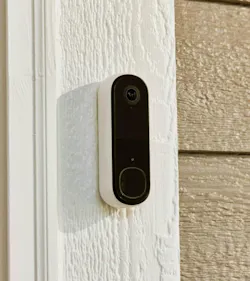 During Arlo's third-quarter 2026 earnings call, executives provided additional details on the economics of strategic partnerships, AI-powered security services and the company's plans to expand recurring revenue through 2027.
Arlo Technologies (NYSE: ARLO) executives offered additional details about the company’s growth strategy during the analyst Q&A portion of its third-quarter earnings call, addressing questions about recurring revenue, strategic partnerships and competitive developments in smart home security.
The discussion provided greater clarity on the economics of newer partnerships, the timing of anticipated revenue contributions and how Arlo intends to increase subscription adoption.
Recurring revenue growth — Asked how paid account growth and higher average revenue per user would support Arlo’s target of approximately 30% annual recurring revenue growth in 2027, CEO Matthew McRae pointed to two primary drivers: faster customer acquisition through strategic partners and increased subscription revenue from Arlo Secure 7.
The updated service platform includes a new $50 monthly plan and additional subscription options expected to influence customer spending.
“Those are the two levers that have us believing we are going to shoot for a 30% ARR growth, which you know is double the growth this year, where we have had strategic partners under integration and development, and launching and starting to scale, but we think the full impact of that will actually happen next year.”
Partnership economics — Questions about the financial structure of newer agreements with ADT and Comcast prompted McRae to distinguish those relationships from Arlo’s earlier partnerships.
He explained that some established partners primarily offer basic services, while newer partners are interested in Arlo’s broader AI capabilities and premium subscription features. The company expects these arrangements to generate higher average revenue per subscriber and a greater contribution from higher-margin services.
“From a partner in unit economic perspective, expect to see a big shift towards service revenue, and having that be a much larger component.”
McRae indicated that additional details about pricing and partner economics would become available as the new offerings launch.

ADT and Comcast expansion — Addressing questions about the status of major partnerships, McRae said ADT’s planned expansion remained unchanged despite developments involving its potential privatization.
He said Comcast integration was progressing toward a mid-2027 launch, with an initial regional rollout expected to precede broader deployment. The full-year financial impact would not be realized until 2028.
“I think it will be a little bit like ADT, shifted out, where we will see it launch, scale, and then the full-year impact wouldn’t be until 2028, but obviously at a much larger scale.”
McRae also identified Samsung as an ongoing strategic relationship but said it remained uncertain when or whether that work would develop into something more substantial.
Retail subscription conversion — Questions about Arlo’s promotional strategy prompted McRae to explain how the company is using customer analytics to prioritize products associated with higher subscription adoption.
Multi-camera packages have become a particular focus because buyers are more likely to subscribe and select higher-priced service tiers. Arlo is applying those findings to holiday promotions, including offers involving multi-camera kits and video doorbells.
“Now, the reason that is important is based on the data analytics we have, the propensity to subscribe and subscribe at a higher subscription tier is a lot higher on a multi-cam pack.”
McRae said the company had already observed increased trials and initial subscriptions following Amazon Prime Day, although the results remained preliminary.
Smart home competition and acquisitions — Questions about security capabilities being incorporated into smart displays and speakers from Apple and Amazon led McRae to discuss Arlo’s broader product strategy.
He emphasized compatibility with major smart home ecosystems and said customers increasingly interact with connected devices through multiple interfaces rather than individual applications.
“I think this multimodal way to utilize the platform in general, and as we see smart home and home security combine into really what we call smart home security, that these use cases will blur and start to merge.”
On potential acquisitions, McRae said Arlo would evaluate whether to develop, acquire or partner for specific capabilities. He expects partnerships to remain the primary approach, with selective acquisitions considered where ownership could provide meaningful differentiation and recurring revenue opportunities.
New partnership timing — Asked whether additional strategic agreements could contribute to the 2027 recurring revenue target, McRae said several discussions or negotiations were underway, with potential announcements in the next two or three quarters.
However, he cautioned that integration requirements and launch schedules would likely push meaningful financial contributions from those prospective relationships into 2028.
“So when we’re speaking about the 30% target for ARR in 2027, I’m not including any substantial material revenue from brand new partnerships that we haven’t talked about.”
About the Author
 Rodney Bosch
Editor-in-Chief/SecurityInfoWatch.com
Rodney Bosch is the Editor-in-Chief of SecurityInfoWatch.com. He has covered the security industry since 2006 for multiple major security publications. Reach him at [email protected].