Pimloc Redesigns Video Editor to Streamline Sensitive Footage Redaction
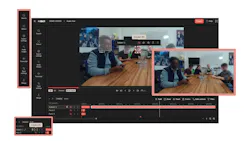 Pimloc's redesigned Video Editor adds expanded detection and redaction tools for sensitive video and audio footage.
Pimloc has introduced a redesigned Video Editor within its Pimloc Redact platform, adding capabilities intended to help organizations review, edit and manage redactions across sensitive video and audio footage more efficiently.
The updated Video Editor features a streamlined interface that reduces the steps required to review and edit recordings. Users can navigate footage more efficiently, make changes directly within videos, redact multiple objects simultaneously and run additional automated detection without reprocessing entire files.
Organizations in law enforcement, education, healthcare and retail regularly handle video containing personally identifiable information (PII) that must be protected before footage can be shared. Although automated redaction reduces the need for manual review, teams must still verify results, make adjustments and identify additional information that requires protection. These tasks can be particularly time-consuming when working with lengthy recordings or footage containing multiple people and sensitive objects.
“Redacting sensitive video often requires several rounds of review, particularly when footage contains multiple people or different types of personal information,” said Simon Randall, CEO and Founder of Pimloc. “We’ve redesigned the Video Editor to accelerate that process, giving teams more control over how they review and adjust redactions. They can now make changes directly within the footage, identify additional information without starting over and spend less time navigating complex recordings.”
Expanded Detection and Editing Capabilities
The redesigned Video Editor integrates editing controls directly into the video player. Users can select an object and immediately redact or unredact it, update its label or adjust its tracking. A more flexible timeline also simplifies navigation through long recordings, while new filters help users locate specific objects and redactions without manually searching through footage.
The update also allows users to run additional automated detection on footage that has already been uploaded and processed. Users can select new detection categories, including screens or whole bodies, and process an entire recording or a specific section without re-uploading the video, losing existing edits or incurring additional processing costs.
For example, a police force preparing body-worn camera footage for disclosure may initially redact faces before identifying mobile phone or computer screens that also require protection. Similarly, a school responding to a request for classroom footage may need to redact names displayed on a whiteboard. The updated editor allows teams to identify these additional objects within an existing project.
Other additions include bulk redaction capabilities that allow users to redact or unredact multiple detected objects at once, including all identified faces. Improved object tracking enables users to track objects forward or backward from any point in a recording, with tracking automatically stopping when an object leaves the frame.
The customizable timeline allows users to zoom in and out to view more footage at once and filter redactions by object type, status or blur style.
The update also expands the platform's audio and transcription tools. An expanded transcript interface allows users to search for and redact spoken information, while audio editing tools support precise muting of selected recording sections.
The redesigned Video Editor builds on Pimloc Redact's existing automated redaction capabilities, which detect and redact PII across video, audio, images and documents. Users retain control throughout the process, with tools to review, adjust and approve redactions before sensitive material is shared.
Pimloc Redact is used across law enforcement, education, healthcare, retail and other sectors to help organizations manage sensitive information while reducing the time required for manual redaction.