Beyond the Front Gate: Building a Perimeter Security Strategy That Works
Key Highlights
- Security perimeter planning should start far from the main entrance to allow early threat detection and risk mitigation.
- Integrating operational planning, detection technology, and trained K9 teams creates a multi-layered defense that addresses different security challenges.
- Faster screening processes improve guest experience without compromising security, emphasizing the importance of staff training and operational efficiency.
- Technology alone cannot cover all security gaps; complementary layers like K9 teams and secondary screening are essential for comprehensive protection.
- A well-designed security operation focuses on early risk identification, accurate alarm resolution, and efficient movement of people, rather than just visible equipment.
Over my 20-plus years in security, I have seen event leaders focus on the entrance they believe presents the greatest risk, often because it has the most security equipment. But the greater vulnerability may be around the corner: a loading dock, employee entrance, media checkpoint or back-of-house access point where screening has been reduced to keep operations moving.
A perimeter is only as effective as its least protected entrance.
After nearly two decades in event security, including 13 years in security operations at Madison Square Garden, I have seen screening technology become faster and more sophisticated. But equipment alone does not create a secure event. Its effectiveness depends on the people operating it, the training behind it and the planning surrounding it. The strongest perimeter security programs integrate operational planning, weapons-detection technology, X-ray screening and highly trained K9 teams from the beginning.
That integrated approach is central to Stratoscope Holdings. Its companies combine event-security and crowd-management planning through Stratoscope, weapons-detection technology through Ingressotek, and trained explosive- and firearm-detection teams through Stratos K9. Each layer addresses a different challenge, but they must operate as one system.
The right plan answers three fundamental questions: How early can you identify risk? How accurately can you resolve an alert? And how efficiently can people enter the protected environment? If any one of those answers is weak, the entire operation is weakened.
The Perimeter Begins Before the Main Entrance
The first decision should not be which screening system to deploy. It should be where the security perimeter begins and how each layer will work together as people and materials approach the venue.

“The first consideration is how far the perimeter can be extended from the primary operating environment,” says Dan Donovan, founder and managing partner of Stratoscope Holdings. “The farther out that perimeter can be established, the greater the opportunity to identify and address risk before it reaches the event or facility itself.”
Donovan has spent more than 30 years planning security for major events, including 13 Super Bowls, seven Olympic Games and the inaugural F1 Las Vegas event. His point is straightforward: distance creates time, and time gives security teams more options. A concern identified outside the main event footprint can be addressed before it reaches a crowded entrance.
But extending the perimeter only works when the plan reflects how people and materials actually move. Attendees, employees, vendors, sponsors, media and production teams arrive with different credentials, bags and equipment. They should not automatically be routed through the same entrance or screening process.
Security leaders need to plan for ingress and egress, determine the space required for equipment and personnel, and prevent arriving and departing crowds from interfering with one another.
K9 teams should be included in that planning from the outset rather than added after technology and access points have been selected. They can screen oversized cases and deliveries, support entrances without X-ray equipment, assist with certain explosive threats and provide an alternative screening capability for guests who cannot be effectively cleared through a particular weapons-detection system.
Their visible presence can also deter threats. Even when X-ray screening is available, K9 teams may be needed for objects too large for the equipment, particularly at media events, press conferences and corporate gatherings.
The goal isn't to add more checkpoints. The goal is to add the right layers in the right places without leaving an overlooked entrance that could undermine the operation.

When Faster Screening Creates Better Security
Security and guest experience are often treated as competing priorities. They should not be.
Long lines do more than frustrate attendees. They create dense crowds outside the protected environment, complicate emergency access and can pressure screening personnel to rush. A slow screening process is not automatically more secure.
That is why advertised throughput — the number of people a system can theoretically process — is only one part of the equation.
“Actual throughput matters, but it has to be considered alongside the expected alarm rate, an effective secondary-screening concept of operations, and the appropriate staffing,” Donovan says. “If the secondary-screening operation isn’t designed correctly, the result can become security theater rather than meaningful risk reduction.”
The team behind the system is what turns a performance claim into a functioning security operation.
When our team provides rental systems, our personnel deploy with the equipment to help operate the screening environment. For permanent installations, training helps ensure the client’s team understands the technology, alarm resolution, secondary screening, and the operational demands of the specific venue.
In either model, the value is not simply the equipment. It is the expertise and process that make the equipment effective in a live environment.
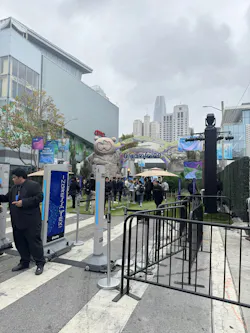
One example is Microsoft Ignite. After reviewing the event’s screening operation, we implemented facial-authentication software to verify guests more efficiently than relying solely on physical identification. The team also introduced expedited X-ray technology for bag screening.
The result was a more streamlined arrival process while maintaining multiple layers of security. Guests moved through a more seamless experience, while security personnel gained additional tools for identity verification and bag screening.
That is the standard organizations should pursue: stronger verification, accurate screening and a faster, calmer entry; not speed at the expense of security or security at the expense of operations.
The real test, however, begins when a system generates an alert.
Detection is only the first step. The secondary-screening team needs the right tools, adequate space, sufficient staffing and a clearly established process for resolving an alarm. Operations can break down when secondary screening is poorly designed or when personnel replace established procedures with individual assumptions.
Technology should support trained professionals, not be selectively overridden. When individuals replace a consistent process with personal judgment, outcomes become less predictable. An organization may have invested in advanced detection without building the operation required to use it effectively.
Technology Cannot Cover Every Gap
No single weapons-detection system can positively screen every person, package and piece of equipment entering an event. That is why electronic detection, X-ray screening and K9 teams should be designed as complementary layers.
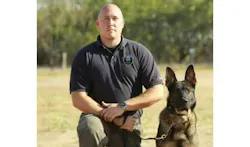
Working across both Ingressotek and Stratos K9 has reinforced that point for me. K9 teams are not a decorative presence beside the technology, nor are they simply a backup plan. They address screening challenges that fixed equipment is not designed to handle.
Their effectiveness, however, depends on more than the dog. A credible K9 program requires trained handlers, continuous education, scenario-based readiness and threat-informed operating procedures.
A K9's presence is not the security measure. The preparedness of the team is.
The same principle applies throughout the perimeter. A sophisticated product cannot compensate for a poorly positioned checkpoint, an understaffed secondary-screening area or an unprotected service entrance.
Before deploying a perimeter security system, security leaders should ask:
- Where can risk first be identified?
- Does every entrance receive the appropriate level of screening?
- Who will operate the technology?
- What training will personnel receive?
- What happens when the system generates an alert?
- Which people, packages or objects cannot be effectively cleared by the primary screening system?
Those questions reveal whether an organization has designed an integrated security operation or simply placed equipment at its entrances.
The strongest security operation is not necessarily the most visible. It is the one that identifies risk early, resolves concerns accurately and moves people confidently without leaving an overlooked entrance exposed.
The front gate may create the first impression. But the entire perimeter depends on what happens beyond it.
About the Author
 Paul Mathews
 Paul Mathews
Senior Vice President of Advanced Perimeter Systems at Ingressotek
Paul Mathews is Senior Vice President of Advanced Perimeter Systems at Ingressotek, a Stratoscope Holdings company. He spent 13 years in security operations at Madison Square Garden before joining Ingressotek in 2019. Mathews helps organizations integrate guest screening, weapons-detection technology and K9 capabilities for major sporting events, concerts, corporate gatherings and high-profile venues nationwide.