How Cargo Thieves Exploit Security Gaps in High-Value Shipments
Key Highlights
- Cargo thieves exploit gaps in shipment verification by impersonating authorized drivers and receiving personnel.
- Coordinated surveillance and diversion tactics expose vulnerabilities during transit and delivery.
- Security escorts, driver vetting and contingency planning can help protect high-value shipments.
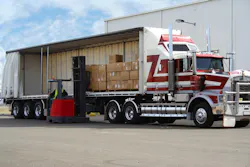
The people directing delivery trucks outside a receiving facility in Pennsylvania appeared legitimate. Wearing reflective vests and carrying clipboards, they instructed drivers where to park. For a driver making a routine delivery, there was little reason to question their authority.
But the individuals were part of an organized theft crew that diverted a delivery truck to an unsecured area, where criminals stole its high-value cargo.
The following day, our security team encountered what appeared to be the same crew while escorting another delivery truck. This time, our off-duty law enforcement officers were following the shipment in an escort vehicle. When individuals attempted to stop the truck before it entered the property, the officers recognized that something was wrong.
They approached the individuals, who quickly changed their story, saying, "We made a mistake, please proceed." The truck continued to a secure location, where its cargo was unloaded without incident.
The incident illustrates how criminals can exploit routine delivery procedures and the importance of verifying who is authorized to direct shipments.
The business consequences of cargo theft
For retailers counting on merchandise arriving in time for a holiday promotion, cargo theft can have consequences far beyond the value of the stolen goods.
Verisk CargoNet estimated $718.9 million in cargo theft losses across the United States and Canada during the first nine months of 2026, a 39% increase over the same period a year earlier.
The financial impact can extend to disrupted product launches, lost sales and reputational damage. Stolen merchandise may also reach the black market before an official product release, undermining carefully planned marketing and distribution strategies.
These risks make cargo security an important consideration throughout the transportation process, from the initial assignment of a carrier to the final delivery.

How cargo theft tactics are evolving
Cargo theft increasingly involves deception and the exploitation of weaknesses in shipment verification procedures.
According to CargoNet's third-quarter 2026 analysis, fictitious pickups accounted for roughly one in four reported supply chain crime incidents across the United States and Canada. In these schemes, criminals impersonate legitimate carriers or use fraudulent identification to obtain shipments that warehouse personnel believe are being released to authorized drivers.
Other incidents involve more aggressive tactics.
We have witnessed targeted attacks, including attempts to force a truck or its security escort off the road while en route to its destination. Our officers have also observed suspicious vehicles following shipments for 50 to 100 miles.
In some cases, crews use three or four vehicles, rotating which one follows the shipment to make surveillance less obvious. This is a technique our personnel recognize from their law enforcement training and experience.
Drivers themselves may also be involved in cargo theft schemes.
In incidents on the West Coast, an escort vehicle was rear-ended, forcing the security personnel to stop and address the collision while the truck continued traveling. Subsequent calls to the driver went unanswered, and the shipment disappeared.
Such circumstances raise questions about possible driver involvement, although that cannot be established from the circumstances alone.
These incidents demonstrate why driver vetting and contingency planning are essential. Before departure, drivers and escort teams should understand how to respond if a collision, communication failure or other unexpected event separates them during transit.
Verify carriers and drivers before pickup
Organized theft crews study delivery patterns and exploit opportunities to redirect shipments to unsecured locations. One important safeguard is verifying exactly who will transport the freight before it leaves the shipping facility.
Shippers should determine whether the company physically transporting the shipment is the carrier originally hired or a subcontractor.
Subcontracting can introduce additional vulnerabilities when responsibility for a shipment changes hands without adequate oversight. If another carrier becomes involved, the shipper should understand how that company was vetted and whether the substitution received authorization.
Transportation agreements should establish clear requirements for approving changes in carriers.
The same scrutiny should apply to the individuals collecting the shipment.
Warehouse and shipping personnel should verify the driver's identification against the authorized pickup information and confirm that the truck and trailer match the assigned equipment.
Unexpected substitutions require particular attention. If a different driver or vehicle arrives, personnel should have an established procedure for confirming who approved the change and verifying that authorization through a trusted contact at the carrier.
Shippers should also determine who will maintain communication with the driver throughout the trip. Regular check-ins and procedures for responding to missed communications can help identify potential problems before a shipment disappears.
These questions should be resolved before cargo is released. Once a truck leaves the facility, uncertainty about the carrier, driver or delivery arrangements becomes considerably more difficult to address.
Secure shipments during delivery delays
Cargo security planning should also account for periods when a loaded truck is stationary.
A truck arriving before a receiving dock opens can create an opportunity for theft, particularly if the driver has no designated secure location to wait.
Before departure, the shipper and carrier should agree on where the truck can safely park if it arrives outside normal receiving hours. They should also establish who will be available to respond to questions or unexpected circumstances overnight.
These arrangements should be part of the shipment's security plan rather than decisions left to the driver upon arrival.
The objective is to eliminate uncertainty about where the cargo should remain and who is responsible for its security until the receiving facility is ready to accept delivery.
When security escorts make financial sense
Security budgets are often constrained, and providing an escort for every shipment may be neither practical nor necessary.
For companies transporting high-value cargo, however, the financial consequences of theft can justify additional protective measures.
Repeated losses may also complicate a company's ability to obtain or renew cargo insurance, potentially increasing the financial consequences of inadequate shipment protection.
Depending on the value of the cargo and the cost of protection, losing a single truckload could exceed the expense of providing security escorts over an extended period.
That calculation should also account for potential lost revenue from disrupted product launches, interrupted distribution schedules and damage to a company's reputation.
Security escorts can provide an additional layer of protection, particularly for shipments facing elevated risks. But their effectiveness depends on coordination with drivers, established communication procedures and a broader security plan that addresses vulnerabilities throughout the delivery process.
Ultimately, protecting high-value shipments requires more than responding to theft after it occurs. Verifying carriers and drivers, planning for delivery disruptions and evaluating when additional protective services are warranted should all be part of the process before a truck leaves its point of origin.
About the authors

Anthony F. Varchetto is President of Blue Star Security. He retired as a sergeant with the Chicago Police Department, where he served on a Drug Enforcement Administration task force.

Jeffrey T. Salvetti is Co-Founder and Partner of Blue Star Security. He is a former Chicago police officer.